
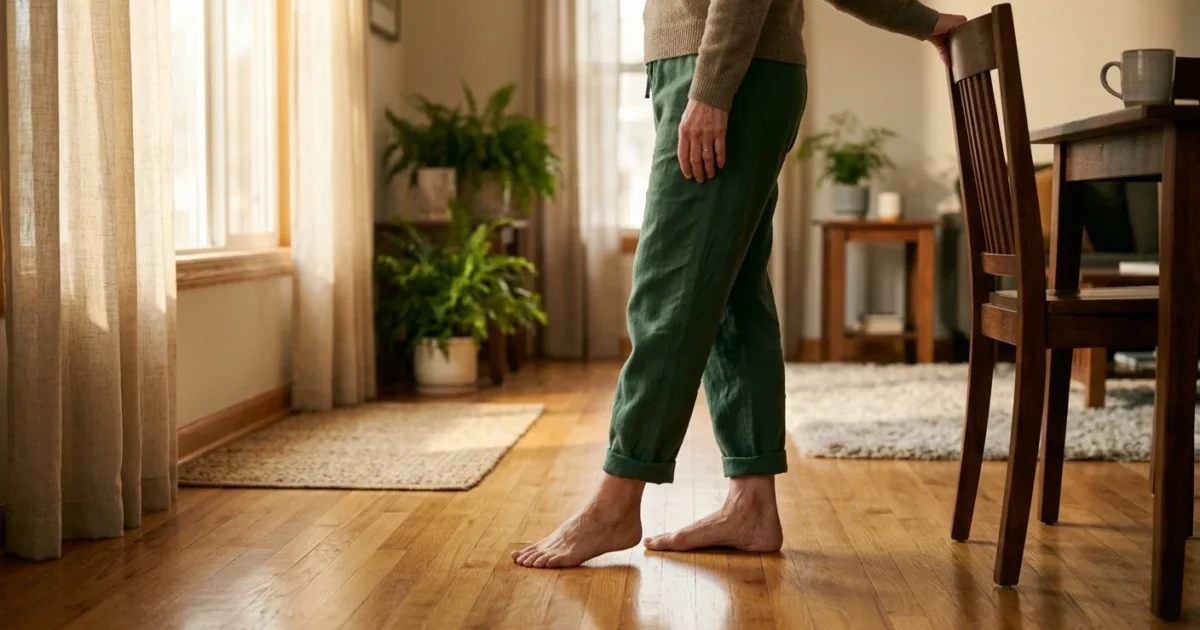
You can reclaim steady balance and safeguard your physical independence with simple daily movements. Targeted stability training directly protects your joints, sharpens your reflexes, and reduces your risk of devastating accidents.
Everyday confidence begins when you train your sensory systems and leg muscles to react instantly to unexpected shifts in posture. Consistent practice transforms everyday tasks like climbing stairs or carrying groceries into safer activities.
Prioritizing your equilibrium today shields your future mobility. You will discover practical, research-backed physical movements designed to keep you firmly grounded on your feet.
The Hidden Risks of Balance Loss and Why Prevention Matters
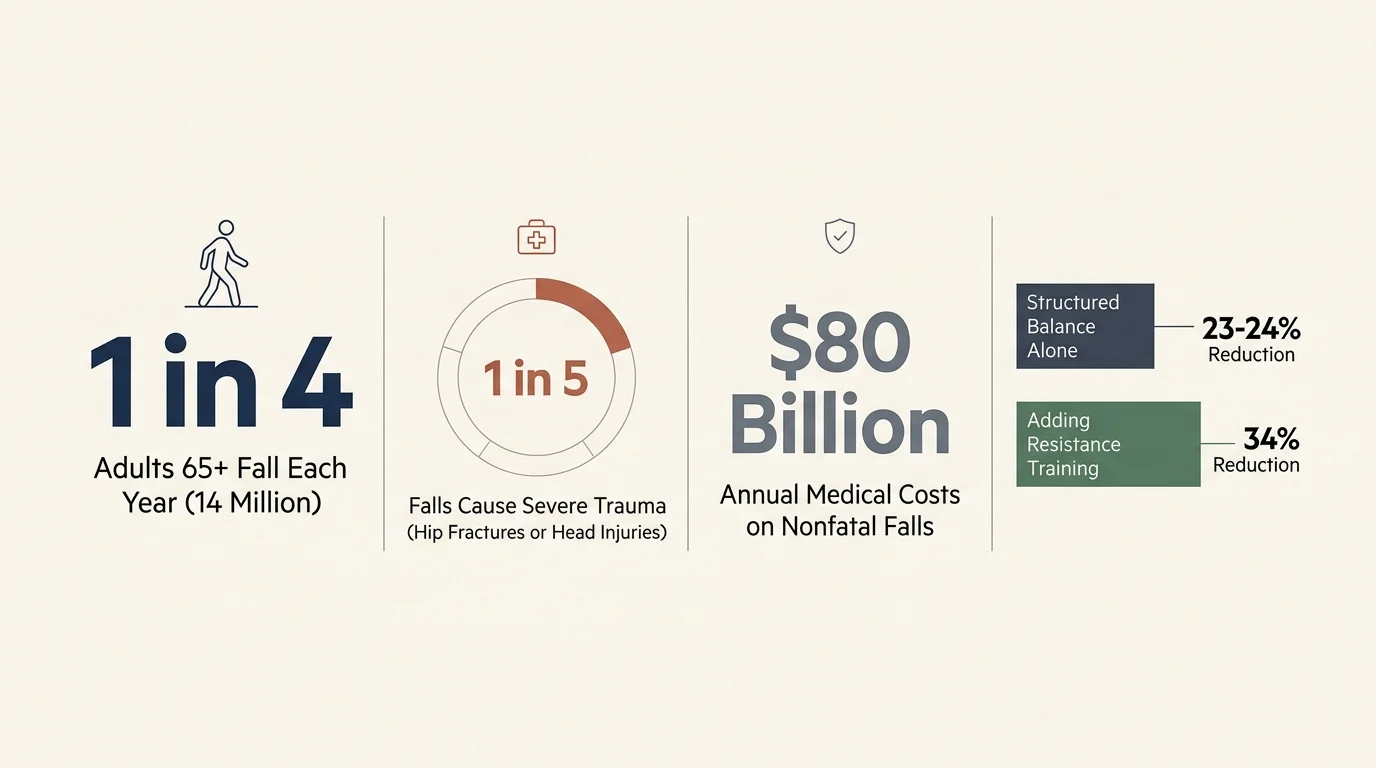
More than fourteen million older Americans fall each year, representing one in four adults aged sixty-five and older. Falls remain the leading cause of both fatal and nonfatal injuries among aging individuals nationwide.
According to the Centers for Disease Control and Prevention, one in five falls causes severe trauma like hip fractures or head injuries.
Over thirty-eight thousand seniors die annually from fall-related complications. A single fall doubles your risk of falling again.
Older adult falls generate substantial medical expenses. Annual spending on nonfatal fall treatments reaches eighty billion dollars, with Medicare absorbing most costs.
In June 2024, the U.S. Preventive Services Task Force issued a Grade B recommendation advising clinicians to prescribe structured exercise to at-risk older adults.
Clinical studies confirm that structured balance routines lower fall rates by twenty-three to twenty-four percent. Adding progressive resistance training increases that protection up to thirty-four percent.
Core Pillars of Comprehensive Fall Prevention
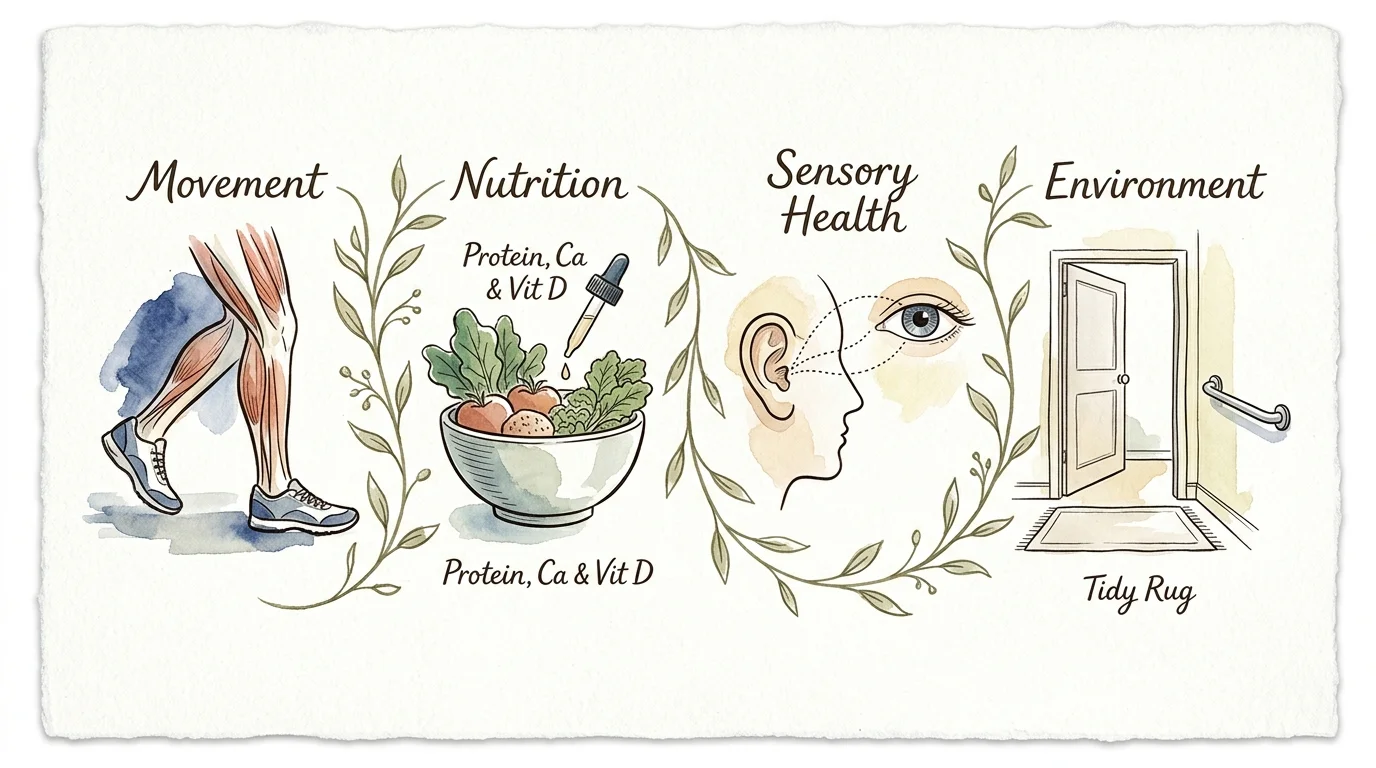
Preventing falls requires a holistic strategy extending beyond isolated workouts. You must support your musculoskeletal and nervous systems through targeted daily habits.
Targeted Movement and Muscle Strength
The U.S. Physical Activity Guidelines urge older adults to engage in multicomponent training regularly. This framework combines balance challenges, aerobic exercise, and resistance training into one weekly routine.
Building leg power helps your muscles absorb unexpected trips. That dynamic strength gives your feet the speed needed to correct balance before you stumble.
Nutritional Support for Bone and Muscle
Musculoskeletal resilience depends on adequate nutrition. Consuming enough protein helps prevent sarcopenia, the age-related loss of lean muscle tissue that undermines physical stability.
Pair daily protein with calcium and vitamin D to fortify bone density. Resilient bones dramatically reduce your risk of fractures if you lose your footing.
Sensory Health and Medication Reviews
Your eyes, inner ears, and joint receptors feed position data to your brain. Schedule annual vision exams and update prescriptions to ensure sharp depth perception.
Review medications regularly with your physician. Many blood pressure and sedative drugs cause sudden dizziness or lightheadedness upon standing.
Environmental Safety and Mindfulness
Rushing through tasks multiplies tripping hazards. Cultivate mindfulness by focusing deliberately on your footing when walking across unfamiliar or dim spaces.
Clear household clutter, secure loose carpets, and install bathroom grab bars. A hazard-free home grants you the peace of mind to navigate daily life safely.
11 Simple Exercises That Improve Balance and Prevent Falls
You can practice these eleven exercises safely at home using minimal equipment. Always keep a sturdy counter or solid chair nearby for reliable support.
1. Single-Leg Stance
Stand behind a sturdy chair and hold the backrest lightly with both hands. Lift your right foot off the ground and balance on your left leg for ten to twenty seconds.
Lower your foot smoothly, then repeat on your left side. Complete three repetitions per leg while keeping your chest tall.
2. Heel-to-Toe Tandem Walk
Place your right heel directly against the toes of your left foot along an imaginary straight line. Look straight forward rather than down at your feet.
Step forward with your left foot, placing your left heel against your right toes. Walk ten paces forward, touching a wall lightly if needed.
3. Chair Rise (Sit-to-Stand)
Sit near the front edge of a sturdy armchair with feet flat on the floor. Cross your arms over your chest to prevent using your hands for support.
Lean forward slightly and push through your heels to stand fully upright. Pause briefly, then slowly sit back down with control for ten repetitions.
4. Standing Calf Raises
Rest your hands on a kitchen counter while standing with feet hip-width apart. Raise yourself onto the balls of your feet, lifting your heels smoothly.
Hold the peak position for two seconds, then slowly lower your heels to the floor. Perform two sets of ten repetitions to strengthen your ankles.
5. Side-Stepping Drills
Stand facing a wall with feet together and hands nearby for balance. Take a wide sideways step to your right, then bring your left foot to meet it.
Step sideways for ten paces, then reverse direction back to the starting point. This drill strengthens your hip abductors to stabilize your walking gait.
6. Clock Reach
Imagine standing in the center of a clock while holding a chair with your left hand. Balance on your left leg and reach your right hand toward twelve o’clock.
Move your right hand toward three o’clock and six o’clock without twisting your torso. Switch sides and repeat to strengthen multi-directional stability.
7. Standing Back Leg Raises
Stand behind a sturdy chair and grip the backrest with both hands. Lift your right leg straight backward without bending your knee or arching your spine.
Hold for two seconds, then lower your foot softly. Perform ten repetitions per leg to build hip extensor and lower back stability.
8. Tandem Stance
Position your right foot directly in front of your left foot so your right heel touches your left toes. Stand near a wall for steady reassurance.
Hold this position for thirty seconds while keeping your weight balanced across both feet. Switch foot positions and repeat twice on each side.
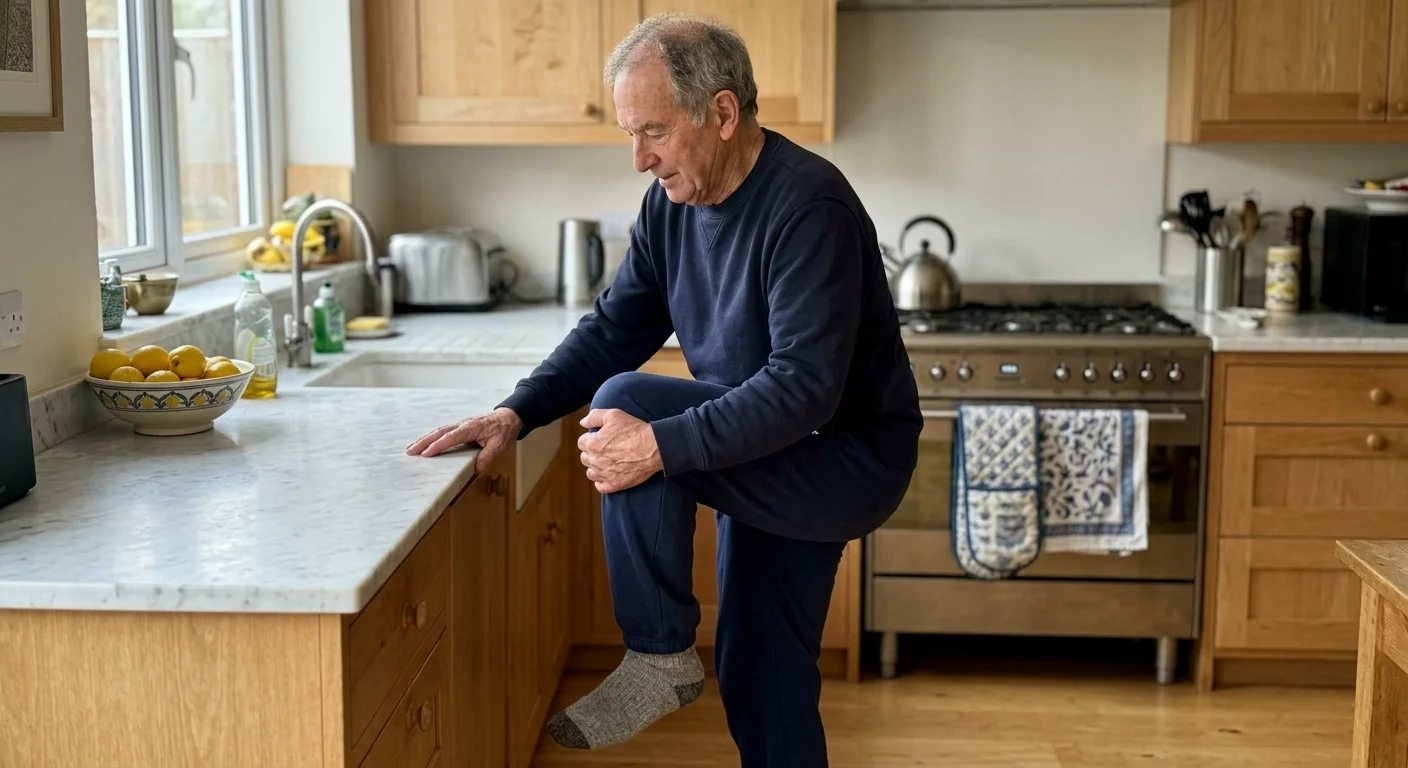
9. Marching in Place
Stand tall with your feet hip-width apart, holding a counter lightly for support. Lift your right knee toward your chest until your thigh parallels the floor.
Lower your foot softly and lift your left knee in an alternating rhythm. Complete twenty slow marches to train hip flexor strength and balance.
10. Head Turns Balance Drill
Stand with feet together and hands resting lightly on a counter. Slowly turn your head to look over your right shoulder while keeping your body still.
Return to center, then rotate your head toward your left shoulder. This drill recalibrates your inner ear vestibular system to prevent dizziness while moving.
11. Gentle Weight Shifts
Stand with feet slightly wider than shoulder-width, keeping knees relaxed. Shift your body weight onto your right leg until your left foot bears minimal pressure.
Hold for three seconds, then shift smoothly onto your left leg. Complete ten repetitions to master quick weight adjustments during everyday walking.
Insights from the Field: Clinical Perspectives on Balance
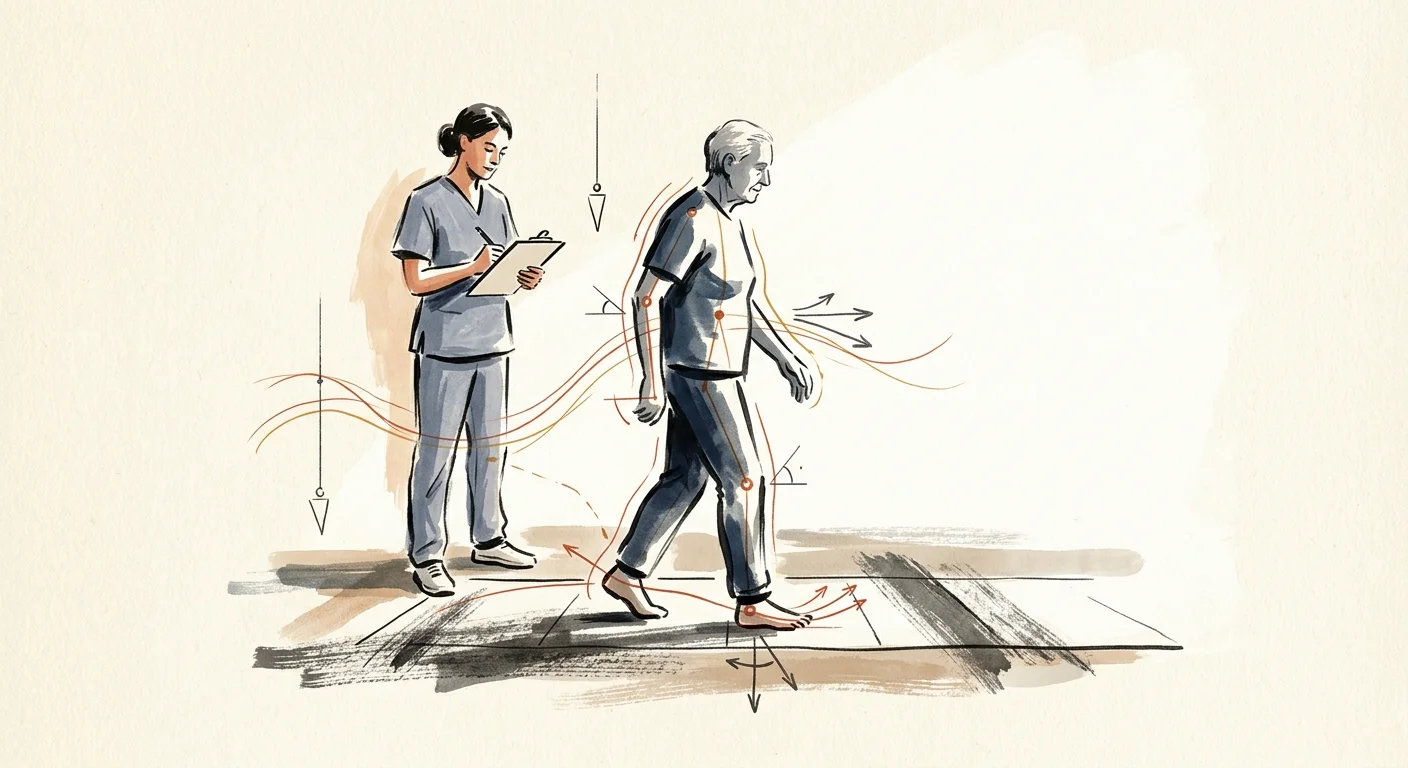
Physical therapists view balance as a trainable skill rather than an unchangeable trait. Clinicians routinely see marked mobility improvements when older adults practice stability drills consistently.
Resources from the American Physical Therapy Association emphasize that structured rehabilitation counters balance decline. Therapists remind individuals that neuromotor systems respond rapidly to consistent training.
Dr. Marcus Vance, a geriatric physical specialist, notes that older adults often underestimate their physical resilience. He emphasizes that regular movement restores joint confidence regardless of chronological age.
Participants in balance programs frequently report gains reaching far beyond physical stability. They describe reduced fear, greater walking endurance, and renewed confidence during social activities.
The National Institute on Aging affirms that regular balance training preserves personal independence. Committing to simple daily movements protects your freedom to live life on your own terms.
Frequently Asked Questions About Fall Prevention
How often should I practice balance exercises to see results?
You should perform balance training at least three days per week for optimal neuromotor adaptations. Most people notice measurable improvements in posture and confidence within four to six weeks.
If you feel persistent dizziness or unsteadiness, consult your doctor promptly. Comprehensive evaluations identify underlying cardiovascular or neurological issues requiring targeted care.
Can walking alone improve my balance and prevent falls?
While walking enhances cardiovascular health, it does not challenge sideways stability or single-leg coordination enough to prevent falls. Multicomponent training targets the specific movement patterns required to stop slips.
Incorporate dedicated stability drills alongside your walking routine for comprehensive protection. Work with a therapist to design an individualized routine suited to your mobility level.
What should I do immediately after experiencing a fall?
Remain calm and check your body for injuries before attempting to stand. Roll onto your hands and knees, crawl to a sturdy chair, and gently raise yourself up.
Contact your physician following any fall, even if you feel uninjured. A medical assessment helps identify medication side effects or physical issues that need adjustment.
When should I consult a physical therapist instead of exercising alone?
Seek professional guidance if you experience frequent near-misses, joint instability, or persistent dizziness. Supervised therapy provides essential safety for individuals recovering from surgery or managing chronic neurological conditions.
A licensed physical therapist designs tailored balance interventions matched to your precise functional needs. Personalized plans ensure you progress safely without risking injury.
Taking Your Confident First Step Today
You do not need to master all eleven exercises today to start making meaningful progress. Choose two simple movements—such as the single-leg stance and chair rise—to practice this afternoon.
Stand beside a sturdy counter and spend five focused minutes building your stability. Consistent, patient effort strengthens the muscles and neural pathways that keep you upright.
Picture the daily activities you will enjoy once you feel steady and secure. Reclaiming your balance restores your confidence, protects your independence, and keeps you moving forward safely.








Leave a Reply