

Forgetting where you parked or blanking on a neighbor’s name can trigger immediate panic, yet distinguishing routine age-related forgetfulness from true cognitive decline changes how you approach your long-term brain health. Understanding the subtle boundaries between normal cognitive shifts and early warning signs empowers you to take decisive, proactive control of your wellbeing before memory concerns undermine your independence. Research shows that up to 45 percent of dementia cases worldwide stem from modifiable risk factors, meaning early intervention offers genuine, measurable protection. By evaluating key daily patterns, addressing reversible medical causes, and adopting targeted lifestyle habits, you can safeguard your cognitive vitality and navigate health decisions with confidence.
Understanding Brain Longevity and Global Dementia Trends
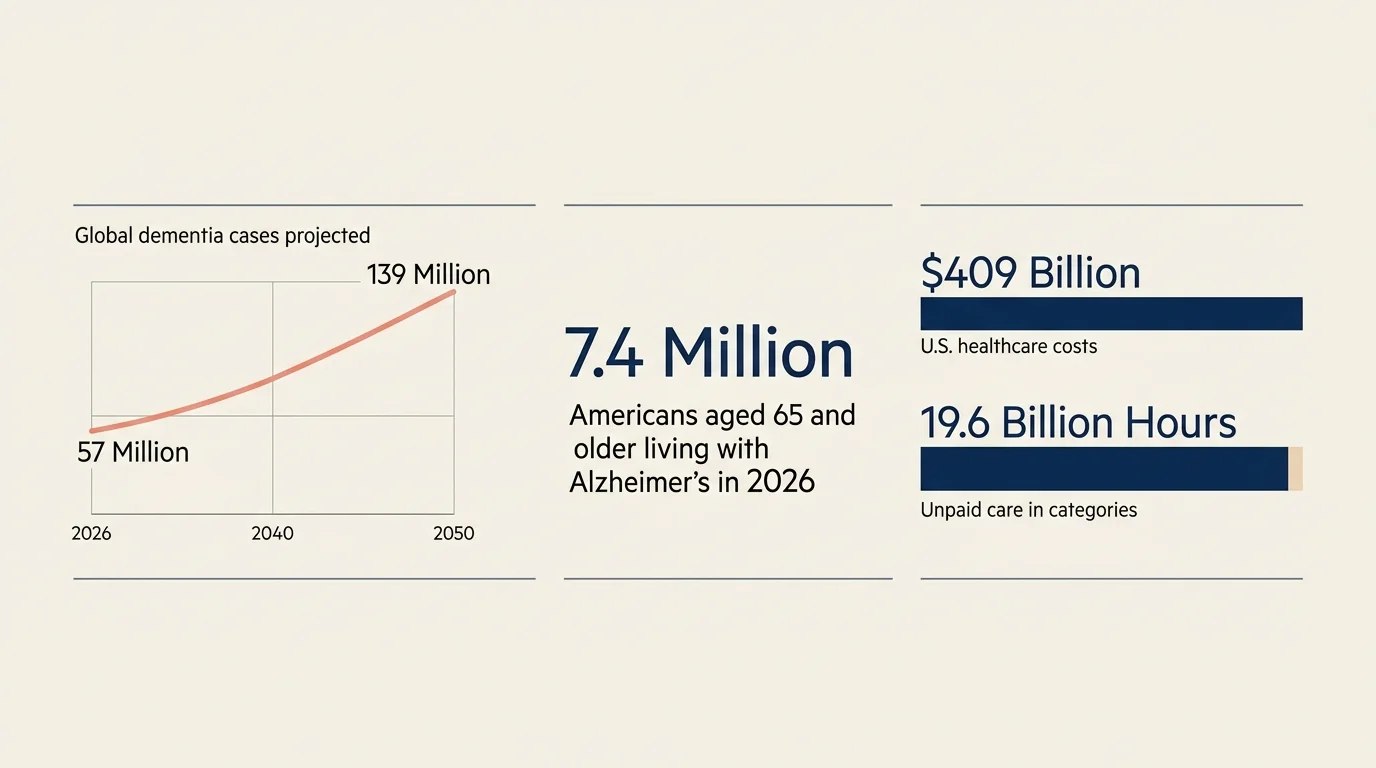
To contextualize memory concerns, you must look at the expanding scope of cognitive health across the globe. Recent estimates from the World Health Organization indicate that over 57 million people worldwide currently live with dementia; experts project this figure will surge to nearly 139 million by 2050. In the United States, the Alzheimer’s Association reports in its 2026 Alzheimer’s Disease Facts and Figures study that an estimated 7.4 million Americans aged 65 and older now live with Alzheimer’s dementia. Similarly, a 2026 report by Alzheimer Europe estimates that 9.07 million people in EU27 nations—and 12.12 million across Europe total—live with dementia, with cases projected to rise by up to 64 percent by 2050.
These numbers carry profound personal and economic weight. U.S. healthcare and long-term care costs for Alzheimer’s and related dementias reached an estimated $409 billion in 2026. Additionally, over 12 million family members and unpaid caregivers provide approximately 19.6 billion hours of care annually in the United States, valued at $446.3 billion. Recognizing these broader statistics highlights a crucial reality: memory care is a vital health issue where early action makes a measurable difference.

Normal Aging vs Early Signs of Dementia: Recognizing the Difference
Your brain changes naturally as you age, affecting recall speed and multi-tasking abilities. Medical experts at the National Institute on Aging emphasize that normal age-related cognitive changes differ fundamentally from progressive neurodegenerative conditions. When experiencing normal aging, you might occasionally forget an acquaintance’s name or misplace your glasses, only to recall them later. You might briefly lose track of the day of the week or struggle to find a specific word during conversation. Crucially, these minor lapses do not disrupt your independent functioning, daily routines, or personal safety.
In contrast, early signs of dementia manifest as persistent disruptions that impair daily decisions and independent living. Dementia involves continuous cognitive decline severe enough to interfere with regular activities. Rather than experiencing occasional word retrieval delays, someone exhibiting early warning signs faces frequent difficulty following conversations or repeats the same questions within minutes. Rather than misplacing keys on a counter, an individual with early cognitive decline routinely deposits items in illogical locations—such as placing a watch in the freezer—and cannot retrace their steps.
Financial management offers another clear baseline. Occasional confusion over a complex bill fits within normal aging; however, a chronic inability to manage a monthly household budget signals potential cognitive impairment. Consistently poor judgment—such as wearing thin clothing in freezing weather or falling prey to financial scams—represents another warning sign. Furthermore, while healthy older adults may briefly forget why they entered a room, individuals experiencing early dementia frequently lose track of dates, seasons, or their physical location in familiar neighborhoods.
Reversible Causes of Memory Loss You Must Rule Out First
Noticing memory slips does not automatically mean you are developing irreversible dementia. Guidance synthesized by the National Institutes of Health highlights that treatable medical conditions often cause cognitive symptoms that mimic early stage neurodegeneration. Before assuming a permanent diagnosis, your doctor must rule out these fully reversible underlying causes.
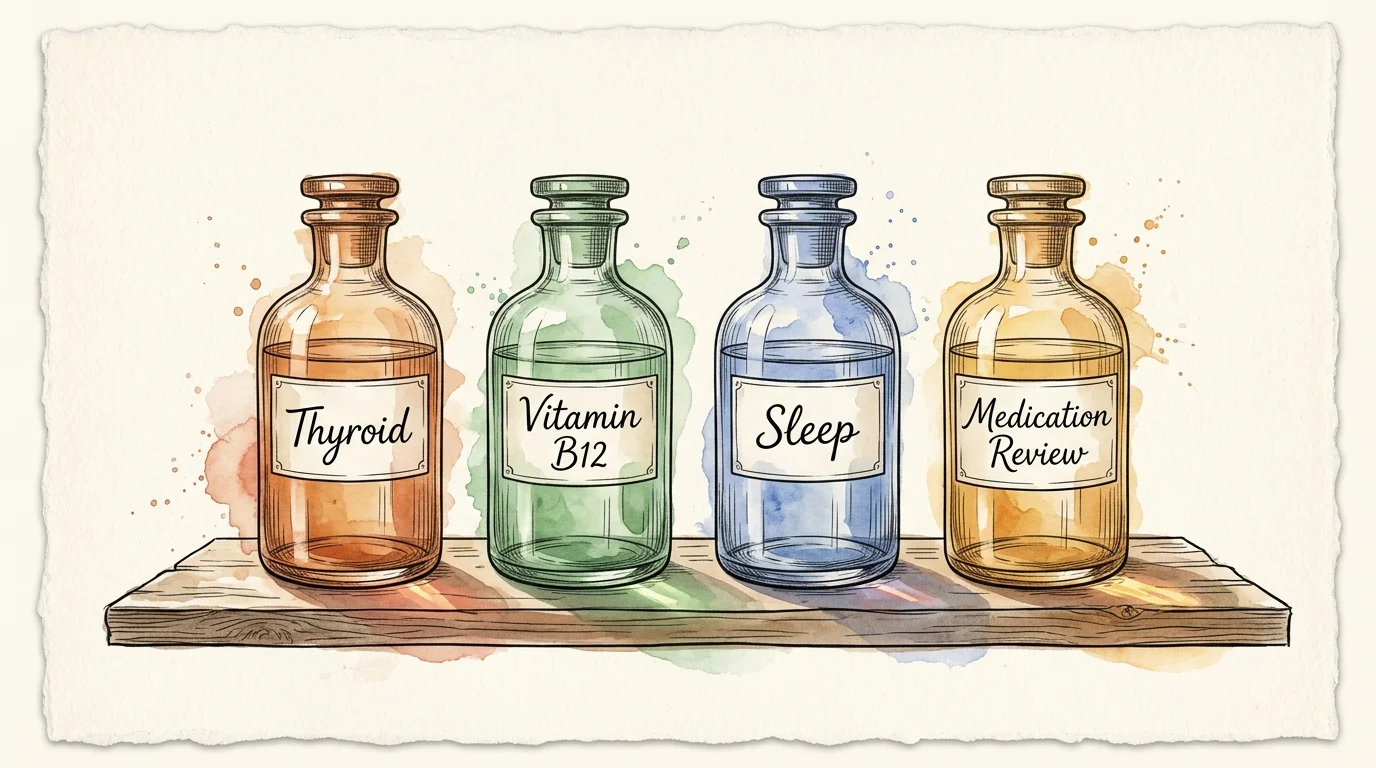
Nutritional deficiencies and metabolic imbalances frequently masquerade as cognitive decline. A Vitamin B12 deficiency directly impairs nerve signaling, causing memory loss, confusion, and fatigue. Thyroid dysfunction—especially hypothyroidism—slows overall metabolic activity, resulting in brain fog and sluggish processing speed. Simple blood tests identify these deficits, allowing your healthcare team to restore cognitive performance through targeted supplementation or treatment.
Medication side effects and mental health conditions represent additional common triggers. Polypharmacy, or taking multiple medications, often causes drug interactions that cloud clear thinking. Sedatives, muscle relaxants, and certain sleep aids significantly affect neurochemistry. Furthermore, clinical depression and anxiety in older adults often present as pseudodementia, where emotional distress temporarily impairs executive function and working memory. Finally, untreated sleep apnea starves the brain of oxygen during sleep, causing daytime cognitive deficits that resemble dementia.

Four Strategy Pillars to Safeguard Your Brain Health
Protecting your long-term cognitive health requires a proactive approach. Updated World Health Organization guidelines published in July 2026 indicate that up to 45 percent of dementia cases worldwide could be prevented or delayed by managing modifiable risk factors. By applying actionable steps across four pillars, you can strengthen your neural resilience.
Pillar 1: Targeted Nutrition and Metabolic Balance
What supports your heart directly protects your brain. Nourishing your nervous system requires dietary patterns rich in antioxidants, healthy fats, and anti-inflammatory compounds. Embracing the Mediterranean-DASH Intervention for Neurodegenerative Delay (MIND) diet—emphasizing leafy greens, berries, nuts, olive oil, and fatty fish—provides essential nutrients for brain health. Managing blood sugar levels plays an equally vital role; chronic elevated glucose damages delicate cerebral blood vessels. By minimizing refined sugars and processed foods, you stabilize insulin sensitivity and maintain consistent energy for your brain cells.
Pillar 2: Physical Movement and Cardiovascular Fitness
Regular movement serves as a powerful neuroprotective tool. Aerobic exercise—such as brisk walking, swimming, or cycling—increases blood flow to the brain, delivering oxygen and nutrients to the hippocampus. Physical activity stimulates brain-derived neurotrophic factor, a protein that supports neuron survival and synaptic plasticity. Aim for 150 minutes of moderate aerobic exercise weekly, along with two strength sessions. Physical movement also helps control high blood pressure, reducing the risk of vascular cognitive impairment.
Pillar 3: Mindset, Cognitive Reserve, and Social Connection
Building cognitive reserve—your brain’s ability to adapt and solve problems—requires ongoing mental challenge and social engagement. Learning a new language, playing an instrument, or tackling complex puzzles stimulates neuroplasticity. Maintaining social connections also protects cognitive health; research from the Centers for Disease Control and Prevention links social isolation to a significantly increased risk of dementia. Prioritize group activities or volunteer work to stay engaged. Additionally, address hearing loss promptly, as using hearing aids reduces the mental strain of processing sound, freeing cognitive capacity for memory retention.
Pillar 4: Proactive Medical Care and Biomarker Tracking
Partnering with your healthcare provider ensures that vascular and metabolic risk factors do not compromise your brain health over time. Schedule regular checkups to monitor blood pressure, cholesterol, fasting glucose, and inflammation markers. Uncontrolled high blood pressure in midlife damages brain micro-vessels, elevating dementia risk. Discuss routine cognitive screenings during wellness visits, particularly if you have a family history of cognitive decline.

Real Voices: Clinical Perspectives on Early Action
Geriatric clinicians emphasize that seeking early evaluation expands your care options significantly. Primary care physicians observe that patients frequently delay discussing memory concerns out of fear, assuming any shift indicates irreversible decline. However, experts stress that early evaluation identifies treatable causes, allows timely lifestyle adjustments, and enables access to emerging therapies while cognitive reserve remains high. Addressing memory shifts early keeps you in control of your medical decisions and long-term care plans.
Frequently Asked Questions About Memory and Cognitive Health
Does a family history of dementia guarantee I will develop it?
A family history of dementia increases statistical risk, but it does not make the condition inevitable. Except for rare genetic mutations causing early-onset forms, most cases involve a combination of genetics, lifestyle, and environment. Because up to 45 percent of dementia risk connects to modifiable factors like exercise and cardiovascular health, adopting protective habits significantly reduces your risk profile.
What specific medical tests evaluate early cognitive changes?
Evaluating cognitive changes requires a clinical assessment by a healthcare professional. Doctors typically start with standardized cognitive screening tools—such as the Mini-Mental State Examination or Montreal Cognitive Assessment—to evaluate memory and problem-solving skills. To rule out reversible causes or assess brain structure, physicians order blood tests for Vitamin B12 and thyroid function, alongside brain imaging like an MRI or CT scan.
How quickly does early-stage dementia typically progress?
Progression rates vary depending on the underlying cause, general cardiovascular health, and individual cognitive reserve. Alzheimer’s disease typically progresses gradually over 8 to 12 years, whereas vascular dementia may progress in distinct steps following minor vascular events. Managing cardiovascular risk factors and staying physically and mentally active helps support functional independence over time.
Can treating sleep apnea or hearing loss actually improve my memory?
Yes, addressing sleep apnea or hearing loss frequently improves cognitive clarity. Unmanaged sleep apnea reduces oxygen supply to the brain and disrupts restorative sleep cycles needed for memory consolidation. Treating sleep apnea with continuous positive airway pressure therapy restores healthy sleep patterns. Correcting hearing loss with hearing aids lowers the mental strain required to interpret sound, freeing processing capacity for memory.
Your Next Steps for Sustained Brain Vitality
Protecting your brain health does not require overwhelming changes overnight; sustainable wellness builds through small, intentional choices. Consider scheduling a routine checkup with your healthcare provider to review your medications, check blood pressure, and screen for Vitamin B12 levels. Reflect today on one manageable habit you can start—such as taking a daily brisk walk, adding leafy greens to your lunch, or calling a friend—to support your cognitive vitality starting now.









Leave a Reply