

You probably associate contagion with the sudden onset of a winter cold or viral influenza. However, biological agents and social cues transmit unexpected conditions through your daily routines every day.
Everyday interactions carry surprising physiological consequences; shared saliva transfers oral bacteria, while group dynamics subtly alter your metabolic health. Recognizing these hidden vectors empowers you to protect your long-term vitality.
Modern clinical science reveals that your health depends deeply on those around you. Here is what you need to know about eight conditions that spread easily without your knowledge.
The Hidden Mechanics of Human Transmission
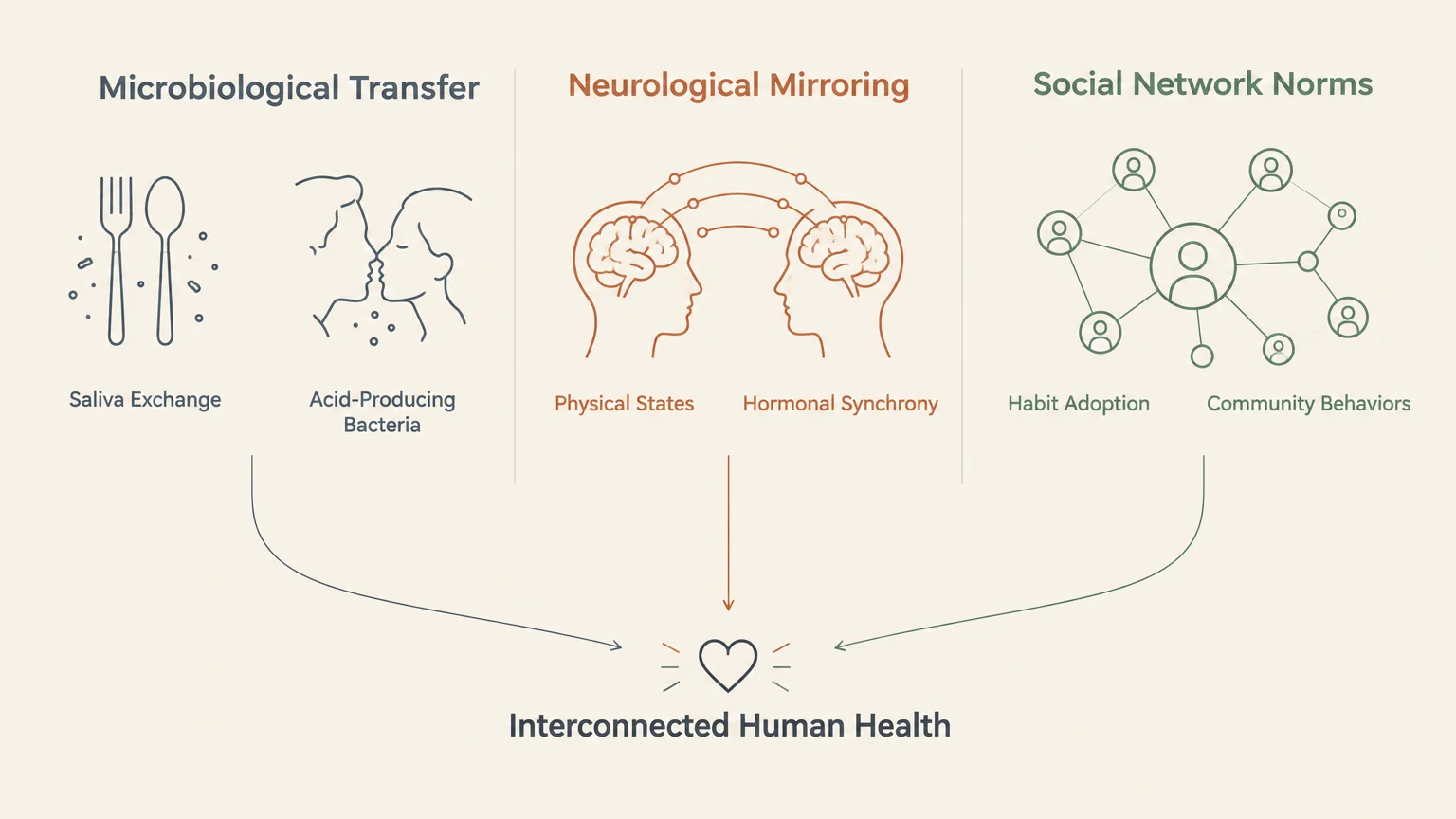
Most people assume contagion requires an airborne cough or touching a contaminated surface. Yet human transmission pathways extend far beyond conventional respiratory infections.
Direct microbiological transfer occurs whenever you share meals, beverage glasses, or close affectionate contact. Acid-producing microbes and systemic pathogens readily colonize new hosts during ordinary domestic life.
At the same time, your neurological system constantly monitors and mirrors the external world. Neural circuits cause you to adopt the physical states and hormonal patterns of people nearby.
Finally, social networks transmit behavioral norms that reshape daily habits across broad communities. Together, these biological and psychosocial mechanisms demonstrate that human health remains an interconnected experience.

8 Surprisingly Contagious Conditions
1. Cavities and Tooth Decay
Many people view tooth decay as an isolated failure of individual brushing or excessive sugar intake. In reality, dental caries is an infectious condition driven largely by the bacterium Streptococcus mutans.
These acid-generating microbes spread easily through saliva during ordinary daily routines. Sharing spoons, kissing, or blowing on a toddler’s food transfers live bacterial colonies directly into another mouth.
Genetic fingerprinting studies reveal up to a 77% match in bacterial genotypes between mothers and their infants. This vertical transmission establishes lifelong bacterial colonies before primary teeth fully emerge.
According to World Health Organization oral health guidance, untreated caries remains the most common chronic condition worldwide. Managing bacterial spread within your household proves just as vital as daily flossing.
2. Stomach Ulcers
For generations, conventional wisdom blamed intense emotional stress and spicy cuisine for painful peptic ulcers. Clinical researchers have proved that stomach ulcers stem predominantly from an infectious bacterial pathogen known as Helicobacter pylori.
This resilient bacterium colonizes the protective mucus layer of your gastric lining, prompting chronic inflammation. It spreads through saliva, shared tableware, or contaminated water and food supplies.
A comprehensive meta-analysis in The Lancet Gastroenterology and Hepatology meta-analysis found that approximately 43% to 44% of the global population carries this infection.
The bacterium causes over 80% of gastric ulcers and represents a Class 1 human carcinogen. Targeted antimicrobial therapy can eradicate the bug entirely.
3. Certain Cancers Through Viral Transfer
Malignant cellular growths cannot jump directly between individuals like an airborne virus. However, the infectious oncogenic viruses that trigger several common malignancies spread with startling ease.
The human papillomavirus (HPV) spreads through intimate skin-to-skin contact, frequently without causing any visible symptoms. Most infected individuals unknowingly pass the virus to partners during routine contact.
According to the Centers for Disease Control and Prevention guidelines on HPV, approximately 85% of people contract an HPV infection during their lifetime.
The agency confirms high-risk HPV strains trigger over 90% of cervical and anal cancers, alongside 70% of throat cancers. Timely vaccination and scheduled clinical screenings interrupt this transmission chain.
4. Secondhand Stress
When a companion enters a room radiating intense anxiety, your body detects that tension almost immediately. You do not merely observe their distress; your endocrine system actively absorbs and replicates it.
In a landmark study published in Psychoneuroendocrinology, researchers at the Max Planck Institute discovered that 26% of observers suffered significant spikes in cortisol merely by watching a stressed individual.
This physiological contagion rate jumped to 40% when participants observed their romantic partners. Watching stressed strangers on a video screen still prompted a cortisol surge in 24% of viewers.
According to National Institutes of Health research on vicarious stress, repeated exposure to ambient tension burdens your cardiovascular health. Establishing calm emotional boundaries preserves your hormonal equilibrium.
5. Weight Shifts and Metabolic Norms
Weight regulation is frequently framed as a solitary battle between personal willpower and caloric intake. Epidemiological research reveals that your social circle exerts an astonishingly potent influence over your metabolic health.
A landmark 32-year longitudinal study published in The New England Journal of Medicine study on social contagion analyzed over 12,000 closely connected individuals from the Framingham Heart Study.
The data demonstrated that your likelihood of developing obesity increases by 57% if a close friend becomes obese. If the friendship is mutual, your personal risk increases by an astonishing 171%.
This influence ripples across three degrees of separation, affecting friends of your friends’ friends. Social groups gradually adjust their collective perceptions of what constitutes an acceptable diet or body size.
6. Loneliness and Emotional Isolation
You might assume loneliness is an entirely private experience born from personal circumstances. Sociological research demonstrates that emotional disconnection behaves like an infectious condition within community networks.
A landmark study in the Journal of Personality and Social Psychology revealed that having a lonely direct contact increases your own likelihood of loneliness by 52%.
Just like metabolic shifts, feelings of isolation spread up to three degrees of social separation. Disconnected individuals often grow less trusting and unconsciously push remaining contacts away.
Because chronic loneliness elevates systemic inflammation and cardiovascular risk, this emotional contagion carries serious medical consequences. Rebuilding reciprocal social connections protects the physical health of entire communities.
7. Contagious Yawning
Seeing someone yawn across a breakfast table almost immediately sparks an irresistible urge to stretch your own jaw. Even reading the word “yawn” triggers the reflex for millions of people around the globe.
Clinical investigations show that between 50% and 70% of healthy adults experience contagious yawning. Neuroscientists classify this reaction as an echophenomenon driven by your brain’s mirror neuron network.
Susceptibility to this motor reflex varies substantially with age. Roughly 82% of adults under 25 experience contagious yawns, whereas responsiveness drops to approximately 60% in adults aged 25 to 49.
Researchers believe this spontaneous mimicry evolved to synchronize group alertness and reinforce social bonding. When you echo another person’s yawn, your brain demonstrates basic empathic attunement.
8. Visual Itching and Scratching
Watching someone scratch an itch can instantly generate an uncomfortable prickling sensation across your own skin. You do not need an allergen or bug bite; the visual input alone produces a genuine physical itch.
Neuroimaging experiments in the Proceedings of the National Academy of Sciences show that visual cues activate central motor regions. Specifically, observing scratching stimulates the supplementary motor area and ventral striatum.
This neurological response triggers an involuntary urge to scratch regardless of your current skin health. Individuals suffering from chronic dermatological conditions like eczema experience an even more pronounced physical reaction.
Recognizing visual pruritus helps you break the unconscious scratch reflex before it damages your skin barrier. Shifting your visual focus elsewhere halts this central nervous system cascade.

Clinical Perspectives from the Field
Primary care physicians increasingly recognize that individual wellness cannot be treated in total isolation. Family habits, shared microflora, and relational stress patterns fundamentally dictate patient outcomes.
Dr. Elena Martinez, an integrative family physician, notes that treating one patient for digestive complaints often requires evaluating household hygiene. She emphasizes that microbial sharing frequently explains recurring gastrointestinal and oral symptoms.
Clinical psychologists similarly urge individuals to treat interpersonal stress as a contagious biological agent. Chronic familial or workplace tension inevitably compromises immune resilience and restorative sleep.

Evidence-Based Strategies for Daily Protection
Understanding these invisible transmission routes allows you to construct thoughtful, supportive daily boundaries. Protecting yourself does not require social isolation; it simply demands informed personal habits.
1. Mindful Oral and Microbiome Hygiene
Maintain separate personal utensils, water bottles, and toothbrushes, even within the same household. Avoid blowing on food meant for infants to prevent early microbial colonization.
Incorporate prebiotic fibers and fermented foods into your weekly diet to nourish diverse gut bacteria. A balanced internal microbiome helps prevent pathogenic strains like H. pylori from dominating your gastrointestinal tract.
2. Social Boundary Management and Stress Buffering
Cultivate conscious awareness of secondhand emotional stress during difficult interpersonal conversations. When companions express intense frustration, take slow diaphragmatic breaths to disrupt your body’s mirror neuron response.
Surround yourself with peers who prioritize nourishing foods, regular physical movement, and restorative rest. Because lifestyle norms spread socially, your community’s positive habits will naturally elevate your own routines.
3. Proactive Clinical Screenings
Schedule regular preventive health appointments to address communicable drivers of chronic illness early. Discuss the HPV vaccine with your clinician to protect against oncogenic viral strains.
If you suffer from persistent stomach burning or indigestion, request diagnostic testing for H. pylori. Simple noninvasive tests identify the infection before it creates severe mucosal ulcerations.
Frequently Asked Questions
Can you contract a stomach ulcer from a single kiss?
A single kiss rarely transfers enough Helicobacter pylori bacteria to cause immediate clinical disease. Prolonged domestic contact or shared dining utensils represent much higher transmission risks.
If you experience chronic burning abdominal pain, consult a gastroenterologist for definitive diagnostic testing. Early medical intervention prevents lasting stomach lining damage.
Does secondhand stress trigger long-term physical inflammation?
Occasional empathetic distress will not harm your cardiovascular system over time. However, chronic daily exposure to elevated cortisol in high-tension environments fuels low-grade systemic inflammation.
Working with a mental health professional helps you establish necessary emotional boundaries. Personalized stress management therapies shield your nervous system from ambient workplace anxiety.
How can you resist social weight gain without dropping close friends?
You do not need to distance yourself from friends who embrace sedentary lifestyle patterns. Instead, take the initiative by proposing active gatherings and nutrient-dense dining options.
Sharing your personal wellness milestones often inspires your peers to adopt positive modifications themselves. Healthy lifestyle behaviors spread through social networks just as effectively as unhealthy habits.
Why do humans yawn when someone else yawns even if they are well-rested?
Contagious yawning is an involuntary neurological reflex rather than a sign of physical fatigue. Your brain automatically mirrors observed actions to promote group cohesion and communal alertness.
While contagious yawning is completely benign, extreme unprovoked fatigue warrants clinical attention. Consult your primary physician if you suffer from unrelenting daytime exhaustion.
Taking Your First Step Toward Daily Awareness
Human bodies remain deeply interconnected with the surrounding social and physical world. Recognizing what transmits between people gives you greater agency over your daily health choices.
Start with one practical adjustment today—such as assigning dedicated water bottles at home or practicing calming breaths during tense meetings. Reflect on how your close relationships shape your daily physical state.
Before implementing substantial lifestyle or dietary changes, consult a qualified healthcare professional. Your medical provider offers personalized guidance tailored precisely to your clinical profile.







Leave a Reply