

Catching skin cancer early transforms an intimidating diagnosis into a highly curable condition. Your skin continually displays subtle biological signals, granting you the practical opportunity to intervene before abnormal cellular damage spreads into deeper tissue.
More than 9,500 people across the United States receive a skin cancer diagnosis every single day. Recognizing subtle signs of skin cancer to watch for provides your strongest defense against advanced disease.
When you know precisely which physical marks demand clinical evaluation, you can partner proactively with healthcare providers to safeguard your long-term wellness.
Understanding Your Risk: The Science of Early Detection
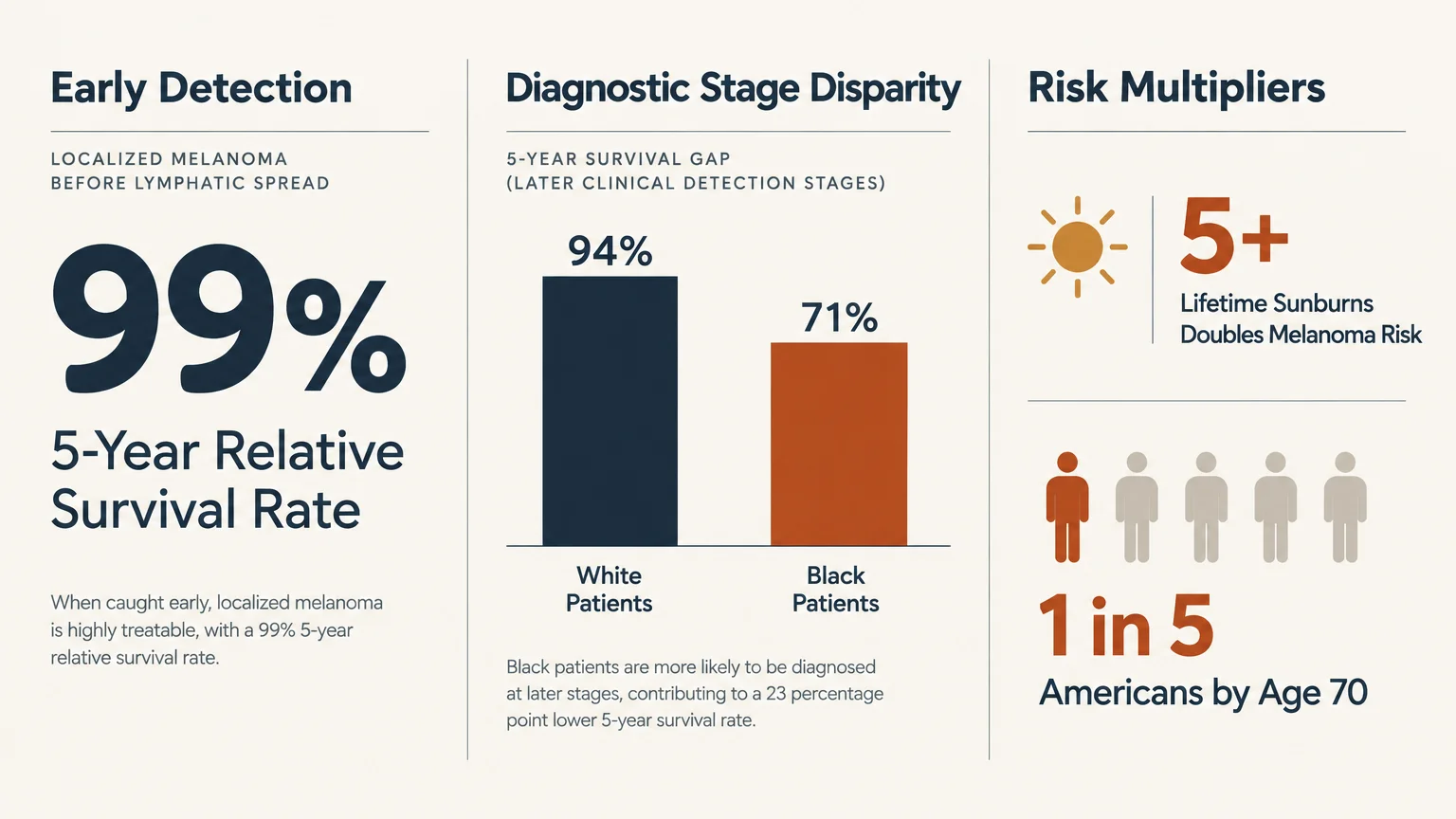
Skin cancer remains the most frequently diagnosed malignancy in the United States. Epidemiological data indicates that at least one in five Americans will develop some form of skin cancer by age 70.
Non-melanoma varieties account for the vast majority of these cases. Basal cell carcinoma affects roughly 3.6 million individuals annually, while squamous cell carcinoma accounts for an estimated 1.8 million cases each year.
Melanoma poses a substantially greater threat because it spreads aggressively into internal organs. According to American Cancer Society skin cancer research, clinicians will diagnose roughly 100,640 new invasive melanoma cases this year.
Those projections include 59,170 men and 41,470 women, resulting in approximately 8,290 related deaths. Fortunately, early detection completely alters this trajectory.
When clinicians identify and excise localized melanoma before it enters the lymphatic system, the estimated five-year relative survival rate reaches approximately 99 percent.
Your personal ultraviolet exposure history strongly dictates your baseline vulnerability. Sustaining five or more sunburns over your lifetime doubles your overall melanoma risk.
Similarly, experiencing just one blistering sunburn during childhood or adolescence doubles your likelihood of developing malignant lesions decades later.
Vigilance must also extend across all skin tones and ethnic backgrounds. Melanin offers partial filtration against ultraviolet radiation, but it does not make your skin invincible.
Significant diagnostic disparities persist within clinical medicine today. The five-year survival rate for Black patients diagnosed with melanoma stands at approximately 71 percent, compared to 94 percent for White patients.
This stark gap occurs primarily because physicians detect lesions at significantly later, more invasive stages in populations of color.
In darker skin tones, malignancies frequently emerge as acral lentiginous melanoma. These specific tumors develop on unexposed anatomical regions, such as the palms, the soles of your feet, and underneath nail beds.
7 Early Signs of Skin Cancer You Shouldn’t Brush Off
Skin malignancies rarely develop overnight. Instead, they present as evolving irregularities and skin changes that could be cancer, requiring deliberate observation and clinical verification.
1. Asymmetry in Mole Architecture
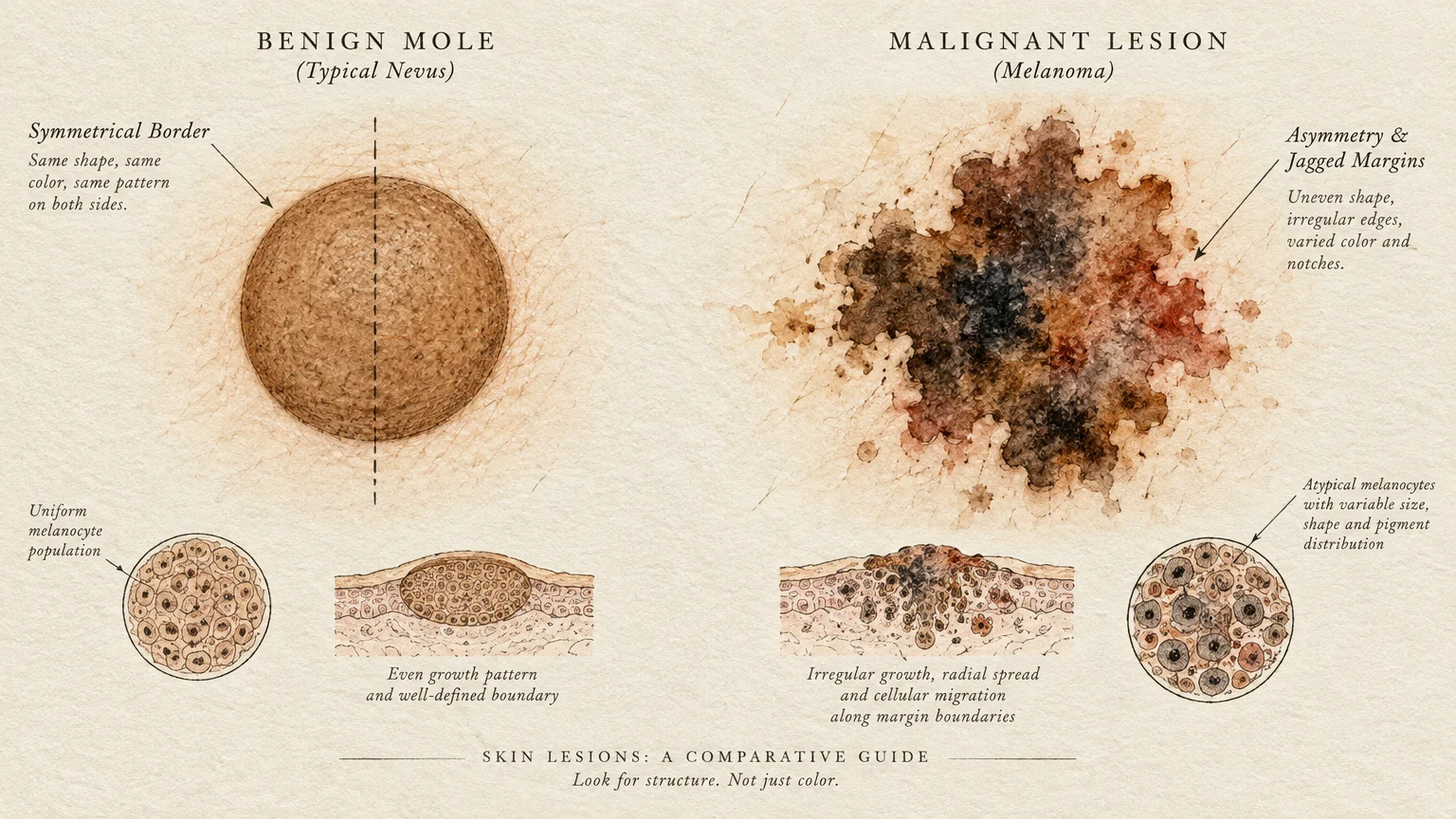
A healthy mole typically maintains structural symmetry across its axes. If you draw an imaginary line through the center of a benign spot, both halves match in size and shape.
Malignant melanomas grow at chaotic, uneven rates along their margins. When one side of your mole looks noticeably distinct from the other, schedule an immediate professional evaluation.
2. Jagged, Scalloped, or Indistinct Borders
Benign moles usually feature smooth, well-defined boundaries that cleanly separate pigmented tissue from surrounding skin. In contrast, early skin cancer symptoms frequently involve jagged, notched, or blurred borders.
Ragged edges occur when abnormal cells migrate outward unevenly. If the outline appears smeared or scalloped like a rugged coastline, treat it as an important warning sign.
3. Uneven, Mottled, or Shifting Pigmentation
Harmless moles generally maintain a uniform shade of tan, light brown, or dark brown throughout their circumference. Cancerous lesions, however, showcase unpredictable color distribution across their surfaces.
Watch for black, brown, and blue tones intermingling with tan areas. Warning signs also include white, pink, or red patches within a pre-existing spot.
4. Diameter Expanding Beyond Six Millimeters
Clinicians establish six millimeters—approximately the diameter of a standard pencil eraser—as a standard benchmark for mole evaluation. Most benign moles remain smaller than this specific physical threshold.
According to Skin Cancer Foundation clinical guidance, melanomas often expand laterally beyond this dimension during their early radial growth phases.
Do not dismiss smaller spots completely; early amelanotic or micro-melanomas can occasionally manifest below six millimeters before progressing rapidly.
5. Continuous Evolution in Size, Shape, or Sensation
Stability characterizes benign dermatological tissue. If a mole begins changing its elevation, widening its perimeter, or altering its surface texture, your body signals active cellular turnover.
Physical sensations also carry diagnostic weight. Take note if a previously silent spot develops chronic itching, local tenderness, burning sensations, or unexplained spontaneous bleeding.
6. A Persistent Sore That Refuses to Heal
Not all skin cancers present as deeply pigmented moles. Basal cell carcinoma and squamous cell carcinoma frequently emerge as open sores that bleed, ooze, crust over, and remain unhealed after three weeks.
These lesions often cycle deceptively through periods of partial scab formation followed by recurring ulceration. A persistent sore on sun-exposed zones demands prompt histological investigation.
7. The “Ugly Duckling” Spot and Subungual Bands
Dermatologists rely on the ugly duckling concept to identify solitary outliers. If one mark appears noticeably darker, lighter, or larger than nearby spots, evaluate it promptly.
Inspect hard-to-see areas with equal diligence. Look for dark streaks beneath nails, atypical marks on your palms, or unusual spots on your soles.

Holistic Strategy Pillars for Comprehensive Skin Wellness
Safeguarding your skin requires combining clinical vigilance with foundational daily habits. Addressing your health from multiple angles creates robust protection against cellular damage.
Pillar 1: Rigorous Medical Surveillance and Clinical Mapping
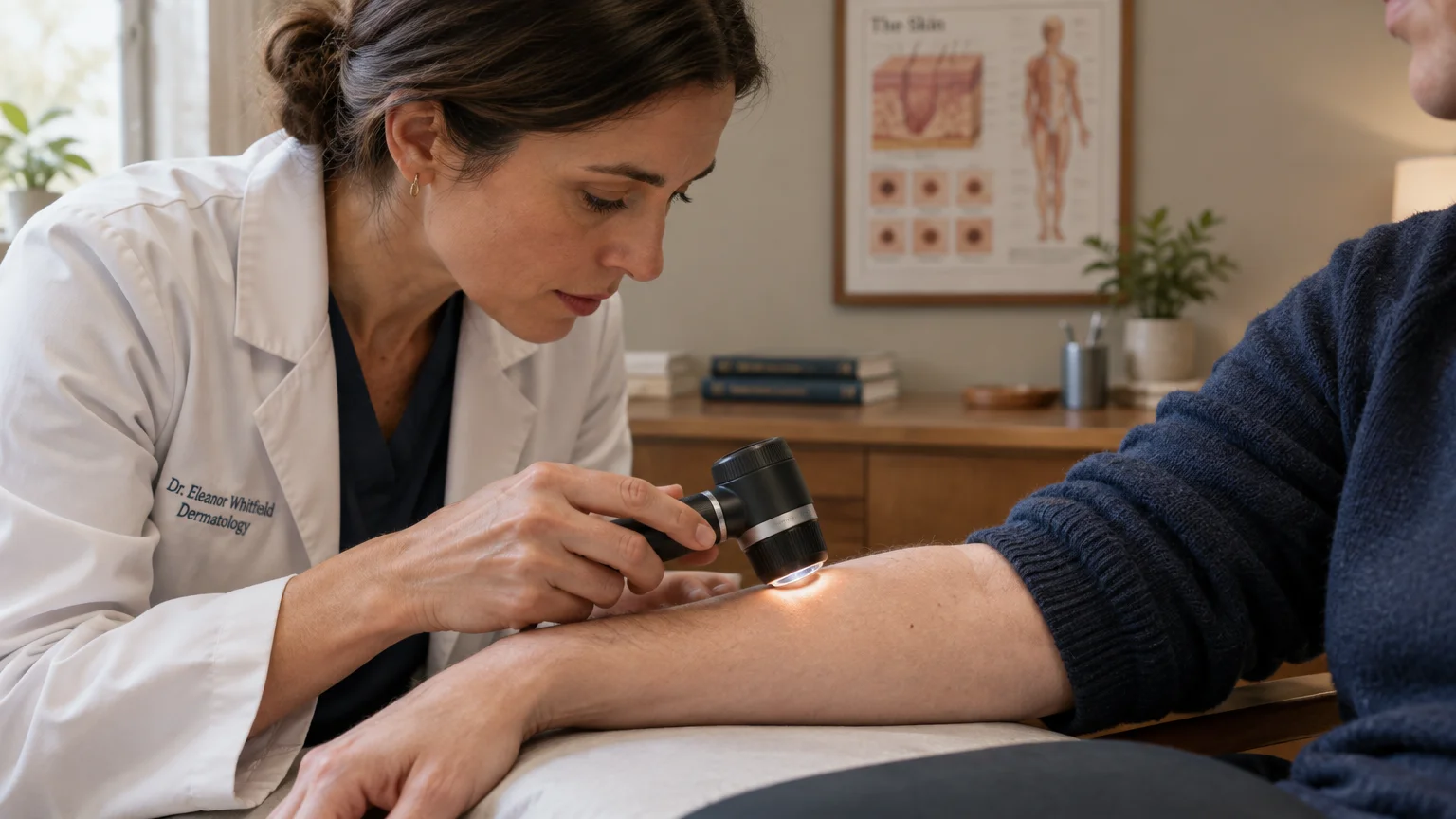
Schedule an annual full-body examination with a board-certified dermatologist. Specialists utilize dermoscopy tools to evaluate subsurface pigment networks that remain invisible to the naked eye.
Consult clinical standards from the American Academy of Dermatology diagnostic protocols to structure your home surveillance routine. Conducting monthly head-to-toe checks ensures you catch evolving marks long before symptoms escalate.
Photograph suspicious or dense mole clusters on your phone alongside a small ruler. These reference images provide objective evidence of structural changes over time.
Pillar 2: Everyday Photoprotection and Barrier Defense
Consistent photoprotection serves as your primary defense against deoxyribonucleic acid damage. Apply broad-spectrum sunscreen with a sun protection factor of 30 or higher every single morning, regardless of cloud cover.
Reapply sun protection every two hours outdoors, and reapply promptly after swimming or sweating. Mineral and chemical formulas both deliver dependable cellular defense.
Wear certified ultraviolet protection factor clothing, wide-brimmed hats, and UV-blocking sunglasses. Seek natural shade when midday sun intensity peaks between 10 a.m. and 4 p.m.
Review educational materials from the Centers for Disease Control and Prevention prevention resources to identify personal environmental risks. Completely avoid indoor tanning beds, which deliver concentrated ultraviolet radiation that severely accelerates carcinogenesis.
Pillar 3: Cellular Nutrition and Systemic Antioxidant Support
Nourishing your body from within enhances tissue resilience and endogenous cellular repair. Diets rich in polyphenols, carotenoids, and essential fatty acids combat reactive oxygen species generated by ultraviolet exposure.
Eat vibrant plant foods such as wild blueberries, pomegranate seeds, leafy greens, and cooked tomatoes. These phytonutrients supply antioxidants that support cellular health.
Support tissue resilience by drinking adequate water and consuming omega-3 fatty acids from wild fish, chia seeds, or walnuts. Nutritious foods bolster your overall defense mechanisms.
Pillar 4: Mindset, Body Literacy, and Health Advocacy
Cultivating body literacy requires transforming fear of cancer into proactive, calm stewardship over your health. Approaching self-examinations with curiosity rather than anxiety helps you identify subtle changes without undue stress.
Advocate boldly for your health if you notice an abnormality. If a clinician dismisses a changing lesion without performing a dermoscopic exam or biopsy, seek a prompt second opinion.
Ask a partner or trusted friend to inspect difficult areas like your scalp, back, and ears. Shared surveillance eliminates blind spots and improves diagnostic safety.
Clinical Perspectives: Expert Insights on Timely Intervention
Experienced dermatologists repeatedly emphasize that patient intuition plays a monumental role in early cancer detection. Clinicians often note that patients who notice subtle shifts in sensation catch melanomas at stage zero.
Data highlighted in National Cancer Institute melanoma overviews confirms that prompt excisions during early radial phases produce outstanding cure rates. Delaying care invites unnecessary health risks.
Dermatologic oncologists frequently remind patients that no question or concern is trivial. A simple five-minute in-office punch or shave biopsy can eliminate diagnostic uncertainty and save your life.
Frequently Asked Questions About Skin Cancer Warning Signs
Navigating dermatological health often sparks practical questions regarding symptoms, timelines, and screening practices. Here are evidence-based answers to four common questions.
How often should you perform a comprehensive at-home skin check?
Perform a comprehensive skin check once a month in a bright room. Utilize a full-length mirror, a hand mirror, and a blow dryer to inspect your scalp and back.
Consistent monthly checks familiarize you with your personal baseline landscape. That baseline familiarity ensures you recognize subtle new arrivals or evolving markings immediately.
Can skin cancer develop on areas of your body that never receive direct sunlight?
Yes, malignancies can emerge on unexposed anatomical regions. Acral lentiginous melanoma develops on bottoms of feet, palms, and mucosal membranes completely unlinked to cumulative sun exposure.
Biological mutations and genetic factors drive atypical cellular growth across sun-shielded zones. Thoroughly examine your buttocks, groin, armpits, and between your toes during self-screenings.
What distinguishes basal cell carcinoma from a typical blemish or pimple?
Acne blemishes usually resolve or regress within seven to ten days. Basal cell carcinoma presents as a translucent, pearly bump or fragile scab that bleeds easily and persists for weeks.
You may also spot tiny blood vessels branching across the translucent surface of the bump. Any unhealed bump lasting longer than a month requires evaluation.
When should you bypass routine waiting and see a dermatologist immediately?
Seek immediate medical care if a mole undergoes rapid asymmetrical expansion, bleeds spontaneously, or turns pitch black within weeks. Sudden onset of localized pain or ulceration also requires urgent evaluation.
Individuals with a personal or familial history of melanoma should maintain low thresholds for clinical contact. Prompt diagnostic biopsies clarify ambiguous lesions rapidly and protect your health.
Taking Action for Your Lifelong Skin Health
Your skin protects you daily from environmental toxins, temperature fluctuations, and solar radiation. Returning that care requires only a few mindful minutes each month.
Take a concrete step today by scheduling your comprehensive annual professional skin check. Afterward, place a recurring reminder on your digital calendar for your next monthly self-assessment.
How well do you truly know the markings on your body right now? Commit to learning your skin today, because proactive awareness remains your most powerful tool for lifelong vitality.








Leave a Reply