

You can add over a decade of vibrant living to your lifespan by adopting targeted daily practices. Simple adjustments protect your cardiovascular system and preserve your cellular vitality for the future.
Many popular longevity tips emphasize expensive supplements or extreme routines that quickly lead to burnout. Real vitality stems from foundational habits that fit naturally into your existing schedule.
Discovering the right habits that add years to life allows you to thrive physically, mentally, and emotionally. The following evidence-based roadmap shows you how to protect your future starting today.

The Science of Longevity: Landmark Research Findings
Medical research confirms that your daily choices wield extraordinary power over your genetic destiny. Rigorous clinical investigations prove that long-term vitality depends far more on routine behaviors than on inherited biological luck.
A landmark study from the Harvard T.H. Chan School of Public Health published in Circulation evaluated five core lifestyle habits. Adults adhering to these habits at age 50 gained 14.0 additional years for women and 12.2 years for men.
These participants were also 82 percent less likely to die from cardiovascular disease and 65 percent less likely to die from cancer. Small improvements in everyday lifestyle produced dramatic shields against chronic degeneration.
Similarly, the massive Million Veteran Program conducted by the U.S. Department of Veterans Affairs evaluated eight foundational lifestyle habits among 700,000 participants. Adopting these habits by age 40 projected an astonishing 24 added years for men and 21 years for women.
Physical inactivity, smoking, and opioid misuse caused the steepest increases in premature mortality throughout the veteran cohort. Conversely, simple habits like restorative sleep, social connections, and stress management significantly extended functional life expectancy.
Sleep science provides equally compelling evidence regarding human longevity. Research presented by the American College of Cardiology revealed that fulfilling five sleep benchmarks extends life expectancy substantially.
Men with optimal sleep gained 4.7 years of life, while women gained 2.4 years. The researchers estimated that poor sleep habits contribute to roughly eight percent of all-cause deaths across the population.
Finally, your social environment directly influences your biological aging rate. A landmark advisory from the U.S. Surgeon General highlighted the lethal consequences of chronic loneliness.
Social isolation elevates mortality risk as severely as smoking up to 15 cigarettes daily. Cultivating meaningful human bonds constitutes an essential biological necessity rather than a mere lifestyle preference.
Researchers consistently discover that these lifestyle habits compound synergistically rather than operating in isolation. Practicing multiple healthy behaviors simultaneously yields exponentially greater protection against chronic degenerative conditions.

Pillar 1: Movement That Builds Functional Resilience
Physical activity stands out as the single most potent intervention for extending healthy years. Consistent movement improves insulin sensitivity, reduces vascular inflammation, and strengthens cardiorespiratory capacity.
The official CDC physical activity guidelines recommend accumulating 150 to 300 minutes of moderate-intensity aerobic exercise each week. Achieving this baseline lowers your risk of premature death by 21 to 31 percent.
You can meet this threshold through accessible activities like brisk walking, cycling, or swimming. Dividing this duration into 30-minute daily sessions makes the objective manageable and sustainable.
The Indispensable Role of Resistance Training
Aerobic conditioning alone cannot fully protect your physical independence as you grow older. You must also challenge your musculature against resistance on at least two days weekly.
Progressive strength training counteracts age-related muscle and bone loss by stimulating protein synthesis. Functional bodyweight exercises like squats and push-ups ensure you maintain mobility and balance throughout your lifespan.
Non-Exercise Activity and Daily Posture
Prolonged sedentary behavior undermines cellular health even if you exercise for 30 minutes each morning. Frequent movement breaks throughout the workday stimulate muscular blood flow and stabilize metabolic markers.
Short walking intervals, standing desks, and light stretches accumulate into significant energy expenditure over time. These micro-movements stimulate lymphatic circulation and enhance your daily metabolic rate.
Pillar 2: Nutrition for Metabolic Integrity and Cellular Defense
The fuel you provide your body directly dictates cellular repair and gene expression over time. Adopting protective eating patterns safeguards your blood vessels and prevents chronic metabolic dysfunction.
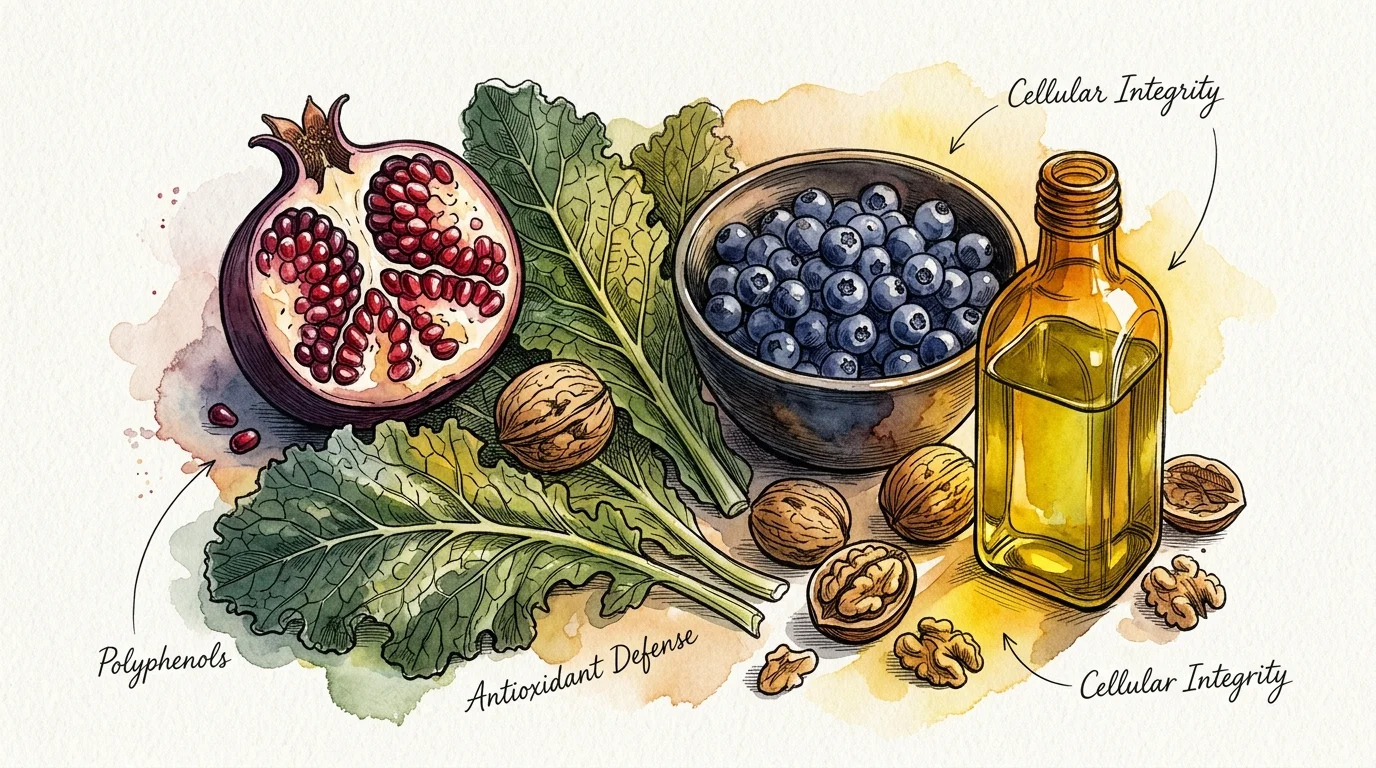
A longevity-focused dietary pattern emphasizes nutrient-dense whole foods over processed alternatives. Diets rich in leafy greens, legumes, nuts, seeds, and colorful produce supply powerful antioxidants that neutralize oxidative stress.
Dietary fiber serves as essential nourishment for your gut microbiome; diverse microbial communities produce beneficial short-chain fatty acids that regulate systemic immunity. Aim for at least 30 grams of fiber daily.
Minimizing Inflammatory Ingredients
Ultra-processed foods loaded with refined sugars and synthetic additives promote systemic inflammation. Chronic inflammation silently damages arterial linings and accelerates organ aging over decades.
Replace packaged snacks with whole alternatives like fresh berries, walnuts, or raw vegetables with hummus. Preparing meals at home gives you complete command over sodium, sugar, and fat content.
Hydration and Alcohol Moderation
Proper hydration supports cellular transport, joint lubrication, and efficient waste clearance. Drink water consistently throughout your waking hours to maintain cognitive focus and stable energy levels.
Limiting alcohol intake represents another crucial step toward sustained longevity. Modern clinical analyses confirm that consuming less alcohol directly reduces cancer and cardiovascular risks.
Consistent meal timing also supports your metabolic health by aligning nutrient intake with your natural insulin sensitivity. Avoiding heavy meals late in the evening protects digestive integrity and enhances nighttime cellular recovery.

Pillar 3: Restorative Sleep for Deep Cellular Repair
Sleep is an active period of neurological detoxification and physiological recovery. Your brain utilizes deep slumber to purge toxic metabolic byproducts through the glymphatic system.
To achieve maximum longevity advantages, strive to meet five clinical sleep benchmarks. Target seven to eight hours of uninterrupted rest nightly without relying on sedative medications.
Roughly eight percent of premature deaths across the population stem directly from poor sleep hygiene. Prioritizing consistent rest protects vascular health, optimizes cognitive clarity, and supports robust immune defenses.
Optimizing Your Evening Sleep Sanctuary
Maintain a cool bedroom temperature between 65 and 68 degrees Fahrenheit to promote restful slumber. Darkness stimulates your pineal gland to produce melatonin, which naturally initiates the sleep cascade.
Dim artificial lights two hours before bedtime and eliminate blue-light exposure from digital screens. Rising at the same hour every morning anchors your master internal clock.

Pillar 4: Emotional Health and Meaningful Connection
Chronic psychological stress floods your vascular system with cortisol and adrenaline, which damages arterial walls over time. Developing effective stress mitigation practices prevents long-term autonomic nervous system exhaustion.
Slow, diaphragmatic breathing exercises stimulate the vagus nerve, immediately shifting your physiology into a healing parasympathetic state. Dedicating just ten quiet minutes daily to mindfulness creates substantial emotional equilibrium.
Cultivating Protective Social Networks
Meaningful relationships act as a powerful biological buffer against disease and premature cognitive decline. Strong interpersonal bonds stimulate oxytocin release, which dampens inflammation and lowers blood pressure.
Prioritize reciprocal friendships that provide emotional safety, mutual encouragement, and shared laughter. Volunteering for meaningful causes expands your social circle while cultivating a life purpose that protects cardiovascular health.
Cultivating gratitude and practicing cognitive reframing further buffer your cardiovascular system against emotional volatility. These cognitive strategies dampen sympathetic nervous system overactivity and preserve neurovascular health.

Pillar 5: Proactive Health Monitoring and Preventive Care
Taking a proactive stance toward preventive healthcare empowers you to detect metabolic shifts long before clinical symptoms appear. Monitoring blood pressure, blood glucose, and full lipid panels reveals emerging cardiovascular hazards early.
Request advanced biomarkers like apolipoprotein B, high-sensitivity C-reactive protein, and hemoglobin A1c during periodic laboratory testing. These specific measurements deliver exceptional clarity regarding arterial inflammation and insulin sensitivity.
Forming a Collaborative Medical Partnership
View your healthcare team as trusted partners in your lifelong wellness journey. Always discuss significant dietary alterations or new exercise programs with your doctor beforehand to ensure personalized safety.
Partnering actively with your physician allows you to interpret diagnostic trends before irreversible tissue damage occurs. Regular biometric evaluations provide objective feedback that validates the efficacy of your daily wellness habits.

Clinical Perspectives: Insights from the Frontlines
Practicing clinicians observe daily how simple lifestyle habits outperform expensive downstream interventions. Their firsthand experiences reinforce the immense value of basic, sustainable daily behaviors.
Dr. Marcus Vance, a board-certified preventive medicine specialist, notes that consistency always triumphs over intensity. He emphasizes that walking thirty minutes daily produces far better metabolic outcomes than sporadic weekend workouts.
Elena Rostova, a clinical physical therapist, frequently reminds her patients that functional strength preserves autonomy. She observes that individuals who prioritize balance and resistance training remain active and injury-free well into their eighties.
Their clinical consensus highlights that longevity is built through ordinary choices repeated thousands of times. Small daily victories systematically reinforce your physical durability against chronic disease.
Frequently Asked Questions About Daily Longevity Habits
Is it ever too late to start adopting habits for healthy aging?
It is never too late to experience profound biological improvements from healthy lifestyle habits. Data from the Million Veteran Program demonstrated that even adults adopting healthy habits at age 60 gained significant life expectancy.
Your cardiovascular system and musculature retain remarkable adaptability across your entire lifespan. Commencing positive changes today produces immediate physiological rewards regardless of your chronological age.
How quickly can you expect physiological changes from daily habits?
Cellular adaptations begin almost immediately after you adopt healthy lifestyle modifications. Blood pressure and insulin sensitivity often show marked improvements within just two to three weeks of consistent physical activity.
Structural improvements like muscle hypertrophy and reduced visceral fat typically become measurable after eight to twelve weeks. True longevity benefits accrue over years of steady adherence to these foundational habits.
Do genetics play a bigger role in longevity than daily lifestyle choices?
Genetics account for roughly 20 to 25 percent of the variance in human lifespan under typical circumstances. Epigenetic research proves that your daily behaviors actively regulate whether disease-promoting genes are expressed or silenced.
While family history provides useful diagnostic context, lifestyle choices remain the primary determinant of your healthspan. You hold immense agency over your physical vitality regardless of your inherited genetic profile.
When should you consult a healthcare professional before altering your wellness routine?
You should always speak with a physician before initiating strenuous exercise regimens or making radical dietary modifications. Clinical guidance proves especially vital if you manage cardiovascular disease, metabolic disorders, or orthopedic limitations.
A qualified healthcare provider can order baseline blood panels and safely customize training parameters to your specific physiology. Collaborative medical care guarantees your longevity strategy remains safe, effective, and tailored to your unique needs.
Your First Manageable Step Toward Lasting Vitality
Transforming your lifespan does not require overhauling your entire routine overnight. Attempting to implement dozens of dramatic lifestyle changes simultaneously often leads to decision fatigue and eventual surrender.
Select one accessible behavior from this guide to incorporate into your schedule over the next three weeks. Whether you commit to a brisk daily walk or prioritize an earlier bedtime, let that habit stabilize completely.
Take a quiet moment today to reflect on your long-term wellness vision. What is one simple choice you can make right now to honor and protect your future self?








Leave a Reply