
The Hidden Science of Aging and Fluid Balance
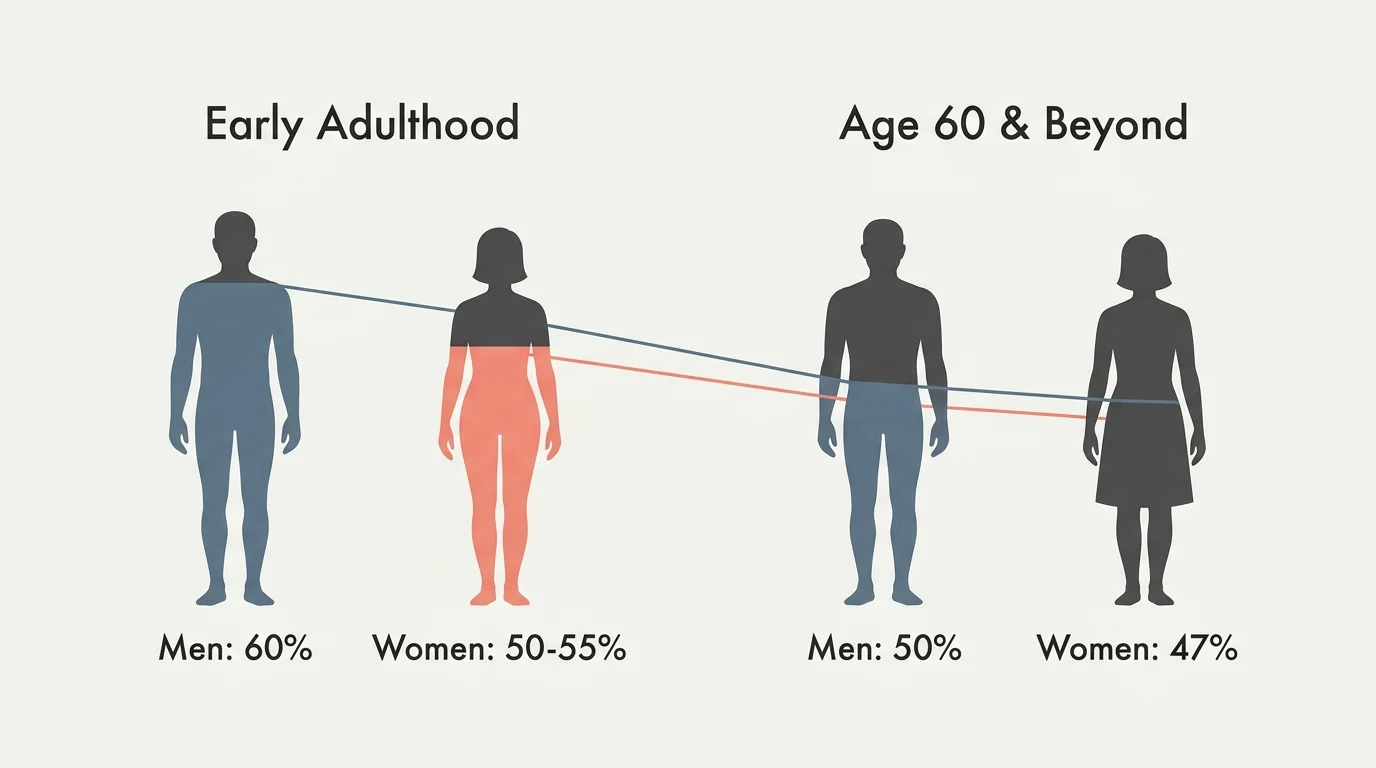
Your body undergoes profound biological shifts as time passes, altering how you process and retain water. In early adulthood, total body water accounts for roughly 60 percent of body weight in men and 50 to 55 percent in women. By age 60 and beyond, those numbers drop to approximately 50 percent in men and 47 percent in women; this decline significantly shrinks your fluid buffer against heat, physical exertion, or acute illness. Clinical reviews compiled by the National Institutes of Health indicate that dehydration affects between 17 and 28 percent of older adults in the United States. Furthermore, a 2023 systematic review published by researchers at the University of East Anglia revealed that low-intake dehydration impacts 24 percent of non-hospitalized seniors—including 19 percent of community-dwelling individuals and 34 percent of long-term care residents.
When fluid levels drop, physical consequences can prove severe. The HOOP prospective cohort study on emergency hospital admissions revealed that 37 percent of older adults were dehydrated upon entering the hospital; these dehydrated patients faced up to a six-fold higher in-hospital mortality risk compared to well-hydrated peers. Aging kidneys gradually lose their ability to concentrate urine efficiently, while the thirst center in your brain becomes less responsive. Recognizing these underlying vulnerabilities helps you appreciate why structured fluid management serves as a cornerstone of preventive health.









Thank you for this information. It is very informative and you kept each section short so it was easy to take the time to read it. A good reminder of several things we already know.