

Your daily prescriptions should restore your vitality rather than drain it. When routine pills start causing sluggishness, dizziness, or stomach upset, a careful prescription audit can safely reclaim your energy.
Millions of people unknowingly live with treatable side effects caused by drug interactions. Learning how to spot these subtle warning signs helps you collaborate with your physician to optimize your daily treatment plan.
Proactive medication reviews protect your independence and prevent unnecessary medical emergencies before they disrupt your daily routine.
Understanding Polypharmacy and the Modern Prescription Burden
Healthcare providers define polypharmacy as the routine use of five or more prescription medications concurrently. While multiple therapies often manage complex health issues effectively, they also elevate the risk of unwanted chemical clashes inside your body.
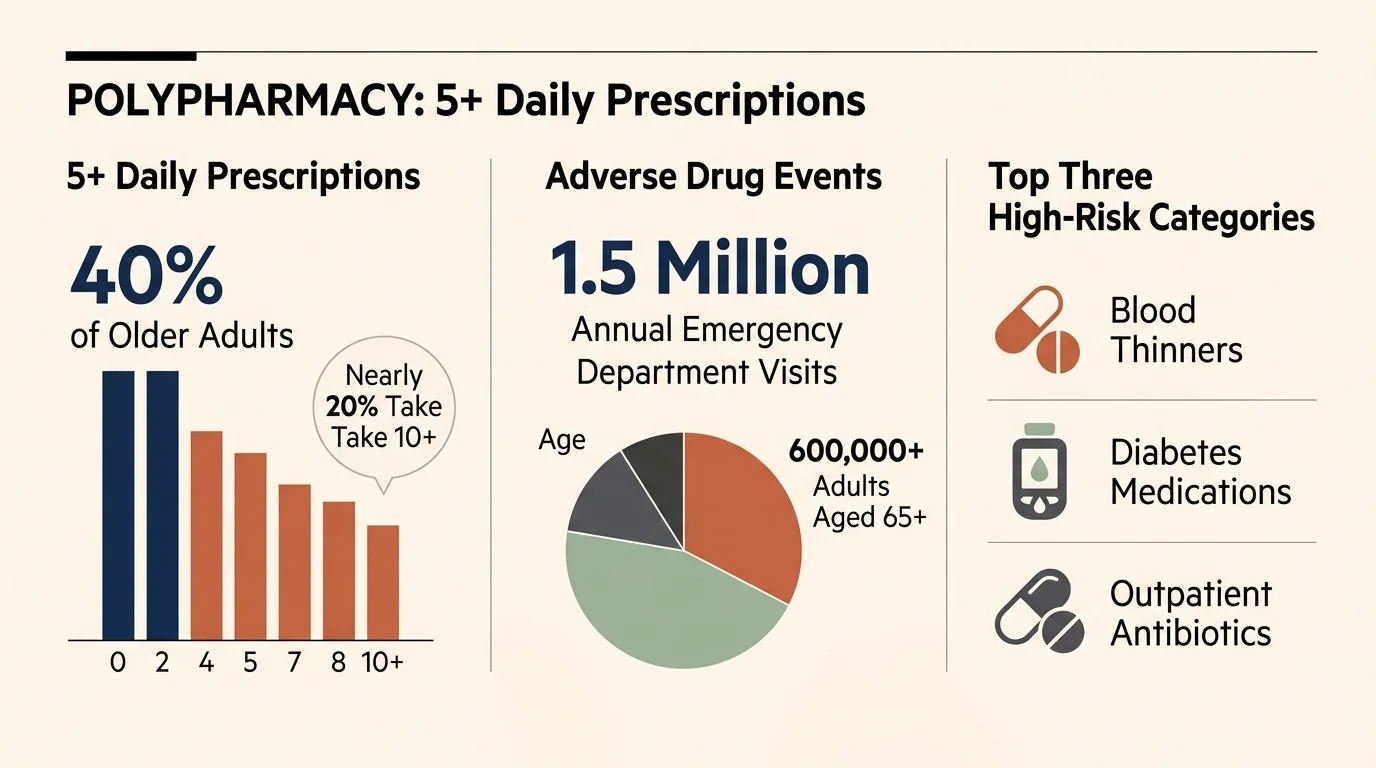
Data from the Lown Institute and national health surveys reveal that over 40% of older adults take at least five daily prescriptions. Furthermore, nearly 20% of seniors regularly consume ten or more distinct pharmaceutical products.
According to the Centers for Disease Control and Prevention, adverse drug events trigger more than 1.5 million emergency department visits across the country each year. Adults aged 65 and older account for over 600,000 of those urgent hospital encounters.
Three therapeutic categories drive almost half of these emergency hospital visits: blood thinners, diabetes medications, and outpatient antibiotics. When you understand how these potent compounds interact, you can protect your long-term wellness.

6 Warning Signs Your Prescriptions Need a Second Look
Recognizing the early warning signals of prescription complications enables you to address problems before serious health issues emerge. Watch for these six critical indicators during your daily wellness routine.
1. Unexplained Fatigue and Persistent Brain Fog
Feeling chronically exhausted or mentally sluggish is not an inevitable consequence of aging. Many common pharmaceuticals cross the blood-brain barrier and depress central nervous system activity.
The American Geriatrics Society publishes the Beers Criteria®, which identifies medications with strong anticholinergic properties that frequently cause memory clouding. Common bladder relaxants, over-the-counter sleep aids, and older allergy pills often trigger severe mental fog.
If you experience progressive concentration issues after starting a new capsule, request a comprehensive clinical review. Your prescriber can often substitute a clearer, non-sedating alternative that restores your mental sharpness.
2. Sudden Dizziness, Lightheadedness, or Balance Changes
Feeling lightheaded when standing up from a chair signals potential postural hypotension. Blood pressure therapies, diuretics, and certain mood medications can cause blood pressure to drop precipitously during position changes.
When multiple vasodilators combine in your bloodstream, your fall risk rises substantially. A minor adjustment in dosage or administration timing often stabilizes your equilibrium without compromising your cardiovascular care.
3. Gastrointestinal Distress and Appetite Shifts
Persistent nausea, burning stomach pain, unexplained constipation, or sudden loss of appetite frequently trace back to your pill regimen. Nonsteroidal anti-inflammatory drugs (NSAIDs) can erode stomach linings over time, causing silent gastrointestinal bleeding.
Simultaneously, regular antibiotic courses or metformin can alter your digestive microbiome and disrupt nutrient absorption. Discussing chronic digestive upset with your clinical team prevents severe malnutrition and mucosal damage.
4. The Prescribing Cascade: New Symptoms After New Pills
The prescribing cascade occurs when a physician misinterprets a drug side effect as a brand-new medical condition. Rather than stopping the offending pill, the doctor adds a second drug to counteract the initial adverse reaction.
For instance, blood pressure drugs like calcium channel blockers frequently cause fluid retention and swollen ankles. A clinician might mistakenly diagnose heart disease and prescribe a potent diuretic, introducing kidney strain and electrolyte imbalances.
You can break this compounding cycle by tracking the exact timeline of every new symptom. Always ask your prescriber whether a fresh complaint could stem from a recently initiated prescription.
5. Unintentional Weight Shifts or Fluid Swings
Rapid fluctuations in body weight often reflect fluid retention or metabolic changes rather than simple caloric shifts. Corticosteroids and certain diabetes therapies can stimulate rapid weight gain and dangerous glucose spikes.
Conversely, excessive diuretic dosing or overactive thyroid supplementation can cause rapid fluid depletion and severe weakness. Monitoring your body mass weekly provides objective data for your clinical appointments.
6. Care Fragmented Across Multiple Specialists
Receiving prescriptions from a cardiologist, endocrinologist, and orthopedic surgeon without central oversight creates dangerous blind spots. Independent specialists rarely have full visibility into what other practitioners prescribe during separate office visits.
This fragmentation often results in duplicate therapies, conflicting mechanisms of action, and severe compound toxicity. Establishing a designated primary care coordinator or dedicated clinical pharmacist protects you from unintended pharmacological collisions.
How Age and Biology Change Drug Sensitivity
Your internal biology transforms naturally across the decades, altering how your organs process synthetic compounds. Kidney filtration rates gradually decline, meaning your body clears active pharmaceuticals at a substantially slower pace.
Meanwhile, reduced hepatic blood flow slows enzymatic breakdown in the liver, allowing drugs to linger in your bloodstream longer. A maintenance dose that kept you balanced at age forty-five may cause toxic accumulation at seventy.
Shifts in body composition also influence pharmacological dynamics; lower total body water and higher proportional body fat alter drug distribution. Fat-soluble sedatives remain stored in fatty tissues for days, prolonging drowsiness and increasing daytime confusion.
Research indexed by the National Institute on Aging emphasizes that personalized dosage adjustments maintain therapeutic benefits while minimizing organ strain. Periodic laboratory blood panels ensure your treatment remains synchronized with your evolving metabolic reality.

Three Pillars for Safer Long-Term Medication Management
Taking control of your pharmaceutical regimen requires practical systems that integrate smoothly into your everyday routine. Implement these three evidence-based strategies to maximize your medical safety and overall wellbeing.
Pillar 1: Medical Advocacy and Annual Brown Bag Reviews
Gather every prescription bottle, over-the-counter remedy, and herbal supplement into a single bag for your annual clinical checkup. Presenting all physical containers allows your physician and pharmacist to inspect dosages, expirations, and potential duplications directly.
The Centers for Medicare and Medicaid Services mandates that Medicare Part D plans provide free Comprehensive Medication Reviews for eligible beneficiaries. For 2026, beneficiaries who meet chronic condition criteria and exceed $1,276 in annual drug spending qualify for this valuable service.
During this structured consultation, a pharmacist reviews every tablet to identify deprescribing opportunities. Removing unneeded or outdated medications reduces side effects and significantly lowers your monthly healthcare expenses.
Pillar 2: Optimizing Hydration, Nutrition, and Dosing Timing
Nutritional habits and daily hydration levels directly dictate how your digestive tract absorbs active medicinal ingredients. Inadequate water intake concentrates active compounds in your kidneys, intensifying potential renal irritation and systemic toxicity.
Specific food-drug interactions can alter therapeutic efficacy; for example, grapefruit compounds deactivate critical liver enzymes, causing dangerous drug spikes. Similarly, calcium-rich dairy foods can bind to certain antibiotics, preventing proper absorption in your intestinal tract.
Always review dietary precautions with a registered dietitian or clinical pharmacist whenever you begin a new therapeutic regimen. Establishing precise daily dosing schedules around consistent meals stabilizes bloodstream concentrations and prevents gastrointestinal irritation.
Pillar 3: Active Monitoring and Central Record Keeping
Consolidating all prescription fills at a single community pharmacy creates an automated safety net against dangerous drug interactions. A centralized pharmacy database flags harmful cross-reactions instantly, even when different doctors write the prescriptions.
Maintain an accurate paper or digital medication log listing drug names, exact dosages, prescribing doctors, and therapeutic reasons. Keep this document accessible on your smartphone or inside your wallet for immediate access during emergency medical visits.
Document any subtle physical changes on your log whenever you adjust a dose or introduce a new tablet. This organized historical record gives your healthcare provider clear data to guide future clinical choices.

Clinical Perspectives: What Pharmacists and Geriatricians Emphasize
Modern geriatric medicine increasingly emphasizes the disciplined science of deprescribing rather than reflexively adding new treatments. Deprescribing involves the supervised tapering or discontinuation of medications whose potential harms outweigh their clinical benefits.
Clinical pharmacists frequently point out that patients often remain on acute medications for years after resolving the original illness. Acid reducers, pain relievers, and sleep aids often continue indefinitely simply because nobody scheduled a discontinuation date.
Clinicians advocate for open, ongoing partnerships where you feel comfortable discussing your holistic health goals and treatment burdens. Shared decision-making ensures that your daily prescription regimen actively supports your quality of life rather than complicating it.
Frequently Asked Questions About Medication Reviews
Review these straightforward answers to common prescription management questions to prepare for your next medical appointment.
How often should I request a full prescription checkup?
You should schedule a comprehensive medication checkup at least once every calendar year with your primary physician or pharmacist. Furthermore, request an immediate review whenever you undergo a hospital discharge, switch specialists, or receive a new chronic diagnosis.
Transitions of care represent high-risk periods where conflicting instructions or duplicate prescriptions frequently slip through administrative cracks.
Can I stop a medication on my own if I suspect a side effect?
Never discontinue or alter the dosage of a prescription drug without direct guidance from your prescribing healthcare professional. Abruptly halting certain pharmaceuticals, such as blood pressure drugs or beta-blockers, can trigger dangerous rebound spikes and acute cardiac complications.
Instead, contact your doctor or pharmacist promptly to explain your symptoms and request a structured, supervised tapering protocol.
What qualifies someone for a free Medicare medication review?
Medicare Part D offers structured Medication Therapy Management programs featuring a Comprehensive Medication Review at zero out-of-pocket cost. Beneficiaries qualify by managing multiple chronic health conditions, taking several covered maintenance drugs, and meeting annual spending thresholds.
For 2026, the Centers for Medicare and Medicaid Services established the annual Part D drug cost eligibility benchmark at $1,276.
How do over-the-counter supplements interact with prescriptions?
Dietary supplements and herbal extracts contain potent biologically active compounds that can dramatically amplify or negate prescription medications. For example, St. John’s wort accelerates drug metabolism in the liver, rendering essential heart therapies or blood thinners ineffective.
Always disclose every vitamin, botanical tincture, and over-the-counter remedy during clinical visits to ensure complete pharmacological compatibility.
Next Steps for Your Personal Health Journey
Achieving optimal wellness requires proactive partnership between you and your healthcare team. Begin by gathering all your current prescription bottles, supplements, and topicals into one convenient location today.
Schedule a dedicated medication review with your primary care clinician or trusted community pharmacist this week. Bring your complete list of questions and an honest account of any subtle daily symptoms you experience.
Take a quiet moment to reflect: which daily physical sensations have you accepted as aging that might actually stem from your medicine cabinet?









Leave a Reply