

A routine medical consultation can transform your long-term health when you prepare intentionally. Avoiding subtle pre-visit errors ensures your physician receives accurate baseline data and addresses your most pressing concerns.
Rushed schedules and vague instructions often derail primary care visits before you even step into the exam room. Small oversights can artificially distort lab results, elevate blood pressure readings, and waste precious consultation time.
Taking proactive control of your appointment prep bridges the communication gap between you and your clinical team. You deserve clear answers, seamless collaboration, and high-quality care at every visit.
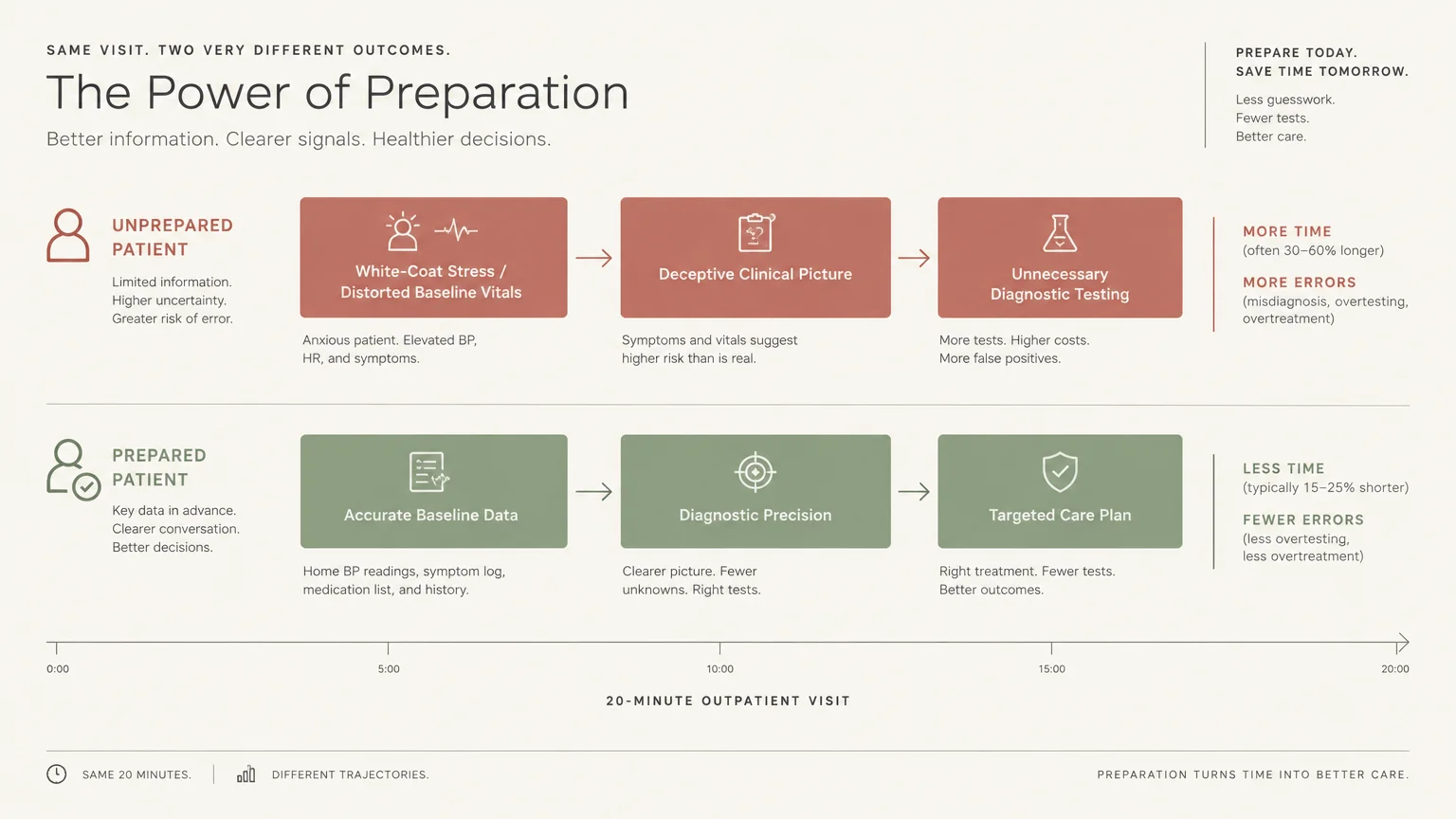
Science Snapshot: Why Preparation Shapes Clinical Outcomes
Modern outpatient encounters move quickly, frequently lasting under twenty minutes per patient. Within this brief window, clinicians must interpret vital signs, review historical records, and formulate safe management plans.
Research from the National Institutes of Health confirms that proactive patient communication directly improves chronic disease outcomes and diagnostic precision. Thoughtful preparation serves as the foundation for this productive collaboration.
When patients enter the clinic unprepared, physiological data frequently becomes distorted. White-coat stress, dehydration, or unrecognized supplement interactions create deceptive clinical pictures that complicate diagnosis.
Clinical evidence demonstrates that structured pre-visit planning significantly lowers medical error rates while curbing unnecessary diagnostic testing. Your deliberate preparation protects clinical accuracy and preserves valuable healthcare resources.

The 6 Pre-Appointment Mistakes You Should Avoid
1. Consuming Caffeine or Nicotine Before Vital Signs
Reaching for an espresso, energy drink, or cigarette right before your checkup alters your cardiovascular baseline. Stimulants trigger sympathetic nervous system activation, which causes transient spikes in both systolic and diastolic blood pressure.
Clinical guidelines from the American Heart Association recommend avoiding caffeine and tobacco for at least thirty minutes prior to blood pressure assessments. Ignoring this guidance can distort your numbers.
An artificial blood pressure spike might prompt an unwarranted diagnosis of hypertension or lead to unnecessary medication adjustments. Plain water represents the safest beverage choice on the morning of your visit.
2. Forgetting a Detailed Medication and Supplement List
Many people assume clinic electronic health records automatically track every substance they take. In reality, medical databases across distinct health systems, outpatient specialists, and retail pharmacies rarely communicate seamlessly.
Over-the-counter vitamins, herbal products, and dietary supplements frequently trigger potent biochemical interactions with prescription pharmaceuticals. For example, common botanicals like St. John’s wort or concentrated garlic extracts alter liver enzyme pathways.
The U.S. Food and Drug Administration cautions that unmonitored dietary supplements can complicate medical procedures and prescription therapies. Full transparency protects you from adverse drug interactions.
Take clear photos of your supplement labels with your smartphone, recording exact brand names, strengths, and daily frequencies. Alternatively, place your original bottles into a tote bag to review directly with your physician.
3. Downplaying Symptoms or Concealing Sensitive Details
Discussing intimate topics like bowel changes, sexual health, substance use, or psychological distress often feels deeply uncomfortable. Many patients minimize their physical discomfort or omit critical symptoms entirely due to embarrassment or fear.
Clinicians view symptoms as interconnected biological puzzle pieces, where seemingly embarrassing details frequently illuminate underlying systemic conditions. Concealing recreational habits or persistent mood shifts forces your care team to operate without essential diagnostic clues.
Healthcare providers evaluate diverse human bodies every day under strict professional and legal confidentiality mandates. They analyze your medical concerns through an objective clinical lens rather than one of personal judgment.
Rehearse articulating sensitive health concerns aloud at home if discussing them face-to-face causes emotional hesitation. You can also write your symptoms down on paper and hand the note to your doctor.
4. Misinterpreting Laboratory Fasting Guidelines
Pre-visit fasting instructions generate substantial confusion for outpatient clinic visitors. Some individuals skip meals unnecessarily for standard consultations, whereas others ingest a light morning snack before comprehensive metabolic testing.
Consuming carbohydrates or dietary fats before a fasting blood sugar or lipid test skews glucose and triglyceride levels. These transient elevations can trigger inaccurate clinical flags for metabolic syndrome or type 2 diabetes.
Fasting typically requires abstaining from all caloric food and beverages for eight to twelve hours before phlebotomy. Unless your physician directs otherwise, you should still drink ample plain water to maintain adequate vascular hydration.
5. Relying on Memory Rather than a Written Agenda
Clinical consultations produce rapid cognitive overload, making it remarkably difficult to recall chronological symptom timelines or complex questions. Once the examination begins, conversation moves quickly and critical inquiries are easily forgotten.
Guidance from the World Health Organization highlights the value of structured patient engagement in avoiding diagnostic delays. Writing down your clinical priorities bridges communication gaps during brief outpatient visits.
Limit your written agenda to your top three primary concerns or questions. Rank them by diagnostic urgency so your most pressing health issues receive immediate attention at the start of your consultation.
Bring a pen and a dedicated notebook to record medical advice, diagnostic terminology, or suggested lifestyle changes. Maintaining written notes ensures you understand your clinical care plan long after leaving the examination room.
6. Altering Routines to Present an Idealized Health Profile
Some patients initiate intense crash diets or excessive workout routines during the days leading up to an annual physical. They hope to quickly lower their blood pressure, drop weight, or artificially optimize routine cholesterol readings.
Sudden, uncharacteristic lifestyle shifts distort metabolic panels, skew hepatic enzyme values, and mask chronic underlying trends. Your medical team requires an accurate reflection of your everyday living patterns to provide effective care.
Unaccustomed, rigorous exercise right before blood tests can cause temporary muscle breakdown markers, such as elevated creatine kinase and liver enzymes. Maintain your typical lifestyle so your doctor can evaluate authentic, actionable baseline metrics.

Strategic Pillars: How to Prepare with Intention
Nutrition and Hydration Strategies
Focus on balanced, nourishing meals during the forty-eight hours before your scheduled clinical visit. Minimize excessive sodium consumption, which promotes water retention and artificially elevates resting blood pressure measurements.
Drink pure water consistently throughout the preceding day to promote optimal blood volume and cellular hydration. Dehydration concentrates blood and urine samples, skewing kidney filtration metrics and electrolyte concentrations on diagnostic panels.
Review evidence-based guidance from the Centers for Disease Control and Prevention regarding balanced chronic disease prevention. Consistent daily hydration and balanced nutrition establish an accurate physiological baseline for all routine screening tests.
Mindset and Communication Mastery
View your medical appointment as a collaborative partnership rather than an intimidating performance evaluation. Approaching your clinician as an ally reduces emotional anxiety and encourages productive, shared decision-making.
Structure your symptom descriptions using the classic clinical criteria of onset, location, duration, and aggravating factors. Explicitly explain when your discomfort started, what it feels like, and what actions provide relief.
This methodical clarity enables your physician to identify physiological patterns efficiently without misinterpreting your experiences. Thoughtful self-advocacy transforms brief office conversations into precise diagnostic opportunities.
Logistical and Environmental Organization
Organize your transit schedule to arrive at the clinical office fifteen minutes before your requested check-in time. Fighting dense traffic or hunting for parking spaces elevates sympathetic arousal and distorts initial vital sign recordings.
Dress in comfortable, loose-fitting clothing that allows swift access to your arms for blood pressure cuffs and vaccines. If your consultation includes musculoskeletal or joint evaluations, wear flexible attire that permits uninhibited movement.
Keep your insurance documentation, identification cards, and past imaging reports organized in an accessible folder. Resolving logistical details smoothly ensures your full mental energy remains focused on your health discussions.

Real Voices: Clinical Perspectives on Patient Preparation
Practicing clinicians repeatedly observe that well-prepared patients experience less anxiety and achieve superior clinical outcomes. Clear communication allows doctors to dedicate their energy to nuanced diagnostic reasoning rather than clerical detective work.
Dr. Marcus Vance, an outpatient internal medicine physician, notes that brought-in medication bottles solve numerous diagnostic puzzles. He explains that reading actual labels prevents severe dosing misunderstandings and identifies hidden drug interactions immediately.
Clinical dietitians similarly emphasize that patients who present honest, representative food journals make meaningful progress much faster. Objective lifestyle documentation enables clinicians to recommend realistic, personalized changes rather than broad, generic guidelines.
Patients who state their primary objectives during the opening moments of an appointment report feeling genuinely heard. Direct communication creates a trusting environment where both patient and clinician work toward common wellness goals.
Frequently Asked Questions
Should I take my morning prescription medications before my appointment?
Most patients should consume their essential daily medications with small sips of water on appointment mornings. However, specific blood sugar or blood pressure drugs may require adjusted timing if you undergo fasting laboratory panels.
Reach out to your prescribing physician or clinic triage nurse two days ahead to obtain tailored instructions. You must never stop critical prescription drugs without direct professional supervision.
Can I participate in vigorous exercise on the morning of a visit?
Gentle physical activity like a morning walk or light yoga is generally acceptable and relieves visit-related nervous tension. However, you should avoid heavy weightlifting or high-intensity interval training right before laboratory draws and physical exams.
Strenuous exercise induces temporary muscle microtrauma, raising serum creatine kinase levels and altering liver enzyme readings. Save your high-intensity workouts for after your clinical consultation concludes.
What practical techniques help manage white-coat syndrome?
White-coat syndrome causes an automatic surge in blood pressure and pulse within clinical facilities. Inform your medical assistant right away so they can give you five minutes of quiet rest before taking vitals.
Practice deep diaphragmatic breathing while waiting in the examination room to soothe your autonomic nervous system. Consider measuring and recording your blood pressure at home for two weeks to share with your provider.
How can I address multiple health concerns in one brief appointment?
Assemble your concerns onto a short list and identify the two most disruptive symptoms affecting your daily life. Introduce these high-priority items at the very beginning of your clinical conversation.
Your clinician will address urgent issues first and help schedule dedicated follow-up appointments for remaining secondary complaints. This transparent structure prevents hasty assessments and ensures every issue receives thorough medical consideration.
Taking Your Next Step Toward Empowered Care
Preparing effectively for a medical consultation is not about striving for perfection; it centers on establishing transparent communication. Taking a few proactive steps safeguards your diagnostic accuracy and respects your valuable time.
Choose one concrete preparation strategy to implement prior to your upcoming clinical visit. Whether you compile your supplement list or draft three essential questions, that single action will immediately elevate your healthcare experience.
Reflect on your previous doctor appointments to determine where communication felt disjointed or incomplete. How could bringing an organized symptom log or arriving ten minutes early transform your next consultation?
Always consult your medical provider to clarify individualized preparation guidelines that match your specific clinical history. Intentional preparation turns brief office visits into powerful, lasting partnerships for lifelong health.









Leave a Reply