

When an older parent or spouse suddenly seems lost, agitated, or unusually sleepy, your first thought might be worsening dementia. Often, a hidden physical trigger—such as a urinary tract infection—is driving those sudden behavioral shifts.
Older adults frequently develop infections without classic bladder pain or a high fever. Recognizing how a UTI affects the aging brain helps you push for the right tests and avoid dangerous delays in care.
This guide outlines the key warning signs, explains how doctors separate true infections from look-alike conditions, and offers practical steps to protect your loved one. Information here is educational and supports—rather than replaces—medical advice from a qualified clinician.

9 Behavioral and Physical Signs of UTI Confusion
Dementia typically progresses slowly over months or years, whereas delirium—an acute state of mental confusion—appears suddenly over hours or 1–2 days. Symptoms of delirium also fluctuate noticeably throughout the day.
Health authorities including the Alzheimer’s Association and the UK National Health Service recognize that UTIs in older adults often show up first as mood or thinking changes. Watch closely for the nine patterns below.
Sudden Cognitive and Mood Shifts
First, watch for acute disorientation. Your loved one may suddenly struggle to recognize familiar rooms, forget the time of day, or lose track of routine conversations.
Second, notice sudden agitation or aggression. A normally gentle person might yell, resist help with dressing, or snap at family members without a clear trigger.
Third, look for unexplained anxiety or low mood. Rapidly emerging fearfulness, tearfulness, or uncharacteristic depression can signal an underlying physical stressor rather than a primary psychiatric change.
Perception and Sleep Disruptions
Fourth, take new hallucinations or delusions seriously. Seeing people who are not there, hearing voices, or expressing sudden paranoia about caregivers often accompanies acute delirium.
Fifth, pay attention to extreme drowsiness or social withdrawal. Known as hypoactive delirium, this quieter form leaves older adults unusually lethargic, silent, or difficult to keep awake during meals.
Sixth, track abrupt sleep disturbances. Reversed day-and-night schedules, pacing after dark, or sudden nighttime restlessness frequently point to physical discomfort or systemic inflammation.
Physical Clues That Mimic Mental Decline
Seventh, never dismiss new falls, dizziness, or sudden unsteadiness. Sudden loss of coordination can reflect infection-related weakness, low blood pressure, or disorientation.
Eighth, monitor worsening urinary leakage and poor appetite. A sudden increase in incontinence or refusing favorite foods and fluids may be the only bladder-related clue.
Ninth, check for shivering, shaking, or an abnormally low temperature. Many frail seniors do not mount a classic fever, and a reading below 36.0°C (96.8°F) signals an urgent medical concern.
Understanding Causes and How Doctors Diagnose UTIs in Seniors
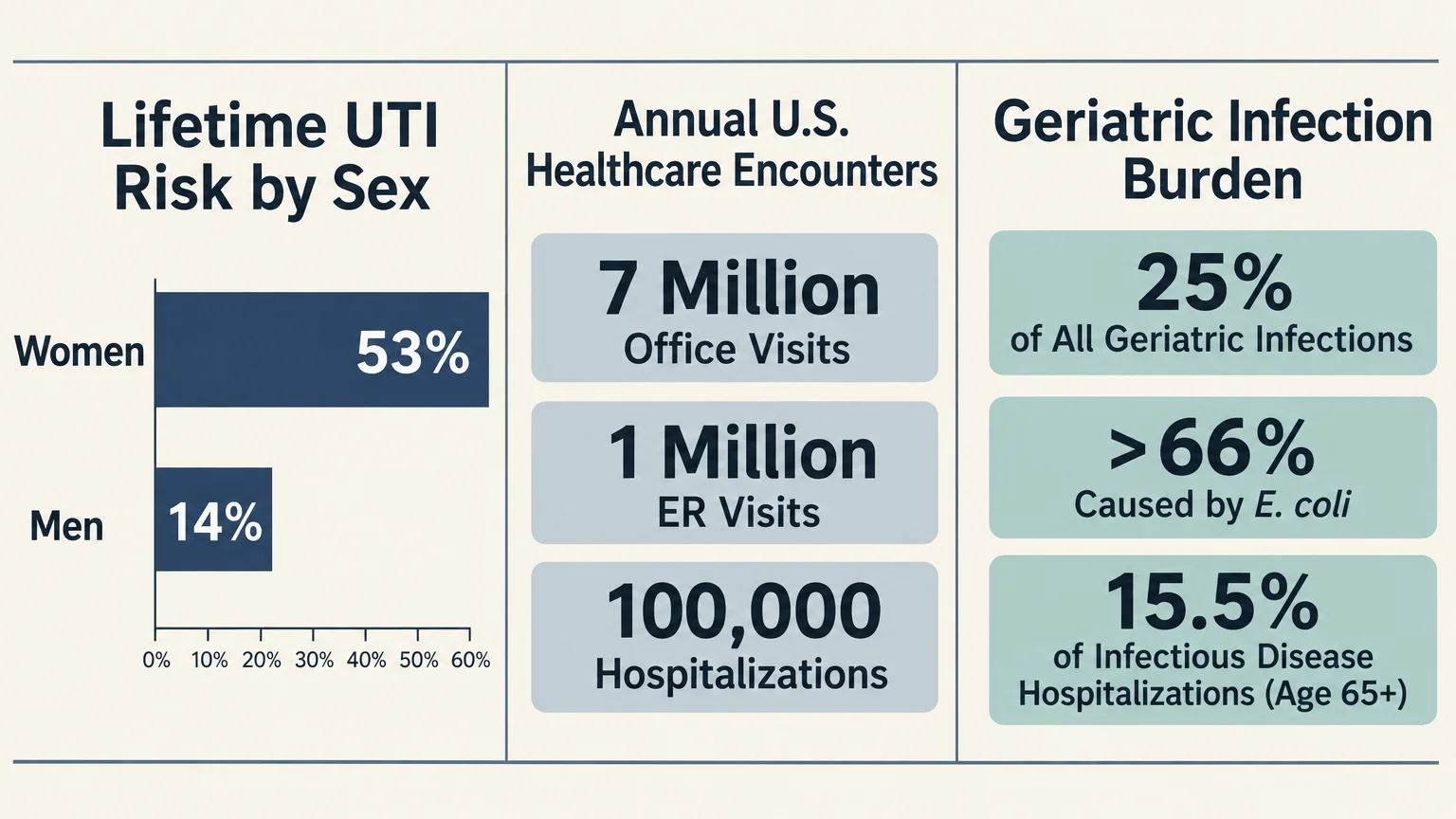
Urinary tract infections are a major health challenge in later life, accounting for 25% of all infections in geriatric patients. In the United States, they drive roughly 7 million office visits, 1 million emergency room visits, and 100,000 hospitalizations yearly.
Risk rises with age for both sexes, with women facing a 53% lifetime risk and men a 14% lifetime risk. Bacteria called Escherichia coli cause more than two-thirds of cases among older adults.
Among U.S. patients over age 65, UTIs account for 15.5% of hospitalizations and 6.2% of deaths tied to infectious disease. Federal mortality records also show rising UTI-related death rates among older adults between 2019 and 2023.
Separating Delirium From Dementia and Other Triggers
In 2026, an estimated 7.4 million Americans aged 65 and older live with Alzheimer’s dementia. Because baseline memory loss is common, clinicians must look carefully at how quickly symptoms changed.
The Mayo Clinic guide to delirium symptoms and causes advises against formally testing for or diagnosing dementia during an episode of delirium. Acute confusion skews cognitive test scores and masks a person’s true baseline.
Systematic reviews identify infection as the trigger in nearly half of delirium cases, and UTIs appear more often in patients with delirium than those without it. Still, researchers emphasize that sudden confusion has many competing causes.
According to the Centers for Disease Control and Prevention overview of urinary tract infections, dehydration, constipation, pain, poor sleep, and medication interactions often trigger confusion. Cloudy or foul-smelling urine alone also does not confirm an infection.
Why Urine Tests Alone Can Mislead
Many healthy seniors carry bacteria in their urine without an active infection, a harmless condition called asymptomatic bacteriuria. It occurs in up to 43% of women over age 90 at home and up to half of long-term care residents.
In older adults with long-term urinary catheters, bacteria appear in nearly 100% of urine samples. Treating those harmless bacteria with antibiotics offers no benefit and can cause real harm.
Under the Infectious Diseases Society of America clinical guidelines, doctors should avoid antibiotics when a confused older adult has bacteria in the urine without urinary symptoms or systemic illness. Instead, clinicians investigate other triggers and observe closely.
Over-testing remains widespread in urgent settings. A 2021 emergency department study of confused older adults found that 58.2% of patients without urinary symptoms or fever still received urine tests, and 18.1% received unnecessary antibiotics.
When Confusion Signals a Medical Emergency
While unnecessary antibiotics carry risks, a true untreated infection can escalate quickly into sepsis, a life-threatening response to infection. Federal surveillance shows 25% of adults hospitalized for sepsis had a UTI, and urosepsis accounts for up to 31% of sepsis cases.
Seek same-day medical evaluation for sudden unexplained confusion, and call emergency services immediately for sepsis warning signs. Red flags include difficulty waking, slurred speech, rapid breathing, mottled skin, or no urination for a full day.
Watch temperature thresholds carefully, too. Clinical guidelines define fever at 38.0°C (100.4°F) or higher, or at least 37.8°C (100.0°F) in long-term care settings, while shaking chills or lower-rib pain require immediate emergency care.

Treatment Options and Antibiotic Safety
When a clinician confirms a symptomatic UTI—such as burning, urgency, lower abdominal pressure, fever, or flank pain—targeted antibiotics remain the standard treatment. Confirming the exact bacteria with a urine culture helps your doctor choose the safest drug.
Updated 2025 guidelines from the Infectious Diseases Society of America changed how doctors classify complicated UTIs. Instead of relying on age alone, clinicians now evaluate systemic symptoms, urinary catheters, or urinary blockages.
For patients who improve on treatment, those guidelines now recommend shorter antibiotic courses—typically 5 to 7 days rather than older 10-to-14-day regimens. Clinicians also avoid drugs like nitrofurantoin or oral fosfomycin when infection reaches the kidneys or bloodstream.
Shorter, targeted courses lower the risk of antibiotic resistance, severe drug interactions, and Clostridioides difficile, a dangerous intestinal infection. The American Geriatrics Society Beers Criteria helps clinicians flag medications that heighten confusion or harm in older adults.
Supportive home steps work alongside prescribed medicine once a doctor evaluates your loved one. Encourage steady fluid intake if medically safe, manage constipation promptly, and track mental clarity closely within 48 hours of starting antibiotics.
If confusion worsens or symptoms fail to improve after two days of treatment, contact the prescribing clinic right away. Never start leftover antibiotics at home, as the wrong drug can mask symptoms while a kidney infection worsens.

Living Well and Coordinating Senior Care
Because UTIs account for 20% of infections acquired in long-term care facilities, proactive communication between family caregivers and clinical staff makes a major difference. Keep a written note of your loved one’s normal baseline memory, mobility, and resting temperature.
Share that baseline log during clinic visits so providers spot subtle shifts quickly. Ask your pharmacist or primary care doctor to run an annual medication review to remove drugs that cloud thinking or impair bladder emptying.
Explore the Alzheimer’s Association caregiving resources for checklists on tracking sudden behavior shifts. You can also read the MedlinePlus urinary tract infection guide for plain-language details on bladder and kidney tests.
Frequently Asked Questions
How can I tell UTI confusion apart from worsening dementia?
Look at the timeline first. Dementia changes abilities gradually over months or years, while UTI-related delirium erupts abruptly over hours or one to two days and fluctuates throughout the day.
What should happen within 48 hours of starting UTI treatment?
Fever, shaking, and physical discomfort usually begin easing within two days, though mental clarity can take longer to fully recover. Call your doctor promptly if symptoms stall, worsen, or new red flags appear.
Does health insurance cover urgent UTI testing and follow-up care?
Medicare and most private health plans cover medically necessary urgent visits and urine cultures, though copays vary by plan. Call the member number on your insurance card to confirm in-network clinics and lab coverage.
What does recent research say about delirium and long-term brain health?
A November 2026 Mayo Clinic analysis in JAMA Neurology linked post-hospital delirium to triple the hazard of mild cognitive impairment and over five times the hazard of dementia. Preventing triggers early helps protect long-term brain health.

Moving Forward With Your Care Team
Sudden confusion in an older adult is always worth a calm, thorough medical checkup. Write down when the behavior began, list every current medication, and bring those notes to your next primary care or urgent visit.
Partnering closely with your doctor, pharmacist, and local caregiver support networks helps you avoid both missed infections and unnecessary antibiotics. You know your loved one’s normal habits best, and speaking up early protects their safety and dignity.