

Catching potential vascular and neurological issues early can save your mobility and prevent life-threatening complications. Your legs act as a crucial barometer for your overall health, offering clear warning signs when something goes wrong with your cardiovascular or nervous systems. Many people brush off persistent aches, unusual swelling, or skin changes as normal signs of aging or fatigue. Ignoring these physical cues allows silent conditions like deep vein thrombosis or peripheral artery disease to progress unchecked. By learning to decode the specific signals your lower extremities send, you can advocate for yourself in the clinic and secure treatments that keep you moving comfortably.
The Science of Leg Health and Circulation
The intricate network of veins, arteries, and nerves in your legs requires robust support to function optimally against gravity. Research from the Centers for Disease Control and Prevention indicates that millions of Americans face complications from preventable circulatory diseases every year. When plaque builds up in your arteries, it restricts the oxygen-rich blood reaching your lower extremities. This process leads to peripheral artery disease; a condition that significantly increases your risk for heart attack and stroke.
Concurrently, venous insufficiency occurs when the one-way valves in your leg veins fail to pump blood efficiently back to your heart, causing painful pooling and pressure. Clinical data shows that early intervention dramatically improves mobility outcomes, meaning you must pay close attention to the nuanced symptoms your legs display. Discussing these specific physical changes with a healthcare provider allows you to map out an effective, evidence-based treatment plan before permanent tissue damage occurs.
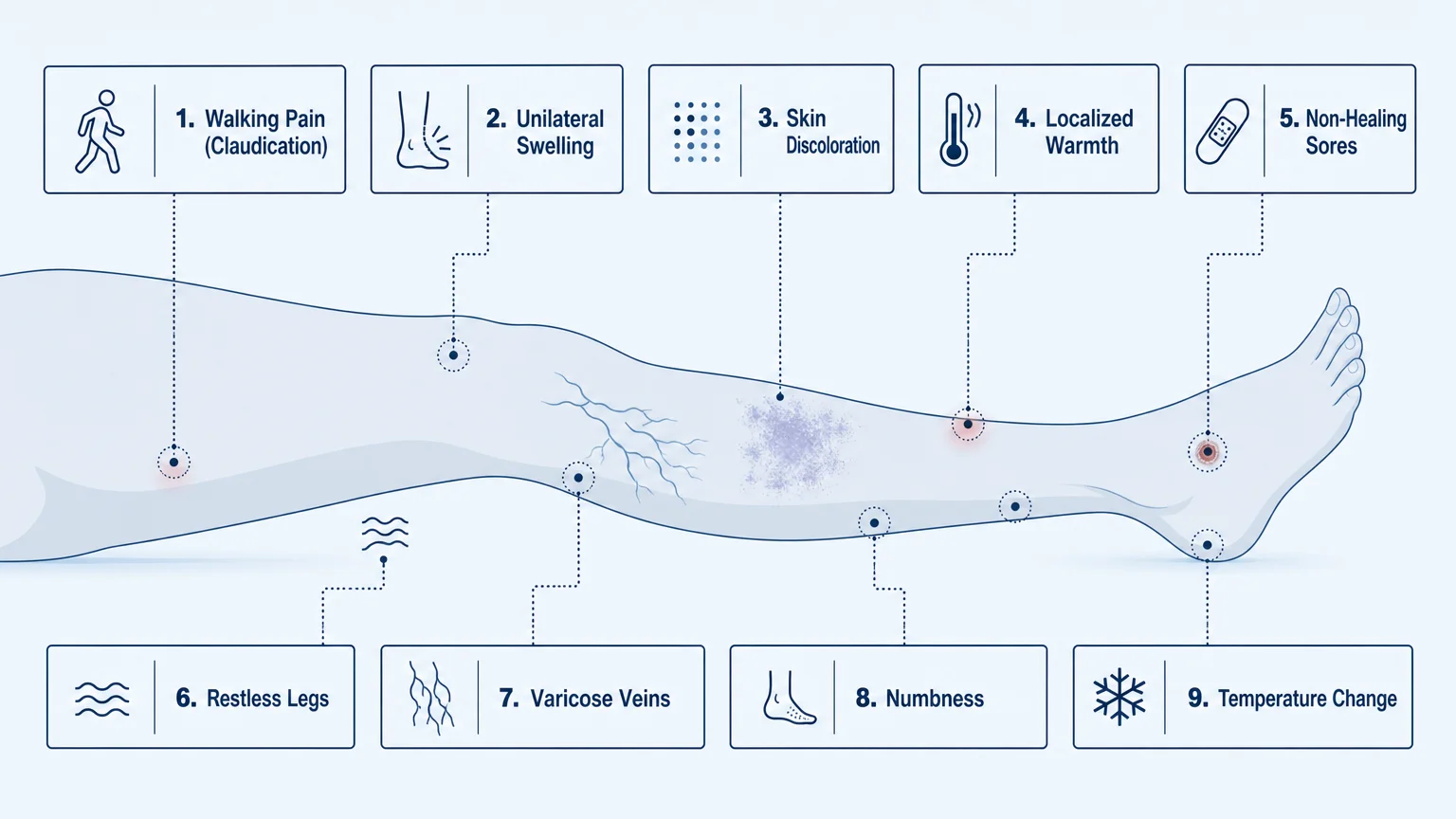
9 Symptoms You Should Never Ignore
1. Pain That Predictably Occurs During Walking
Experiencing a cramping, aching, or heavy sensation in your calf or thigh every time you walk a certain distance points directly to claudication. This classic symptom of peripheral artery disease occurs because your leg muscles demand more oxygen during physical activity, but narrowed arteries cannot deliver an adequate blood supply. The pain typically subsides after a few minutes of complete rest. Documenting exactly how far you can walk before the discomfort begins provides your doctor with excellent baseline data to evaluate your arterial health and map out your recovery.
2. Persistent and Unilateral Swelling
While mild puffiness after a long flight might not warrant immediate panic, persistent swelling in just one leg requires professional evaluation. This fluid buildup, known as edema, often signals that a blockage or damaged valve prevents blood from flowing efficiently back up to your chest. When swelling appears suddenly and aggressively in a single lower extremity, it serves as a primary indicator of a deep vein thrombosis. The National Library of Medicine warns that these deep clots require emergency care to prevent them from breaking loose and traveling to your lungs.
3. Sudden Skin Discoloration
A noticeable change in the color of your leg skin provides crucial insight into your vascular health. Legs that turn uncharacteristically pale or blue when elevated often suffer from severe arterial blockages, indicating that oxygenated blood struggles to reach your tissues. Conversely, an intense, localized red or purplish hue can indicate an acute infection called cellulitis or severe vein inflammation. Pay close attention to these chromatic shifts; they offer visible evidence of internal circulation problems that require prompt antibiotic therapy or vascular intervention.
4. Localized Warmth and Tenderness
Healthy legs maintain a relatively consistent temperature that matches the rest of your body. Discovering a specific area on your calf or thigh that feels unusually warm to the touch demands your immediate attention. This radiating heat frequently accompanies the redness and swelling associated with superficial thrombophlebitis or deep venous blood clots. The localized inflammatory response happens as your immune system reacts to restricted blood flow and vascular injury. Treating this warmth as an urgent medical priority protects you from the cascading dangers of unchecked vascular blockages.
5. Chronic Numbness and Tingling
A persistent pins-and-needles sensation or a complete loss of feeling in your feet and lower legs points toward nerve damage, clinically known as peripheral neuropathy. While frequently associated with uncontrolled blood sugar, this troubling numbness can also stem from chronic circulation problems that literally starve your nerve endings of essential nutrients. Losing sensation drastically increases your risk of falling and makes you completely unaware of small cuts or blisters. Addressing these neurological senior health signs early prevents permanent nerve death and preserves your daily independence.
6. Wounds That Refuse to Heal
Any scrape, blister, or ulcer on your foot or lower leg that remains open for more than two weeks constitutes a serious medical red flag. The healing process requires a massive influx of white blood cells, oxygen, and structural proteins—all of which arrive via your bloodstream. When poor circulation chokes off this supply chain, minor injuries deteriorate into dangerous, non-healing ulcers. Showing these stubborn lesions to a specialist guarantees you receive advanced wound care and necessary arterial assessments before severe infections develop.
7. Bulging, Painful Veins
Prominent, twisted, and bulging veins along your calves or thighs represent far more than a cosmetic annoyance. These enlarged vessels indicate advanced venous insufficiency, a condition where the delicate valves inside your veins have failed, allowing blood to pool backward under high pressure. The Society for Vascular Surgery notes that untreated varicose veins lead directly to chronic aches, restless legs, and severe skin breakdown. Exploring modern vein health treatments can eliminate this intense aching and restore proper upward blood flow.
8. Severe Nighttime Cramping
Waking up in agony because your calf or foot muscles have seized into a hard knot drastically impacts your overall quality of life. While occasional nighttime cramps might stem from simple dehydration or a tough workout, regular and severe spasms often point to significant mineral imbalances or arterial disease. When plaque severely narrows your arteries, your resting blood flow drops so low that your muscles spasm from acute oxygen deprivation. Discussing these nocturnal attacks with your doctor helps differentiate between benign muscle fatigue and critical limb ischemia.
9. Unexplained Hair Loss on the Lower Legs
Many people mistakenly attribute a sudden lack of hair on their shins, ankles, or toes to the physical friction from wearing tight socks and pants. In reality, your hair follicles require a continuous, robust blood supply to survive and produce new growth. When peripheral artery disease slowly chokes off the microscopic vessels feeding your skin, the hair follicles die off completely. This subtle but profound physical change serves as an excellent, visible warning sign of deteriorating arterial health that you can easily track and report.

Actionable Strategies for Better Leg Health
Nourish Your Vascular System
Your daily nutritional choices play a monumental role in maintaining strong, elastic blood vessels. Focus on integrating foods rich in potassium, magnesium, and flavonoids—such as leafy greens, berries, and citrus fruits—which actively reduce systemic inflammation and support healthy blood pressure. The American Heart Association strongly advises limiting excessive sodium intake, as it directly contributes to fluid retention and exacerbates swelling in your lower extremities. By prioritizing whole foods over heavily processed meals, you provide your body with the exact building blocks necessary to repair damaged vascular tissue. Remember that hydration remains equally essential; drinking adequate water thins your blood slightly, making it vastly easier for your heart to pump it through your legs and back up against gravity.
Mobilize for Improved Blood Flow
Targeted movement serves as the most effective medicine for sluggish circulation and chronic leg discomfort. Your calf muscles act as a secondary heart, pumping venous blood upward with every step you take. Engaging in regular, low-impact cardiovascular exercises like brisk walking, swimming, or cycling forces these muscles to contract and push blood efficiently. If your mobility concerns or physical environment limit traditional exercise, you can practice seated ankle pumps and heel raises throughout the day to achieve similar circulatory benefits. The American Physical Therapy Association encourages developing a tailored movement routine with a licensed professional, ensuring you exercise safely without aggravating existing joint issues or vascular conditions.
Cultivate a Proactive Medical Mindset
Navigating the healthcare system requires fierce self-advocacy and a proactive approach to your personal wellbeing. Understandably, social determinants such as living in a food desert or lacking reliable transportation to specialty clinics complicate this process for many individuals. Start by utilizing local community health resources and requesting telehealth appointments when physical distance creates a barrier to care. Track your leg pain symptoms and mobility concerns in a daily journal, noting the exact severity, time of day, and any specific triggers. Presenting this concrete data to your primary care physician removes the guesswork from your diagnosis and demonstrates your deep commitment to finding a sustainable, long-term solution.

Voices from the Field
Healthcare professionals consistently emphasize the sheer importance of listening to your body’s early warning signs. Vascular specialists frequently note that patients wait far too long to address mobility changes, often dismissing serious cramping as a normal consequence of aging. This hesitation costs patients valuable time for non-invasive, highly effective interventions. According to widespread clinical experience, patients who report vascular symptoms within the first few months of onset achieve vastly superior outcomes compared to those who delay care out of fear or denial.
Similarly, physical therapists highlight the profound, undeniable connection between daily physical habits and lower extremity health. They advise older adult patients to view their leg comfort as a direct reflection of their total systemic wellness. Therapists regularly remind their clients that physical pain is simply the nervous system asking for immediate attention and behavioral change. By partnering openly with knowledgeable medical providers, you can transform your anxiety about leg health into targeted, actionable recovery strategies.
Frequently Asked Questions About Leg Symptoms
When does leg swelling become a medical emergency?
Swelling requires immediate medical attention if it occurs suddenly in only one leg, especially when accompanied by sharp pain, redness, radiating warmth, or unexpected shortness of breath. These specific signs frequently indicate deep vein thrombosis, a dangerous blood clot that can break loose. Do not wait for a scheduled appointment if you experience this rapid onset.
Can better hydration really improve my vein health?
Absolutely. Chronic dehydration causes your blood volume to drop and the blood itself to thicken, placing extra strain on your circulatory system as it attempts to move fluid through your lower extremities. Maintaining optimal hydration physically supports the delicate valves within your veins, helping them prevent blood from pooling in your calves and ankles.
How do I know if my discomfort is muscular or vascular?
Vascular pain often follows a highly predictable pattern, such as intense cramping that always starts after walking two blocks and completely disappears with rest. Muscular pain generally feels tender to the touch, worsens with specific physical stretches, and lingers even when you sit perfectly still. However, only a comprehensive medical evaluation can definitively diagnose the root cause.
Are compression socks safe for everyone to use?
While compression therapy brilliantly manages benign fluid swelling and mild venous insufficiency, it can severely damage legs suffering from peripheral artery disease by further restricting the already compromised arterial blood flow. You must obtain clear clinical clearance from your doctor before purchasing or wearing any medical-grade compression garments.
Your Next Steps Toward Healthier Legs
Taking definitive control of your leg health begins with careful observation and meticulous documentation. For the next seven days, commit to writing down any instances of heaviness, cramping, or swelling you experience, noting the specific time of day and your recent activity level. This small, highly practical step transforms vague complaints into a clear, actionable medical history you can share confidently with your doctor. Your legs carry you through every single chapter of your life; offering them the attention and dedicated care they deserve ensures you remain active, independent, and pain-free. What small lifestyle adjustment can you make today to actively support the veins and arteries working tirelessly on your behalf?








Leave a Reply