

Emerging research reveals that common synthetic compounds lurking in our daily environment may significantly impact your long-term liver health. Scientists have linked high blood levels of two specific per- and polyfluoroalkyl substances, known as PFAS, to more than double the odds of hepatocellular carcinoma.
While news of chemical exposure sounds alarming, understanding how these substances interact with your biology gives you clear pathways to take protective action. You can implement practical steps today to reduce your environmental toxic burden and support your liver naturally.
The Science Behind PFAS and Liver Cancer Risk
On November 6, 2026, researchers at the Keck School of Medicine of USC published a landmark nested case-control study in Environmental Health Perspectives. Their investigation analyzed blood samples drawn years before diagnosis from participants in the Multiethnic Cohort.
The researchers evaluated twelve distinct per- and polyfluoroalkyl substances in 223 patients who developed hepatocellular carcinoma and 223 matched controls. Two specific compounds demonstrated a stark, statistically significant relationship with liver cancer.
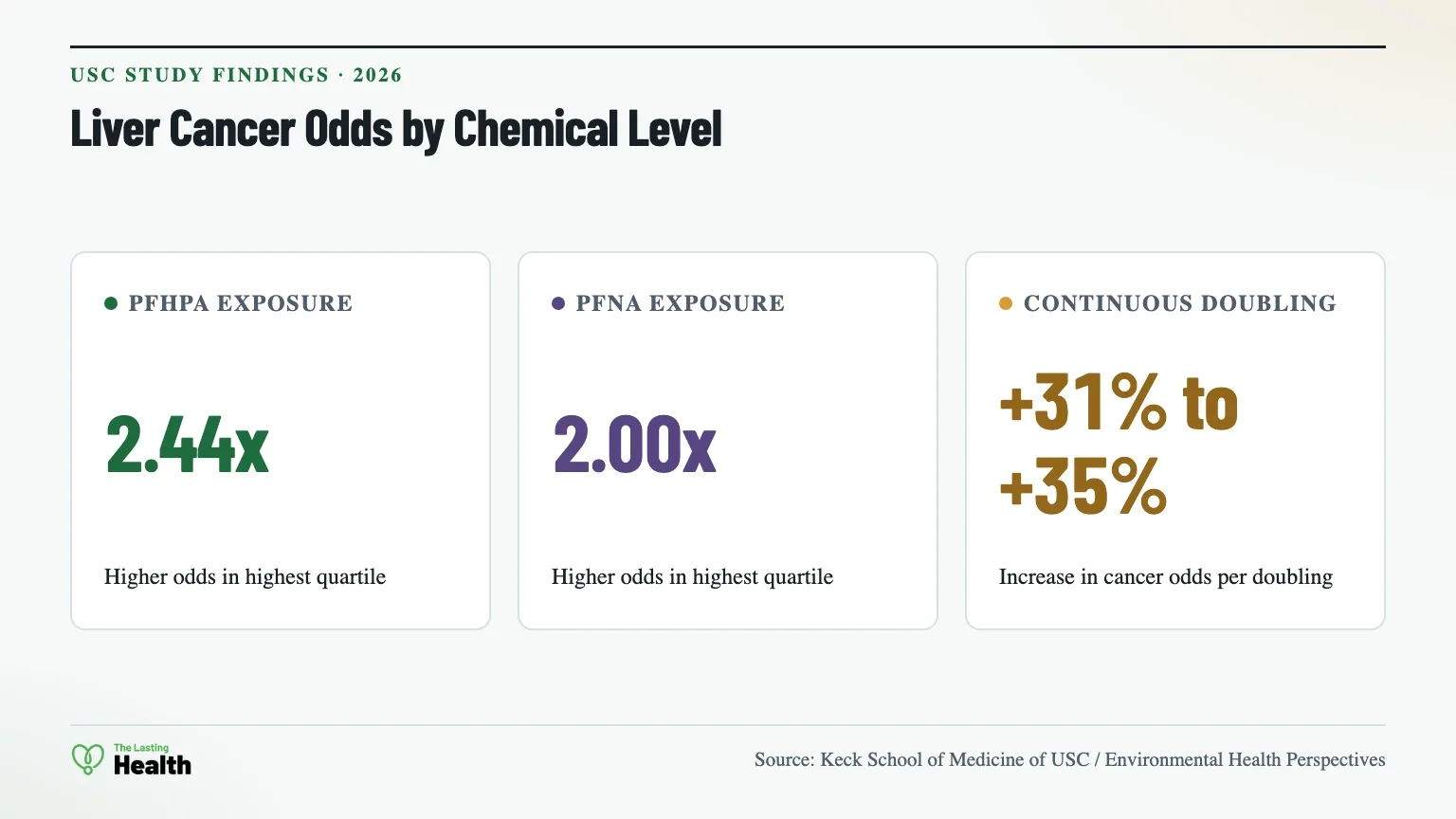
Individuals in the highest exposure quartile for perfluoroheptanoic acid, or PFHpA, faced 2.44 times higher odds of developing hepatocellular carcinoma compared to those in the lowest quartile. For perfluorononanoic acid, known as PFNA, participants in the highest quartile experienced a 2.00-fold increase in odds.
When analyzing blood concentrations on a continuous scale, each doubling of PFHpA and PFNA corresponded to a 35% and 31% rise in cancer odds, respectively. Because this was an observational study, it establishes a meaningful correlation rather than definitive causation.
Crucially, the study highlighted that these risks did not stem from classic legacy chemicals like PFOA or PFOS; rather, they involved understudied and newer replacement compounds. Manufacturers often introduced short-chain PFAS like PFHpA as supposedly safer commercial alternatives.
Independent research from the National Cancer Institute published in September 2026 across twelve cohorts corroborated these findings. That analysis confirmed that high PFHpA levels multiplied hepatocellular carcinoma risk more than fourfold.
How Genetic Susceptibility Amplifies Environmental Risk
Your genetic makeup plays an essential role in determining how your liver processes environmental toxins. USC investigators specifically evaluated polygenic risk scores for metabolic dysfunction-associated steatotic liver disease, formerly referred to as nonalcoholic fatty liver disease.
For individuals with high genetic susceptibility to fatty liver disease, each doubling of PFHpA exposure increased cancer odds by 47%. Conversely, people with low genetic susceptibility showed no statistically significant increase in cancer odds from identical chemical exposures.
This gene-environment interaction provides an empowering insight: shielding your metabolic health can serve as a vital buffer against chemical stressors. Metabolic dysfunction represents the fastest-growing driver of liver malignancies nationwide.
According to the American Cancer Society, over 42,000 Americans receive a liver cancer diagnosis annually. Because five-year survival rates remain near 22%, proactive prevention must address both metabolic risks and toxic exposures.

Pillar 1: Reduce Environmental Exposure and Filter Your Water
PFAS chemicals resist heat, water, and oil; consequently, they persist indefinitely in the environment and accumulate in human tissue. The Centers for Disease Control and Prevention reports that nearly all Americans carry measurable concentrations in their blood.
Drinking water represents a primary exposure route for millions of households across the nation. A comprehensive study by the U.S. Geological Survey estimated that at least 45% of U.S. tap water contains one or more PFAS compounds.
You can dramatically cut your daily ingestion by installing water filtration certified under NSF/ANSI 53 or NSF/ANSI 58. Reverse osmosis units and high-grade activated carbon systems offer reliable protection against chemical contaminants.
Visit the U.S. Environmental Protection Agency database to confirm which specific compounds your home filter removes. Verifying independent testing ensures that your filtration device targets newer short-chain molecules alongside legacy chemicals.
Beyond tap water, minimize your contact with grease-resistant fast-food packaging and stain-resistant textile treatments. Choosing fresh home-cooked meals stored in stainless steel or glass containers creates an effective barrier against dietary contamination.
Pillar 2: Strengthen Metabolic and Liver Function Through Nutrition
Because metabolic dysfunction magnifies the adverse effects of chemical exposures, prioritizing your liver vitality provides substantial defense. A nutrient-dense diet rich in bioactive plant compounds supports your body’s natural phase I and phase II detoxification pathways.
Incorporate cruciferous vegetables such as broccoli, Brussels sprouts, and arugula into your weekly routine. These vegetables supply glucosinolates; these sulfur-rich compounds stimulate glutathione production and accelerate the processing of lipophilic compounds.
Soluble fiber from oats, beans, and chia seeds binds bile acids in your digestive tract and promotes healthy elimination. This binding mechanism prevents recirculating toxins from placing unnecessary metabolic burdens on hepatic cells.
Limit ultra-processed foods, high-fructose corn syrup, and excess alcohol consumption to prevent cellular steatosis. By stabilizing your blood sugar and insulin sensitivity, you mitigate the underlying metabolic vulnerabilities that interact with environmental toxicants.

Pillar 3: Clinical Screening and Preventive Medical Care
Routine clinical care allows you and your physician to identify liver strain long before noticeable symptoms develop. Standard liver function tests measure circulating enzymes like alanine aminotransferase and aspartate aminotransferase to evaluate ongoing cellular health.
Current clinical guidance from the ATSDR clinical guidance advises doctors to follow standard diagnostic care rather than ordering commercial PFAS blood tests. Routine blood chemical panels remain non-actionable because therapeutic protocols rely on optimizing organ function rather than clearing synthetic compounds directly.
Discuss your individual risk profile with your primary care provider if you possess a personal or family history of fatty liver. They may recommend non-invasive hepatic ultrasound or elastography to quantify liver stiffness and fat accumulation.
Resources from the American Liver Foundation can help you prepare questions regarding metabolic health evaluations and lifestyle interventions. Personalized medical collaboration ensures your preventive strategies align with your unique physiological needs.
Clinical Perspectives on Chemical Exposures
Integrative physicians emphasize that exposure science should inspire positive lifestyle changes rather than panic. Hepatologists often note that while synthetic chemicals are ubiquitous, your everyday habits dictate how resilient your hepatic tissue remains against outside insults.
Clinicians frequently remind patients that genetic susceptibility is not an unchangeable fate; it simply highlights where you should direct proactive care. By addressing metabolic health, you substantially lower your overall susceptibility to environmental harms.
Frequently Asked Questions
Should you request a commercial PFAS blood test from your doctor?
Medical societies and public health agencies do not currently recommend routine PFAS blood panels for the general public. These tests do not change clinical management, so focusing on standard liver enzyme screening and metabolic panels offers far greater practical value.
Which home water filters successfully remove PFHpA and PFNA?
Look for reverse osmosis or dual-stage activated carbon filters certified under NSF/ANSI standards 53 or 58. Always consult the manufacturer’s performance data sheet to confirm that the unit removes short-chain perfluoroalkyl acids alongside PFOA and PFOS.
Why are newer replacement chemicals showing higher cancer associations than legacy PFAS?
Legacy compounds like PFOA faced intense regulatory scrutiny, leading manufacturers to substitute structurally similar short-chain molecules. Recent evidence demonstrates that some newer replacements persist in tissues and interact with biological pathways just as aggressively as older chemicals.
Can reversing fatty liver reduce my environmental cancer risk?
Research clearly demonstrates that environmental cancer risks are most pronounced when combined with metabolic dysfunction. Resolving liver fat through balanced nutrition, physical activity, and weight management removes the biological vulnerabilities that chemical contaminants exploit.
Your Next Steps for Long-Term Liver Vitality
Protecting your hepatic health does not require an overwhelming lifestyle overhaul; small, deliberate modifications yield profound cumulative benefits. Start today by evaluating your drinking water source and introducing a certified filtration pitcher or under-sink filter.
Take a moment to reflect on your daily routines: which single adjustment in your kitchen or hydration habits can you comfortably implement this week? Sharing your goals with your healthcare provider will reinforce your commitment to sustainable, lifelong vitality.