

A sharp jolt shoots down your arm when you turn your head, or your fingers go numb as you sleep. These sudden feelings often point to a pinched nerve.
Learning the main pinched nerve symptoms helps you get care before nerve pain turns into lasting weakness. This guide covers the seven key signs, common causes, and safe ways to heal.
Most people heal with simple home steps, while rare warning signs need emergency care. This article shares educational facts only and does not replace advice from your doctor.
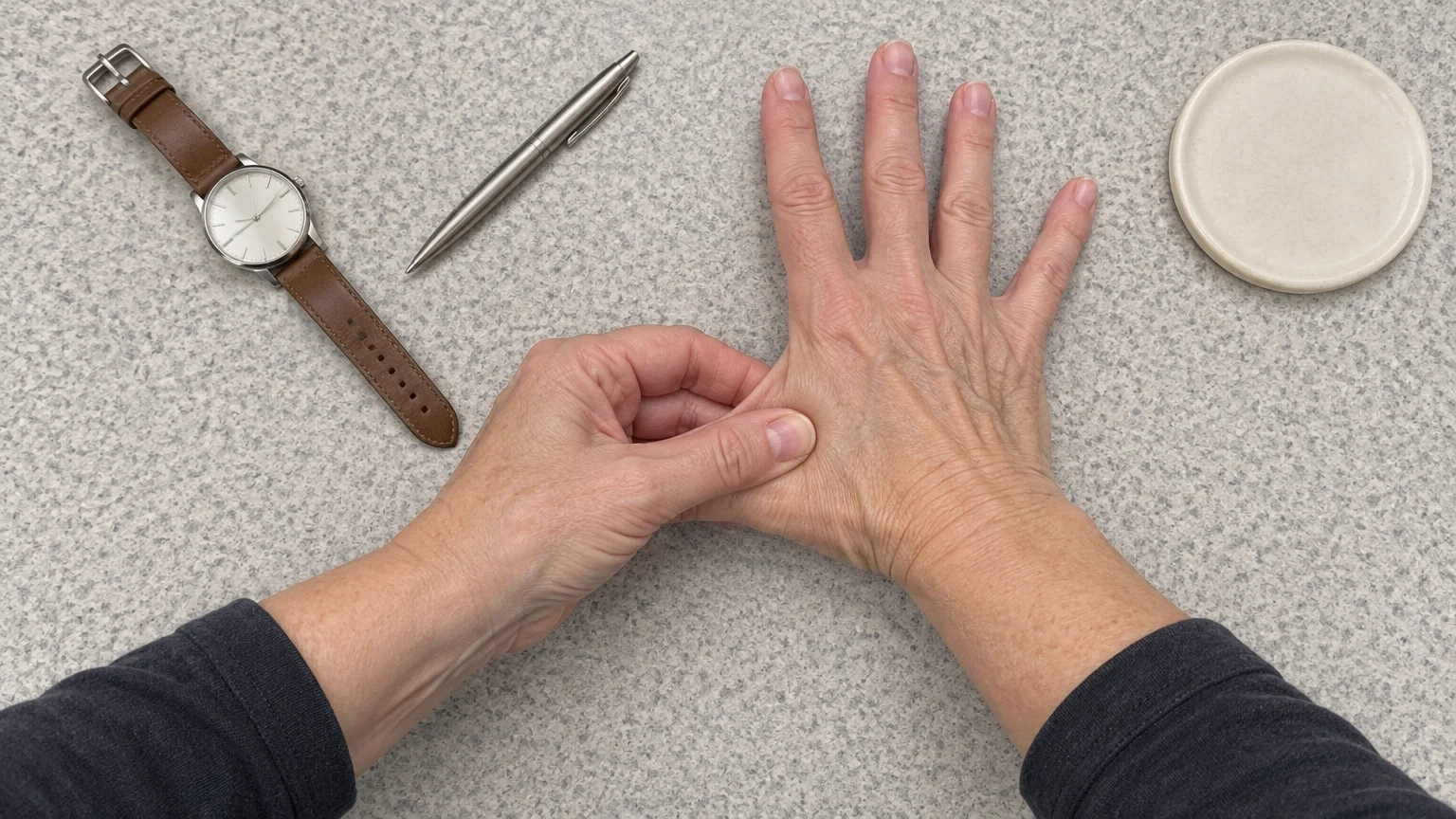
The 7 Signs of a Pinched Nerve
A pinched nerve happens when bone, cartilage, muscle, or ligaments press on a nerve. The Cleveland Clinic notes this pressure blocks nerve signals and causes seven clear symptoms.
1. Sharp or Aching Pain at the Pressure Point
You may feel a deep ache or sharp pain where the nerve gets squeezed. This neck and back pain often worsens when you twist, cough, or sneeze.
Moving your spine puts extra pressure on the irritated nerve root. Resting in a gentle, neutral position often eases the ache briefly.
2. Pain That Travels Down an Arm or Leg
Pressure on a spinal nerve root causes radiculopathy, which means a pinched nerve in your spine. The Mayo Clinic notes that trapped spinal nerves send pain down the full nerve path.
A neck problem can shoot pain down one shoulder and arm. Pressure in your lower back sends pain down one leg, which people often call sciatica.
3. Numbness or Reduced Feeling
Squeezed nerves cannot carry normal touch signals back to your brain. Because of this block, skin on your arm, hand, leg, or foot may feel dull or numb.
You might barely notice light touch, warm water, or cold objects there. Tracking which fingers or toes feel numb helps your doctor find the exact pinched nerve.
4. Tingling or Pins and Needles
Many people notice a prickly feeling, like a hand or foot fell asleep. Doctors call this numbness tingling feeling paresthesia, and it often comes and goes with your posture.
Per the National Institute of Neurological Disorders and Stroke, wrist nerve pressure wakes many people at night. You may feel tingling in your thumb, index, and middle fingers until you shake your hand.
5. Burning Sensations Along the Nerve
Nerve pain does not always feel like a sore muscle. Many people describe a hot, stinging, or burning feeling running down their leg, foot, or toes.
Irritated nerve fibers fire off distress signals on their own. That burning feeling can flare up even while you sit still or lie down to sleep.
6. Muscle Weakness or Sudden Clumsiness
Motor nerves carry signals from your brain that tell muscles when to move. When pressure blocks those signals, the affected muscles start to lose strength.
You might drop cups, struggle with shirt buttons, or trip because your toes drag while walking. Untreated wrist pressure can even shrink the muscle at the base of your thumb.
7. Weak or Missing Reflexes
During an exam, your doctor may tap your elbow, knee, or ankle with a small rubber hammer. Healthy nerves respond with a quick, automatic muscle twitch.
A pinched nerve slows or blocks that automatic reflex. You will not notice missing reflexes on your own, so a clinical exam is key to catching this sign.
What Causes a Pinched Nerve and Who Gets It
Nerves pass through narrow spaces between bones and soft tissues. A slipped disc, bone spur, swollen tendon, or tight muscle can crowd a nerve.
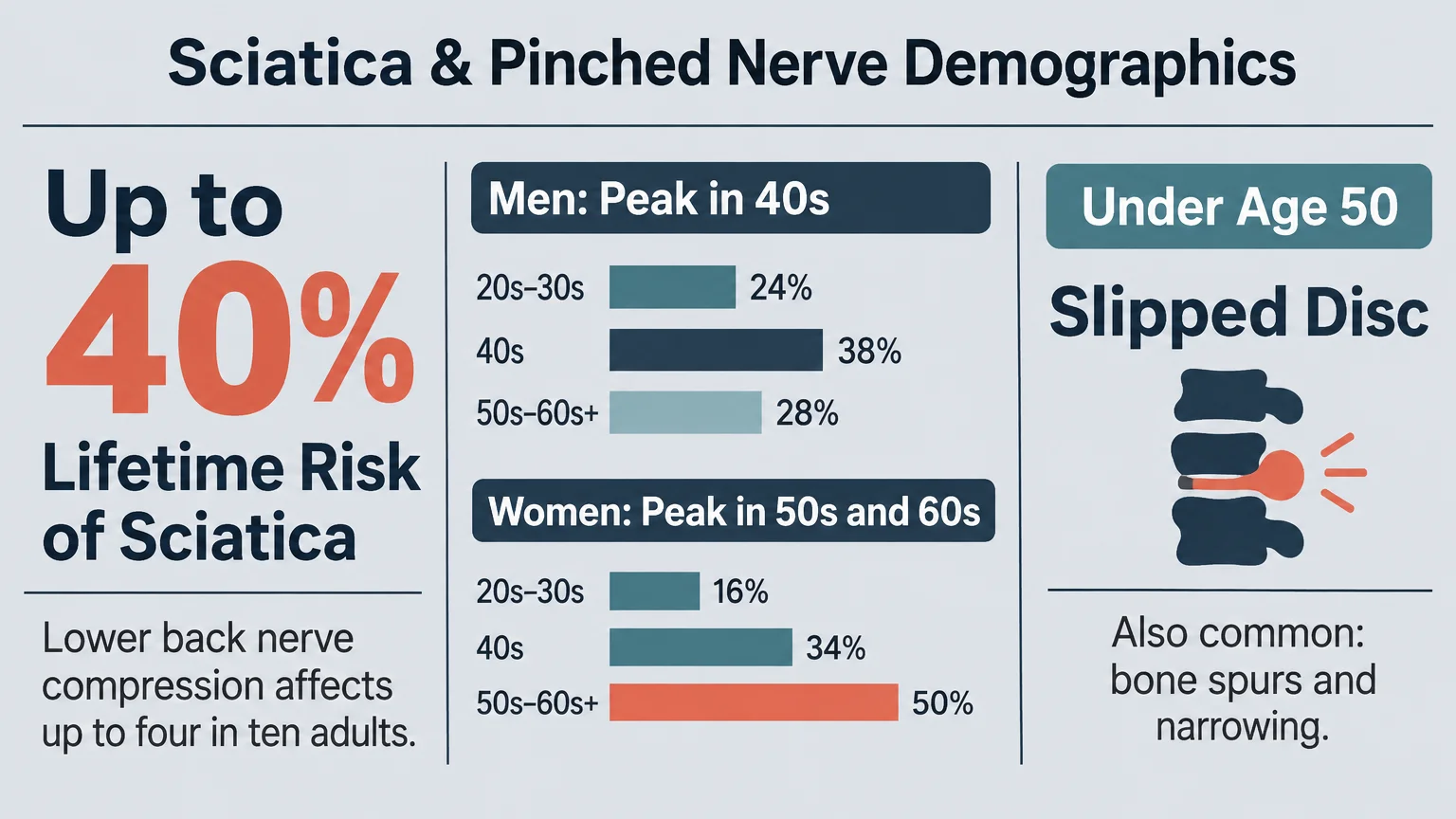
Up to 40 percent of people get sciatica during their lives. Lower back nerve pain hits men most often in their 40s and women in their 50s and 60s.
Under age 50, a slipped disc is the top cause of lower back nerve pain. After age 50, gradual narrowing of the spinal canal becomes more common.
Neck nerve compression strikes about 83 per 100,000 people each year and peaks around ages 50 to 54. Outside the spine, wrist nerve pressure makes up 90 percent of nerve cases.
This wrist condition, called carpal tunnel syndrome, affects women three times more often than men, and excess weight doubles the risk. Assembly-line workers face three times the risk of desk workers.
Sometimes a nerve gets pinched in both your neck and wrist at the same time. Doctors call this double crush syndrome, and fixing one spot alone may leave symptoms behind.
How Doctors Diagnose Nerve Compression
Your doctor checks your symptom map along with your muscle strength, touch sense, and reflexes. These hands-on checks often pinpoint the pinched nerve without scans.
If pain lasts past a few weeks, you may need an MRI scan to see soft discs and nerves. Remember that about 27 percent of pain-free adults show a slipped disc on an MRI.
Doctors always match scan pictures to your physical exam. A nerve test can also send mild electrical pulses to measure how well signals move along your arm or leg.
Emergency Warning Signs You Cannot Ignore
Most pinched nerves heal safely, yet some signs require urgent medical care. Call your doctor right away if numbness hits both arms or both legs, or if weakness grows quickly.
Go to the emergency room immediately for signs of cauda equina syndrome. This serious emergency happens when heavy pressure crushes the nerve bundle at the base of your spine.
The American Association of Neurological Surgeons warns about five red flags. Watch for trouble urinating, leaking urine or stool, groin or buttock numbness, fast leg weakness, and sudden loss of sexual feeling.
Surgeons advise operating within 24 to 48 hours of these emergency symptoms. Waiting longer sharply raises the chance of lasting leg paralysis or lifelong bladder trouble.

Pinched Nerve Treatment and Home Care
Most people recover from a pinched nerve within days or weeks using simple rest and self-care. Acute sciatica often fades in two weeks, and most people feel better within 6 weeks.
The neck outlook is also bright for most patients. Reviews show up to 90 percent of people with neck nerve compression heal well without surgery.
Safe Steps You Can Try at Home
Limit moves that spark pain during the first week, like heavy lifting or twisting. Still, avoid long bed rest because staying flat all day can worsen sciatica.
Apply an ice pack for 15 to 20 minutes at a time to calm swelling. Use a heating pad for the same time to loosen tight muscles.
Hold gentle stretches for 10 to 30 seconds and repeat two or three times. Stop stretching right away if you feel sharper pain or spreading numbness.
Over-the-counter pills like ibuprofen or naproxen can lower swelling around the nerve. Ask your doctor or pharmacist first to make sure they are safe for you.
Physical Therapy, Shots, and Surgery
If pinched nerve treatment at home falls short after a few weeks, physical therapy helps. A therapist teaches safe moves that relieve nerve pressure and build supporting muscles.
Wrist splints hold your joint flat while you sleep. For neck pain, the American Academy of Orthopaedic Surgeons advises wearing soft collars briefly so neck muscles stay strong.
When pain lasts past six weeks, doctors may try short steroid pills or targeted steroid shots. These options calm heavy swelling around spinal nerves while tissues heal.
Doctors consider surgery only after several weeks or months of nonsurgical care fail. A surgeon removes the piece of disc or bone spur pressing on the nerve.

Living Well and Working With Your Care Team
Daily habits protect your spine and wrists once pain fades. Keep your screen at eye level, keep wrists flat, and stand up each hour to stretch.
Carrying less extra weight reduces stress on spinal discs and wrist tunnels. Regular walking, swimming, and core strength moves help guard your nerves against future flare-ups.
Caregivers can help with heavy bags and watch for growing weakness. Tracking symptoms together helps your care team see what helps or hurts.
Your care team may include your family doctor, physical therapist, and spine specialist. Share your goals so your team builds a plan that fits you.
Frequently Asked Questions
When should I follow up with my doctor?
Call your doctor if symptoms last past a few weeks without easing. Seek care sooner if pain worsens, stops sleep, or follows a fall.
Will a pinched nerve cause permanent damage?
Most pinched nerves heal fully with no lasting harm. Still, ignoring severe numbness or weakness for months can injure nerves for good, so early care matters.
Does health insurance cover pinched nerve care?
Most health plans cover doctor visits, physical therapy, nerve tests, and needed surgery. Many plans ask you to try physical therapy before they approve an MRI or steroid shots.
Are there new treatments being studied for nerve pain?
Researchers are testing gentler surgical tools that reach spinal nerves through tiny cuts. Scientists are also studying targeted non-opioid drugs and ways to speed nerve healing.

Taking Your Next Step
Nerve pain disrupts work and sleep, yet steady relief is very common. Write down where pain or numbness travels and bring those notes to your doctor.
Lean on your healthcare team and patient groups when you need guidance. This article shares educational facts only and never replaces personal advice from your doctor.