
The Dangerous Shift to Respiratory Distress
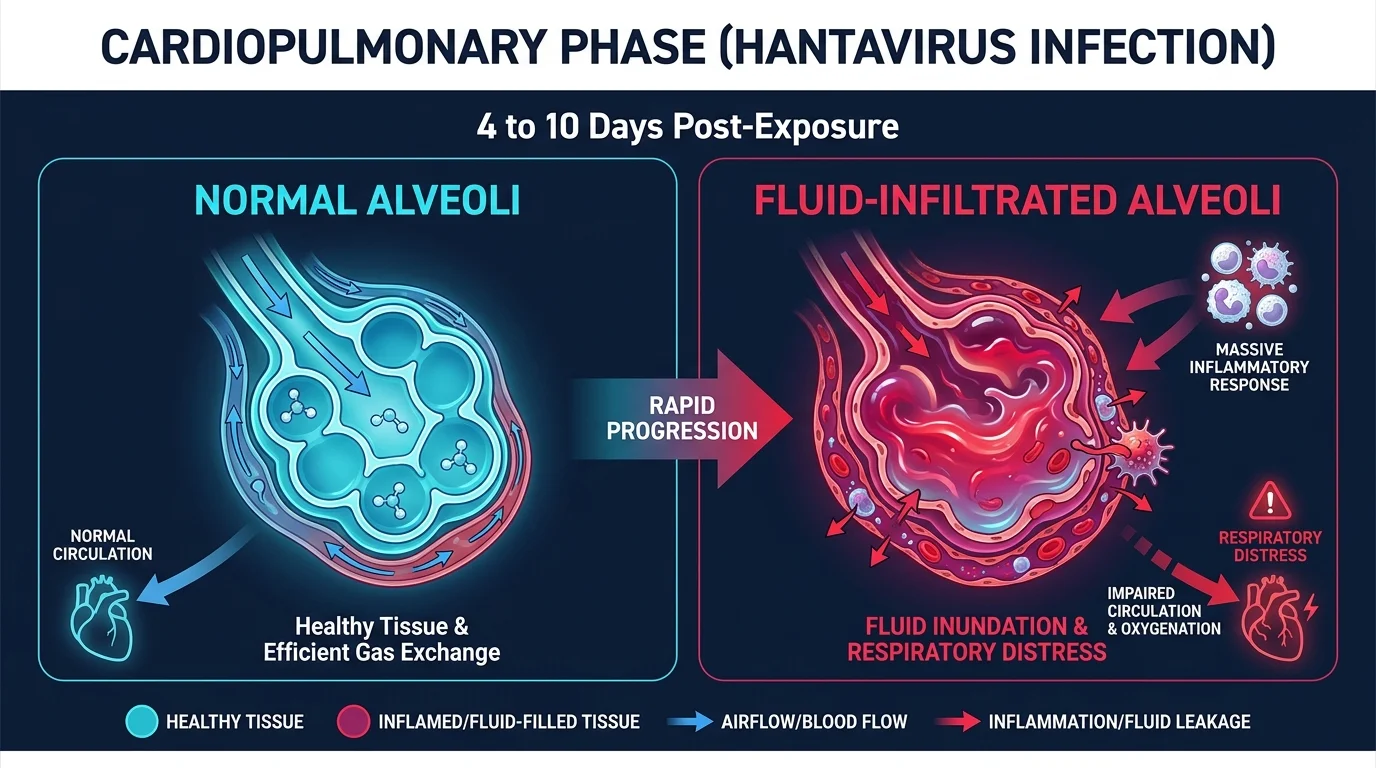
The true danger of a hantavirus infection reveals itself during the cardiopulmonary phase, which typically strikes four to ten days after the initial flu-like symptoms begin. This transition is abrupt and terrifying.
The virus triggers a massive inflammatory response within the endothelial cells that line your blood vessels, particularly within your lungs. This inflammation causes a condition known as capillary leak syndrome; your blood vessels become dangerously permeable, allowing blood plasma to flood into the air sacs of your lungs.
As pulmonary edema sets in, you will develop a persistent, dry cough and an escalating shortness of breath. Patients often describe the sensation as feeling like a tight, suffocating band has been wrapped around their chest, or as if they are drowning from the inside out. This rapid deterioration of lung function drastically reduces the oxygen levels in your bloodstream, leading to profound hypoxia.
At this stage, hantavirus pulmonary syndrome becomes a dire medical emergency. Without immediate, intensive medical intervention, the condition can quickly progress to acute respiratory failure and cardiogenic shock. Research from the National Institutes of Health demonstrates that early recognition of this specific respiratory deterioration is the single most critical factor in improving patient survival rates.







Leave a Reply