

Drizzling a spoonful of extra virgin olive oil over your spinach salad unlocks a wealth of vitamins your body would otherwise waste. You spend significant time and money selecting fresh vegetables, but without the right companion ingredients, you leave critical nutrients behind. Fat-soluble vitamins require dietary fat to cross the intestinal wall and enter your bloodstream. By pairing your greens with a healthy fat, you instantly maximize your meal’s nutritional return on investment. This simple culinary adjustment transforms a standard plate of vegetables into a highly bioavailable source of cellular fuel. Mastering nutrient absorption simply requires knowing exactly what to add to optimize the foods you already enjoy.
The Science of Bioavailability and Nutrient Absorption
Bioavailability refers to the exact proportion of a nutrient that successfully enters your systemic circulation to be used by your cells. Simply swallowing a nutrient-dense food does not guarantee your body will assimilate its contents. The human digestive tract acts as a selective barrier; until a vitamin or mineral successfully crosses the epithelial lining of your small intestine, it remains entirely outside your internal physiological environment. Raw carrots, leafy greens, and bright bell peppers provide an abundance of protective antioxidants and fat-soluble vitamins—specifically vitamins A, D, E, and K. However, human biology struggles to extract these specific fat-soluble compounds without a lipid vehicle to transport them.
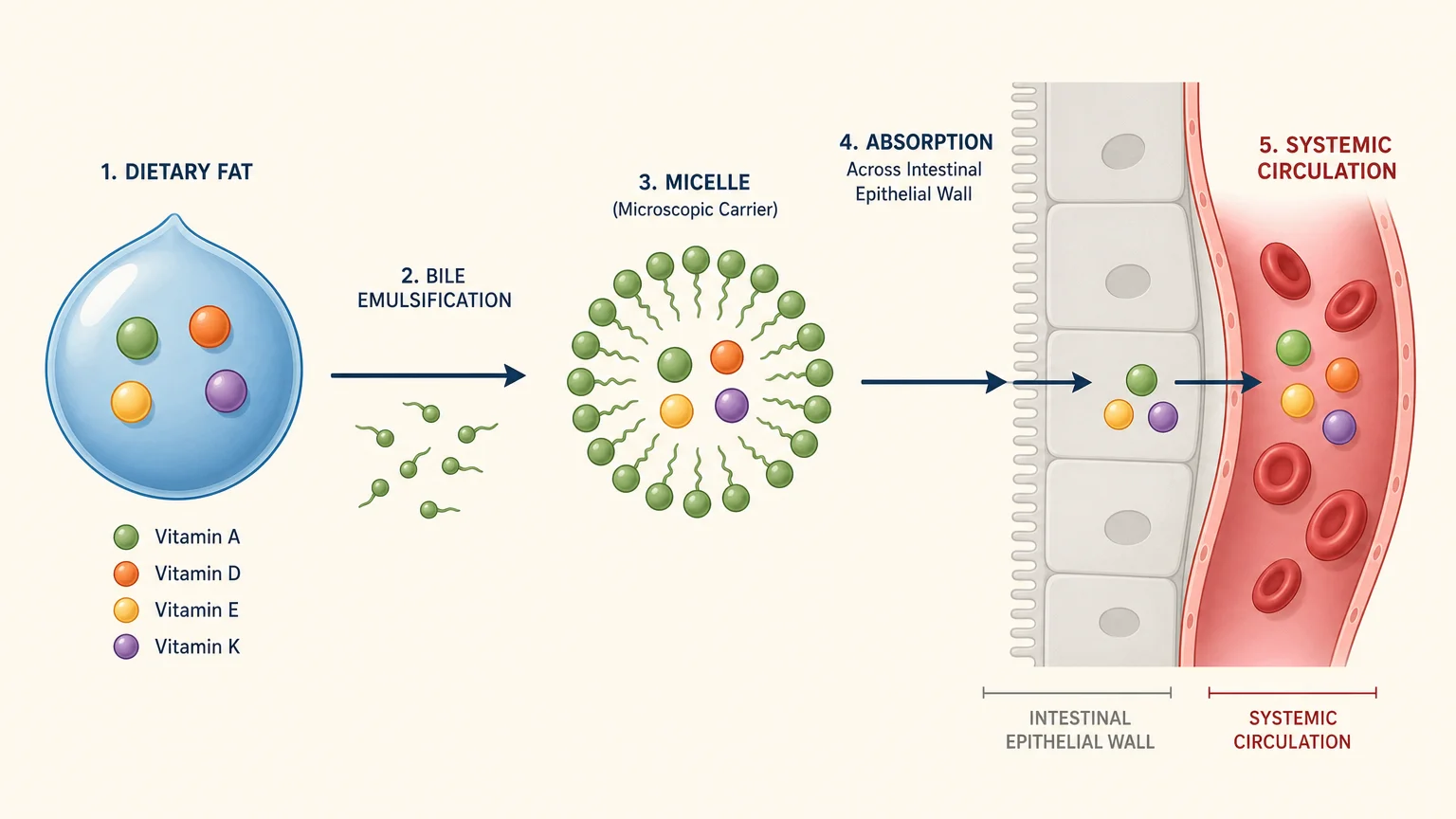
When you consume dietary fat alongside your vegetables, your digestive system initiates a precise sequence of events. Your gallbladder releases bile acids that function much like natural dish soap, emulsifying the dietary fat into microscopic droplets known as micelles. These tiny micelles encapsulate the fat-soluble vitamins, effectively ferrying them across the watery environment of your intestinal tract and directly into your absorptive cells. Clinical studies continuously demonstrate that consuming salads with fat-free dressings results in virtually zero absorption of powerful antioxidants like beta-carotene, whereas using a full-fat dressing allows the body to assimilate optimal levels of these crucial compounds. For detailed physiological breakdowns of how specific vitamins behave in the gut, an Office of Dietary Supplements report details the exact mechanisms governing lipid-soluble nutrient uptake.
Understanding this biological mechanism liberates you from the outdated nutritional paradigms of the past. The severe low-fat dietary trends of previous decades inadvertently triggered widespread malabsorption of essential micronutrients, leaving many individuals deficient in the very vitamins required for robust immune function and bone health. Recognizing that dietary fat acts as an indispensable key to cellular nourishment helps you reframe healthy eating tips around abundance and strategic synergy, rather than restriction and avoidance.
Strategy Pillar One: Mastering Food Synergy Through Strategic Nutrition
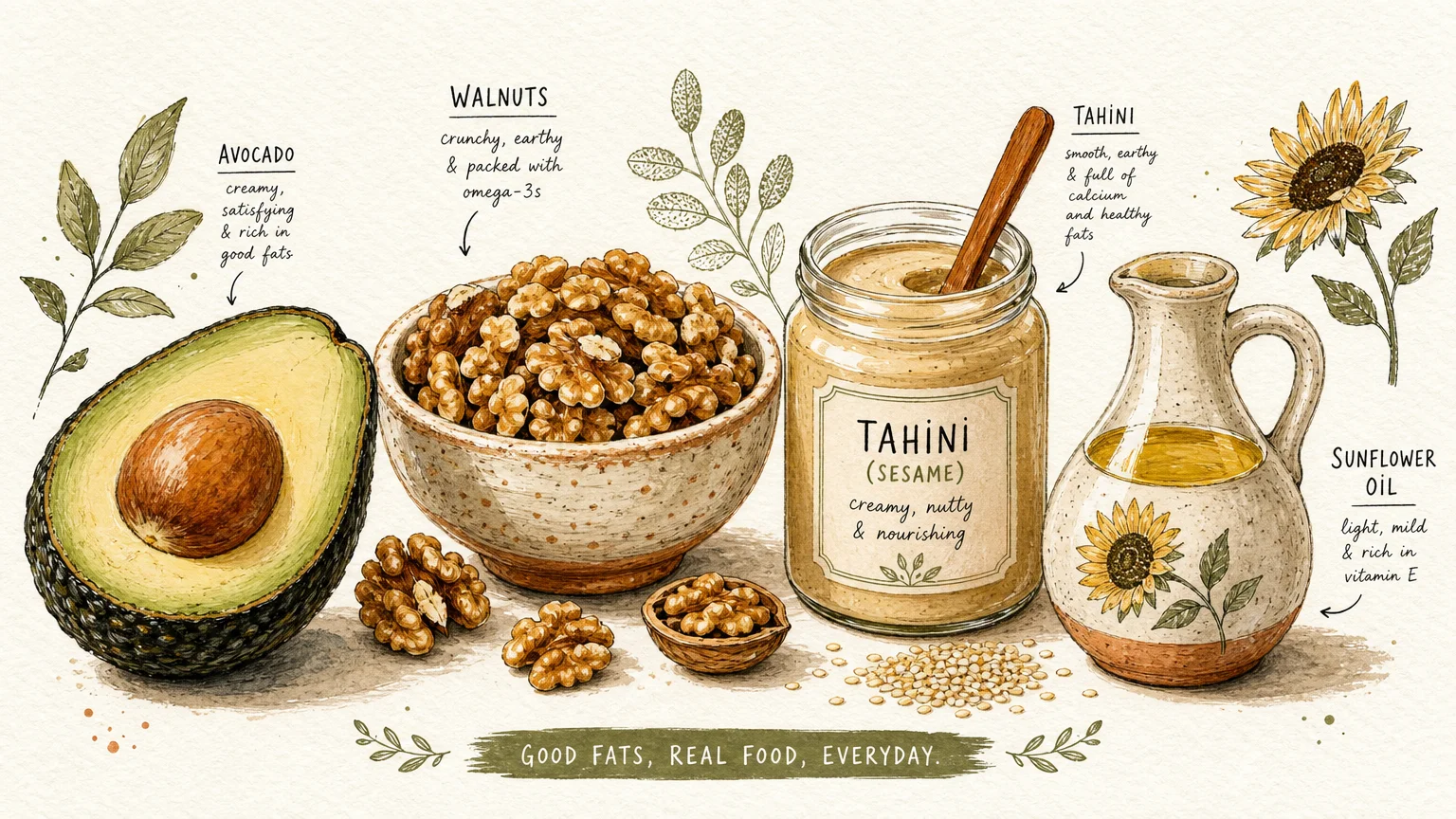
Adding a source of healthy fat stands as the most vital strategy for optimizing your daily nutrition advice. Extra virgin olive oil offers profound cardiovascular benefits while acting as the perfect carrier oil for your vegetable intake, but you possess many accessible options to achieve the same result. Half of a sliced avocado, a handful of crushed walnuts, a drizzle of sesame-based tahini, or even standard sunflower oil will provide the lipid foundation necessary for vitamin extraction. Social determinants of health and grocery budgets vary widely; therefore, it remains important to note that you do not need expensive specialty oils to trigger the micelle formation process. Any source of dietary fat will unlock the nutritional potential of your plant-based meals.
Beyond fat-soluble vitamins, strategic food pairings greatly enhance mineral absorption. Iron deficiency represents a major global health challenge, particularly for individuals relying primarily on plant-based iron sources. Non-heme iron—the type found in lentils, spinach, and fortified cereals—is notoriously difficult for the human body to absorb. By adding a robust source of vitamin C to these meals, you biochemically convert the iron into a highly absorbable form. Squeezing fresh lemon juice over your lentil stew or tossing diced red bell peppers into your spinach salad drastically changes your body’s ability to utilize the iron. The Centers for Disease Control and Prevention emphasizes the importance of these synergistic dietary approaches for preventing anemia and supporting vital energy production.
Furthermore, culinary spices engage in remarkable biochemical partnerships. Turmeric contains a potent anti-inflammatory compound called curcumin, which unfortunately possesses incredibly poor natural bioavailability. The human liver aggressively filters and excretes curcumin before it can provide systemic benefits. However, simply adding a pinch of black pepper introduces piperine—a compound that temporarily slows the liver’s excretion pathways, boosting the absorption of curcumin by remarkable margins. Cultivating a healthy diet requires treating your kitchen as a laboratory of synergy, where adding simple ingredients continuously multiplies your nutritional benefits.

Strategy Pillar Two: Enhancing Digestion Through Intentional Movement
The physical journey of food through your digestive system directly dictates how effectively you absorb its nutrients. Sedentary behaviors create a sluggish gastrointestinal environment, slowing down transit time and compromising the mixing action required for optimal digestion. Gentle, intentional movement following a meal stimulates peristalsis—the rhythmic, wave-like muscle contractions that propel food through your stomach and intestines. This steady mechanical movement ensures that your meals mix thoroughly with digestive enzymes and bile acids, maximizing the physical contact between the digested food particles and the absorptive surfaces of your small intestine.
Taking a leisurely fifteen-minute walk after enjoying a nutrient-dense meal actively supports your body’s extraction process. This light activity encourages blood flow to the digestive organs without triggering the body’s stress response. You do not need to engage in vigorous exercise to reap these benefits; in fact, intense physical activity immediately following a meal produces the exact opposite effect. High-intensity workouts force your cardiovascular system to divert blood away from your gastrointestinal tract and pump it aggressively toward your skeletal muscles, effectively halting the digestive process and contributing to malabsorption and severe cramping.
Accessibility remains paramount when considering movement strategies. If walking presents physical challenges, gentle seated stretches, mild yoga postures that compress and release the abdomen, or wheeling around your neighborhood will provide similar stimulatory effects on your digestive tract. The primary goal is to remain upright and gently active, using gravity and mild muscular engagement to support the complex physiological choreography of digestion and vitamin assimilation.

Strategy Pillar Three: Cultivating a Rest-and-Digest Mindset
Your brain fundamentally controls your ability to break down and absorb vitamins and minerals. The cephalic phase of digestion begins long before a single bite of food enters your mouth; the mere sight, smell, and anticipation of a delicious meal signal your brain to start producing salivary enzymes and stomach acid. When you eat while staring at stressful emails, arguing, or rushing aggressively through traffic, your autonomic nervous system remains locked in a state of sympathetic dominance. This “fight or flight” physiological response considers digestion a low-priority task, significantly suppressing the secretion of vital digestive fluids and impairing nutrient uptake.
To fully benefit from your carefully paired meals, you must intentionally shift your body into a parasympathetic state, commonly referred to as “rest and digest” mode. This neurological shift allows the vagus nerve to communicate safely with your stomach, pancreas, and gallbladder, signaling them to flood your system with the enzymes required to extract zinc, magnesium, and essential amino acids. Eating the most perfectly structured salad will yield minimal nutritional return if your stress hormones are actively signaling your gut to shut down its absorptive pathways.
Cultivating this essential mindset does not require complicated meditation routines. Simply pausing before you pick up your fork to take three slow, deep breaths significantly alters your neurological state. Acknowledging the effort that went into preparing the food and eating in a designated, calm environment signals physiological safety to your brain. This foundational mindset shift transforms eating from a rushed biological necessity into a highly efficient, nutrient-absorbing metabolic process.

Strategy Pillar Four: Collaborating With Medical Care Professionals
Even the most meticulously crafted healthy diet cannot overcome structural or chemical barriers within a compromised gastrointestinal tract. Nutrient absorption relies entirely upon the microscopic integrity of your gut lining and the precise pH environment of your stomach. Chronic reliance on certain over-the-counter medications, particularly acid-reducing proton pump inhibitors, can severely alter your gastric acid levels. Robust stomach acid is fundamentally necessary for uncoupling minerals like calcium and vitamin B12 from their carrier proteins; suppressing this acid long-term frequently leads to silent, progressive nutrient deficiencies.
Underlying medical conditions frequently sabotage dietary efforts. Conditions such as celiac disease, Crohn’s disease, or small intestinal bacterial overgrowth directly damage the delicate absorptive villi lining your intestines or allow rogue bacteria to consume your vitamins before you can absorb them. If you continually implement sound nutrition advice but still experience profound fatigue, unexplained bone density loss, or systemic inflammation, your primary focus must shift toward professional medical diagnostics rather than culinary adjustments. Comprehensive information regarding inflammatory gut conditions can be found through the National Institute of Diabetes and Digestive and Kidney Diseases, which outlines how structural damage impedes physiological uptake.
Working alongside a registered dietitian or a board-certified gastroenterologist ensures that your nutritional protocols align with your unique physiological realities. These professionals can order specialized blood panels to accurately track your intracellular nutrient levels and rule out complex malabsorption syndromes. True holistic health necessitates a bridge between proactive daily lifestyle choices and rigorous clinical oversight, ensuring that your body actually utilizes the high-quality foods you consume.
Clinical Perspectives on Maximizing Your Diet
Medical professionals continuously observe patients adopting highly restrictive, fragmented diets in the pursuit of better health, only to eventually develop profound clinical nutrient deficiencies. Dietitians strongly advocate against looking at food through a reductionist lens—viewing a spinach leaf merely as a vehicle for vitamin K or a walnut solely as a source of fat. The medical consensus emphasizes the complex matrix of whole foods, recognizing that vitamins, minerals, and phytonutrients evolved to be consumed and absorbed together in synergistic harmony.
Global health frameworks consistently prioritize dietary diversity and food pairing as essential tools for combating malnutrition and chronic disease on a population level. According to guidelines established by the World Health Organization, maximizing nutrient bioavailability through accessible culinary combinations is an indispensable strategy for maintaining long-term public health. If you wish to build a customized dietary protocol that honors these clinical principles, locating a professional through the Academy of Nutrition and Dietetics directory serves as an excellent starting point for evidence-based personalized care.
Frequently Asked Questions About Nutrient Absorption
Does the method of cooking my vegetables impact nutrient bioavailability?
Yes, temperature and cooking methods drastically alter the physical structure of your food, modifying how easily you can extract specific compounds. While raw vegetables provide excellent roughage and high levels of heat-sensitive vitamin C, the cooking process actually enhances the bioavailability of other vital nutrients. Gently steaming spinach reduces the oxalates that typically bind to iron and calcium, allowing your body to absorb those minerals more efficiently. Similarly, cooking tomatoes breaks down their tough cellular walls, dramatically increasing the amount of cancer-fighting lycopene available for your body to absorb. A balanced healthy diet incorporates both raw and cooked vegetables to maximize the full spectrum of nutritional benefits.
Should I rely on dietary supplements instead of focusing on complex food pairings?
While high-quality dietary supplements play an important role in correcting severe, clinically diagnosed deficiencies, they cannot replicate the intricate biological matrix of whole foods. Supplements deliver isolated doses of synthetic or extracted vitamins, which your body often struggles to recognize and utilize without the accompanying enzymes, fibers, and cofactors naturally present in a real meal. Taking a high-dose vitamin pill on an empty stomach frequently results in expensive urine, as the body rapidly excretes what it cannot properly digest. Focusing on strategic food pairings ensures that your body receives nutrients in the exact formats it evolved to process most efficiently.
Exactly how much healthy fat do I need to consume with a meal to see these benefits?
You do not need to drown your vegetables in heavy oils to trigger the absorption of fat-soluble vitamins. Clinical research indicates that adding as little as three to eight grams of dietary fat per meal successfully initiates the micelle formation required for nutrient extraction. This highly manageable amount translates to roughly one teaspoon of extra virgin olive oil, a small handful of almonds, or a couple of tablespoons of hummus. Finding a balance that satisfies your palate while providing enough lipid carriers for your vitamins ensures sustainable, long-term adherence to these healthy eating tips.
Why do I constantly feel fatigued even though I eat a perfectly balanced diet?
Experiencing chronic exhaustion despite maintaining an impeccable diet often serves as a primary indicator of systemic malabsorption. You may be eating an abundance of nutrient-dense foods, but if your gut lining is inflamed, your stomach acid is insufficient, or your microbiome is severely imbalanced, those essential vitamins pass straight through your system unutilized. Fatigue linked to poor iron, vitamin B12, or vitamin D uptake cannot simply be out-eaten; it requires professional investigation to uncover the root physiological cause. Please remember that this information serves educational purposes, and persistent fatigue strongly warrants personalized care from a qualified healthcare provider.
Your Next Step Toward Better Nutrition
Transforming your approach to healthy eating does not require overhauling your entire kitchen or memorizing complex biochemical pathways. The most profound shifts in human health often stem from incredibly simple, consistent daily adjustments. Recognizing that nutrients work as a collaborative team rather than isolated entities empowers you to make smarter choices without adding unnecessary dietary stress. You possess the ability to radically upgrade your cellular health simply by changing how you combine the foods currently sitting in your refrigerator.
Take a moment to reflect on your typical daily meals and identify one simple opportunity to introduce a healthy fat. For your very next meal, commit to drizzling just one teaspoon of olive oil over your side salad or adding a sprinkle of seeds to your roasted vegetables. Observe how this minor addition enhances the flavor profile of your food while giving you the peace of mind that your body is fully extracting the vital nourishment it deserves.









Leave a Reply