

Dismissing specific physical decline as a normal part of getting older often masks treatable medical conditions that you can actually reverse. When you recognize distinct muscle weakness patterns instead of accepting general fatigue, you unlock the ability to restore your strength and mobility. Aging alone does not cause you to suddenly drop your coffee mug, struggle to stand from a low chair, or drag one foot while walking. These specific neuromuscular signals point directly to underlying issues like vitamin deficiencies, nerve compressions, or autoimmune disorders. By identifying these five distinct patterns of weakness, you can seek precise medical interventions that protect your long-term health and keep you moving with confidence.

The Science Snapshot: Deciphering the Biology of Aging Muscles
Age-related muscle loss operates on a predictable timeline that differs vastly from acute disease states. You experience a natural biological process known as sarcopenia as you age, involving the slow degradation of muscle mass starting around your fourth decade of life. Medical researchers confirm that without proactive strength training, most adults lose roughly three to eight percent of their muscle mass per decade. However, this gradual shift rarely creates sudden or highly localized functional impairments. When you experience rapid changes in your physical capabilities—such as abruptly losing the grip strength required to open a jar—your body is waving a massive red flag. Neuromuscular health relies on a complex network of chemical messengers and robust blood flow. When this intricate communication system fails, the resulting dysfunction presents in highly specific configurations. Recognizing the difference between normal sarcopenia and pathological muscle weakness empowers you to seek out proper diagnostics. Comprehensive data provided by the National Institute on Aging emphasizes that writing off severe fatigue as an inevitable consequence of advancing years frequently delays the diagnosis of entirely manageable endocrine and neurological disorders.

5 Muscle Weakness Patterns You Should Never Ignore
Pattern 1: Symmetrical Weakness in Your Shoulders and Hips
Experiencing equal, bilateral weakness in your proximal muscles—the large muscle groups closest to the center of your body—warrants immediate medical evaluation. You might notice this pattern when you suddenly struggle to lift your arms above your head to brush your hair, or when you find it nearly impossible to stand up from a low seat without relying entirely on your arm strength. This bilateral presentation strongly points away from localized orthopedic injuries and directs suspicion toward systemic issues. Endocrine disruptions, particularly an underactive thyroid gland, frequently drain energy reserves from these massive muscle groups, leaving you feeling profoundly heavy. Additionally, conditions such as polymyalgia rheumatica specifically target the shoulder and hip girdles, causing functional weakness that can seemingly develop overnight. Because these proximal muscles dictate your core mobility, addressing the root cause remains essential. Routine blood tests can identify thyroid imbalances or elevated inflammatory markers, allowing your healthcare team to prescribe targeted therapies that rapidly restore your baseline strength.
Pattern 2: Asymmetrical Weakness Affecting Only One Side
Developing weakness that strictly affects the right or left side of your body demands urgent attention, as it almost always signals a neurological event or nerve compression rather than generalized muscle aging. If one-sided weakness strikes suddenly and involves your face, arm, or leg, you must seek immediate emergency medical care; this presentation serves as the classic hallmark of a stroke. However, when asymmetrical weakness develops gradually over weeks, it usually points toward peripheral nerve entrapment. Conditions like cervical radiculopathy—where a damaged disc pinches a nerve root—can cause the muscles in one arm to atrophy. Similarly, lumbar nerve compressions often lead to weakness in a single leg, prompting a noticeable limp. An accurate diagnosis typically requires magnetic resonance imaging to pinpoint the exact location of the interference. By collaborating with orthopedic specialists, you can explore targeted physical therapy or minimally invasive procedures designed to decompress the affected nerve.
Pattern 3: Distal Weakness Progressing in Your Hands and Feet
Distal weakness impacts the muscles farthest from your body’s core, primarily manifesting as clumsiness in your hands or a dragging sensation in your feet. You might initially write off dropping your keys or stumbling over a flat rug as simple clumsiness; however, these exact symptoms frequently announce the arrival of peripheral neuropathy. When the long nerve fibers stretching into your extremities sustain damage, the electrical signals commanding your hands and feet become distorted. Unmanaged blood sugar fluctuations stand as the leading culprit for this type of nerve damage. Beyond glucose imbalances, severe vitamin B12 deficiencies produce an almost identical distal weakness pattern. Because older adults naturally produce less stomach acid, you remain highly susceptible to this specific nutritional shortfall. Correcting a B12 deficiency through supplements or simple clinical injections can dramatically halt nerve degradation and help you regain fine motor control.
Pattern 4: Weakness Paired With Profound Morning Stiffness
Waking up with muscles and joints that feel cemented in place for hours indicates a completely different mechanism of weakness than mechanical wear and tear. While typical osteoarthritis might cause a few minutes of stiffness when you first roll out of bed, systemic autoimmune disorders generate aggressive morning stiffness that often persists well past breakfast. You might find your grip so incredibly weak during the early hours that you cannot hold a toothbrush. This pattern arises because inflammatory fluids pool in your joints while you sleep, creating intense pressure that mechanically restricts muscle function. Conditions like rheumatoid arthritis directly attack the synovial lining of your joints, leading to a cascade of inflammation that rapidly degrades surrounding muscle tissue. A prompt evaluation by a specialist affiliated with the American College of Rheumatology grants you access to disease-modifying drugs. These sophisticated medications suppress the rogue immune response, protecting your muscular architecture from irreversible damage.
Pattern 5: Fluctuating Fatigability That Worsens With Activity
A highly distinct pattern emerges when your muscles feel perfectly strong upon waking but progressively refuse to function as you use them throughout the day. This phenomenon, known as fatigable weakness, serves as the primary indicator for diseases of the neuromuscular junction—the microscopic gap where your nerves talk to your muscles. Myasthenia gravis represents the most common condition in this category; it involves rogue antibodies destroying the receptors on your muscles that receive nerve signals. You might start your morning eating easily, only to find your jaw muscles profoundly tired by dinner. You could also experience drooping eyelids that strictly occur after reading for an extended period. Because this weakness temporarily resolves with rest, many individuals mistakenly attribute it to normal exhaustion. Recognizing this highly specific, activity-dependent fluctuation allows neurologists to prescribe precise medications that increase the availability of chemical messengers, effectively restoring your endurance.
Holistic Pillars for Protecting Your Neuromuscular Health
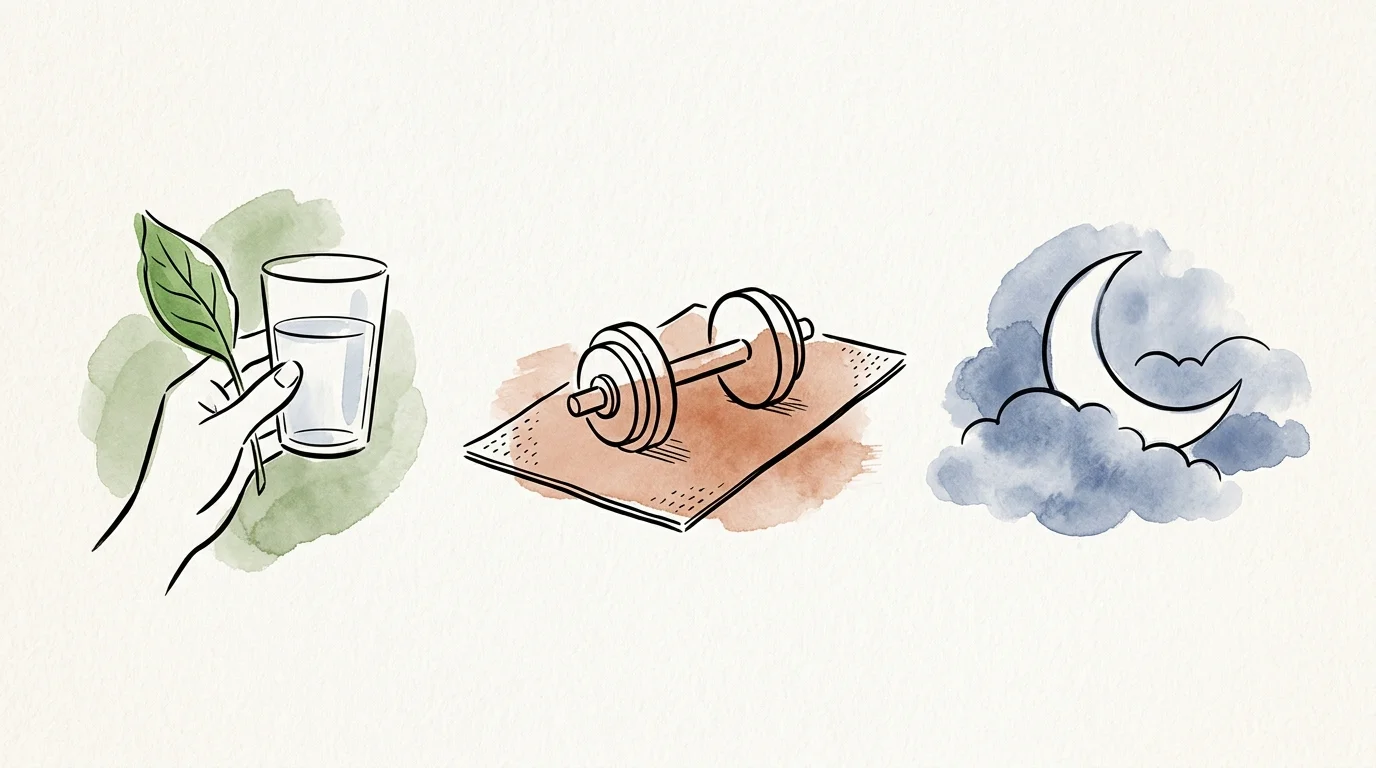
Achieving optimal muscular health requires a comprehensive approach that transcends simple exercise regimens. Your nutritional intake dictates the availability of the raw materials your body needs to synthesize muscle tissue and facilitate rapid nerve conduction. Consuming adequate amounts of high-quality protein evenly distributed throughout your day provides the essential amino acids required for muscle repair. Monitoring your micronutrient status—particularly vitamin D, magnesium, and the entire B-vitamin complex—ensures that your neuromuscular junctions fire efficiently. Consulting clinical resources provided by the Academy of Nutrition and Dietetics can help you design a dietary protocol that actively fights systemic inflammation. Proper hydration also plays a critical role; even mild fluid deficits can exacerbate muscle cramping and accelerate localized fatigue.
Movement must remain a non-negotiable component of your routine, but you must approach physical activity with strategic precision. Engaging in progressive resistance training under the guidance of a qualified professional provides the mechanical stimulus required to preserve your fast-twitch muscle fibers. These specific fibers dictate your explosive power, keeping you safe from unexpected falls. When recovering from localized weakness, supervised physical therapy allows you to rebuild strength without placing inappropriate loads on compromised joints. The American Physical Therapy Association emphasizes that tailored movement protocols can effectively reroute neural pathways, helping your brain find new ways to recruit muscle fibers after an injury.
Securing appropriate medical care serves as your final protective pillar. True holistic health requires acknowledging the social determinants that impact your well-being, such as access to nutritious foods and the financial ability to consult with specialists. If you recognize any of the five weakness patterns, you must advocate for comprehensive diagnostic testing rather than settling for a generalized physical exam. Requesting a baseline neurological evaluation and comprehensive metabolic panels provides your healthcare team with a precise map of your internal physiology. By actively participating in this diagnostic process, you construct a resilient foundation for long-term independence.

Real Voices From Clinical Practice
Neurologists and physical therapists consistently urge individuals to tune into the specific nuances of their physical decline. Medical professionals observe countless instances where patients suffer silently for years, erroneously believing their diminishing capabilities merely reflect the passage of time. A seasoned physical therapist might note how patients often report abandoning beloved hobbies—like gardening—because their hands felt too weak, only to discover later that a completely reversible cervical nerve compression caused the dysfunction. Patient experiences heavily reinforce this clinical perspective; many individuals recount spending months struggling to climb stairs before a simple blood test revealed an easily treatable thyroid disorder. When patients finally receive proper interventions, they frequently express profound relief paired with frustration that they waited so long to seek answers. Your body actively communicates its internal distress through these specific weakness patterns; honoring those signals by seeking timely medical expertise can dramatically alter the trajectory of your aging process.
Frequently Asked Questions About Neuromuscular Health
How do I definitively tell the difference between normal fatigue and medical muscle weakness?
Normal fatigue typically manifests as a generalized sensation of tiredness that improves significantly after rest. You usually retain the mechanical ability to perform tasks, even if those tasks feel exhausting. True medical weakness involves an absolute reduction in maximum force generation; you simply cannot lift the object or raise your foot regardless of how hard you try. If rest does not resolve the inability to move a muscle against resistance, you are dealing with clinical weakness that requires immediate medical evaluation.
Can dietary modifications actually reverse my loss of strength?
If a specific nutritional deficiency drives your muscle weakness, precise dietary interventions can yield dramatic reversals. Deficiencies in vitamin D, vitamin B12, and severe protein malnutrition directly dismantle your neuromuscular function. Correcting these shortfalls restores the physiological environment required for nerve signaling. However, if an autoimmune disorder or structural nerve compression causes your weakness, diet alone will not reverse the condition, though an anti-inflammatory nutritional approach can powerfully support your prescribed medical treatments.
Should I start lifting heavy weights if my muscles suddenly feel weak?
You should absolutely avoid initiating an intense resistance training program if you experience a sudden onset of unexplained muscle weakness. Placing heavy loads on compromised joints or attempting to push through a nerve injury can cause severe tissue damage. Your very first step must involve securing a comprehensive medical diagnosis to rule out serious neurological conditions. Once your healthcare provider clears you for activity, you should collaborate with a physical therapist to design a progressive strengthening protocol.
Who should I see first if I notice these distinct patterns of weakness?
Your primary care physician serves as the ideal starting point for a comprehensive evaluation, as they can order the foundational blood panels required to check your thyroid function and vitamin levels. Depending on your specific symptoms, your primary care provider will then refer you to the appropriate specialist. If you display asymmetrical or fatigable weakness, a consultation with a specialist from the American Academy of Neurology proves essential. For symmetrical stiffness and pain, a rheumatologist provides the most precise diagnostic insights.
Your Next Step Toward Lasting Strength
Taking ownership of your physical well-being begins with a commitment to fierce self-observation and active medical advocacy. Your manageable first step involves spending the next week carefully logging any instances where your muscles fail to perform their usual duties; write down exactly which muscles feel weak, what time of day the weakness peaks, and whether the issue affects one or both sides of your body. Bringing this detailed record to your next medical appointment transforms you into an empowered health advocate, providing your physician with the exact clues needed to secure an accurate diagnosis. As you move forward, ask yourself: Are you adapting your life to accommodate preventable weakness, or are you actively seeking the precise treatments required to sustain your independence?









Leave a Reply