

How do YOUR fingernails look?
We know it’s unexpected, but your fingernails reveal a lot about your health. So be cautious and probably consult a doctor if you observe any changes in your nails.
But what can healthy fingernails look like? First of all, “regular” fingernails should have white tips with a clean texture and a little bit of shine. The nail beds should always be flesh-colored, which means they should lean toward pinkish, tan, or brown hues.
We should also understand that not all changes to the fingernails are harmful. Most of them are absolutely harmless, while others are a natural part of aging or could be a medication side effect.
However, if you do observe a change and are worried about it, it’s important to let your doctor know, especially if you’re also dealing with other symptoms like fatigue, breathlessness, or stomach pain.
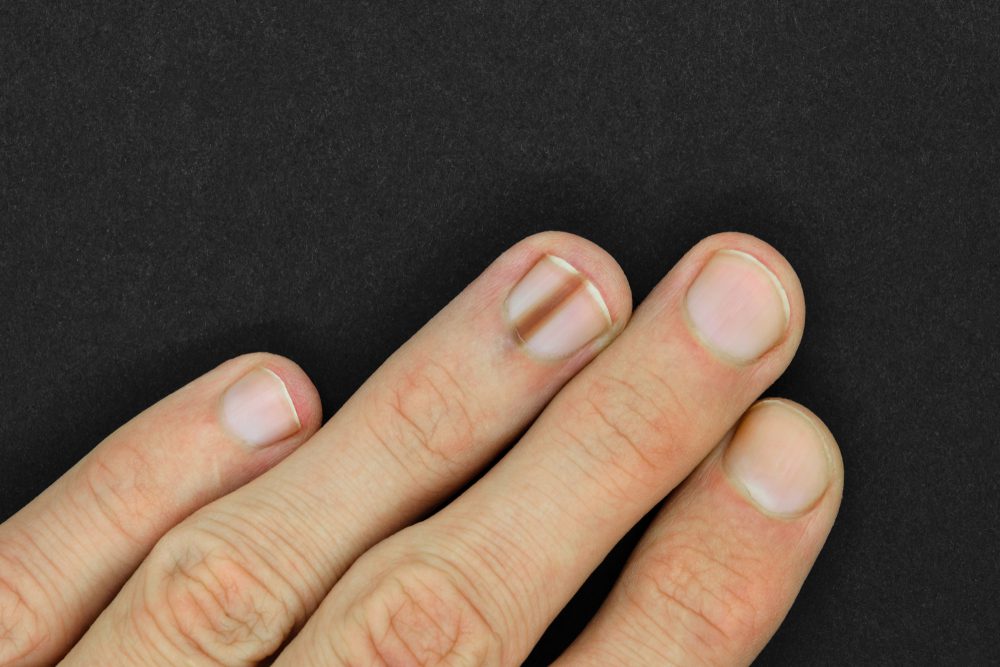
#1 A brown vertical stripe on the nail
The majority of the time, benign moles or pigmentation on your fingernails will be the main cause of a dark brown or black line along your nail or brown pigments around the nail.
People with darker skin experience this more often due to their increased melanocytes. A brown, lengthwise band can be seen in the nail when the melanocytes, which are normally triggered by stress to the cuticle, start producing pigment.
However, you should be careful since this stripe could be a melanoma warning sign. Even though you might assume the most deadly kind of skin cancer always manifests as a mole or other dark spot, it can really begin in the nail.
While just 1% of melanomas in Caucasians start in the nail, for African-Americans, 20% of melanomas develop right there. In more severe situations, it may spread to the tissue around the nail or the area around the cuticle. That is a concerning sign since it indicates that it is spreading and growing.
#2 Changes to the lunula
The majority of fingernails have a lunula, or white half-moon shape, at the base, right above the cuticle. It is the largest on the thumbnail and gets smaller as you go to the pinkie. Additionally, a change in the size or color of this area could be a sign of an underlying illness.
For instance, cirrhosis, chronic renal failure, or congestive heart failure may be indicated if the lunula reaches almost the end of the nail, turning the rest of the nail white aside from a narrow band at the top. Aging can also be the cause of this condition, often known as Terry’s nails.
A blue-tinged lunula may be a sign of Wilson’s disease, a rare genetic disorder where copper builds up in the liver, brain, and other organs. Research indicates that a red lunula may be a sign of heart failure. And half-and-half fingernails, in which the white from the lunula stretches halfway up the nail bed while the other half of the fingernail is darker in color, are quite common in people with severe kidney failure.
#3 Brittle nails
This common condition may result from poor nutrition or chemical exposure through your hands, such as when you are cleaning and using some powerful detergents.
The nail matrix, or root of the nail, is where nails are formed. And you should know that your body doesn’t have the resources to produce strong nails if you are undernourished or lacking in a few nutrients. Because of this, folks with eating disorders may notice issues with their nails. Brittle nails may also be a sign of thyroid problems or iron deficiency anemia.
Wearing gloves when cleaning with chemicals or doing the dishes might also save your nails from becoming brittle. Also, moisturizing is the key factor when you want healthy, hydrated nails. You can always use some hand cream or vaseline, and you are good to go.
So, keep strong chemicals away from your nails, and if you use nail polish remover excessively and too frequently, take care since it might also make your nails brittle.
#4 Changes in color
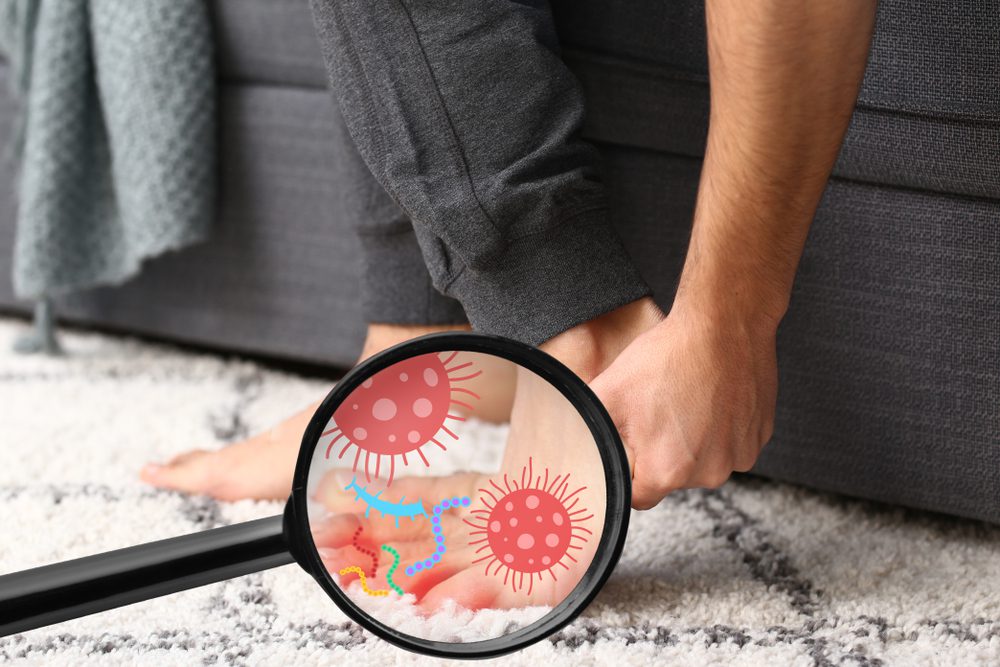
Depending on the precise color, discolored nails that are bluish or green can signify a variety of health issues. According to the AAD, blue nails, for instance, could indicate that you aren’t getting enough oxygen in your circulation, which can occur with a number of illnesses, such as pneumonia or COVID-19.
In some cases, a bacterial infection beneath your nail may cause your fingernail to develop a dark greenish color. Paronychia, the medical term for this condition, can develop if bacteria enter a cut close to the cuticle and spread to the skin beneath the nail.
Yellow staining of the nails is less serious. Patients who suffer from bronchitis and other respiratory problems may experience this condition. Though it occurs more frequently in toenails than fingernails, the fungus can also cause the nails to turn yellow. A nail fungus infection can affect people of any age, but older folks are more susceptible.
#5 Nails clubbing
It is possible for the bending to start so gradually that few people even notice it. Fingertips frequently bulge as the fingernails start to curve downward, and the nails begin to feel spongy to the touch.
From a distance or up close, clubbed nails look like an upside-down spoon. These changes might come naturally, or bring along other symptoms like coughing or shortness of breath. The finger swelling that gives the impression of clubbing is thought to be caused by dilated blood vessels.
Visit a dermatologist as soon as you discover that your fingernails are beginning to bend. The harmless trait of having curved nails can run in the family. Bent nails can also indicate that you suffer from a liver, heart, or lung problem.
#6 Nails separate from their nail beds
Onycholysis is a disorder that usually causes no discomfort and is more likely to occur if your nails are longer. The most frequent reason is simple nail trauma, including excessive nail-filing or discomfort from chemicals used in manicures.
Occasionally, psoriasis or a fungal infection in the nail might also be linked to onycholysis. Moreover, a hormone condition called hyperthyroidism, which raises your metabolism, might be the cause of sudden and severe nail detachment.
Your doctor might not be able to diagnose the cause of your problem based solely on a physical examination because there are many possible causes for your nails to detach from their nail beds. You might also go through more testing, like a blood panel, to figure out what’s going on.

#7 Beau lines
The majority of the time, lines that run the entire length of a fingernail are normal and not dangerous. But if you have deep grooves along the entire width of your nail, it means that something temporarily prevented your nails from growing or slowed them.
Beau’s lines are also a sign of uncontrolled diabetes, a side effect of cancer treatment, or a reaction to exposure to freezing temperatures in persons with Raynaud’s disease, an uncommon blood vessel condition.
Consult your dermatologist or physician if you can’t think of anything that might have contributed to your nails developing slowly or not at all. Nails frequently begin to grow properly once the cause has been identified and taken care of.
If you are curious and want to know more signs that can indicate some other dangerous conditions, you should also check out: 5 Cancers Most Likely to Spread to Your Bones






Leave a Reply