

Receiving the Medicare Annual Notice of Change letter each September gives you the exact blueprint to optimize your healthcare coverage and out-of-pocket costs for the upcoming year. Rather than tossing this dense document aside, you can use it to safeguard your access to essential medical care, preventive screenings, and holistic therapies. As healthcare policies evolve for 2027, understanding the fine print ensures you maintain seamless access to your preferred doctors and vital prescription medications. This guide demystifies the complex insurance jargon so you can confidently evaluate shifting premiums, network changes, and new benefit structures. Grasping these updates now empowers you to make informed decisions during Open Enrollment, ultimately protecting both your physical health and your financial wellbeing.
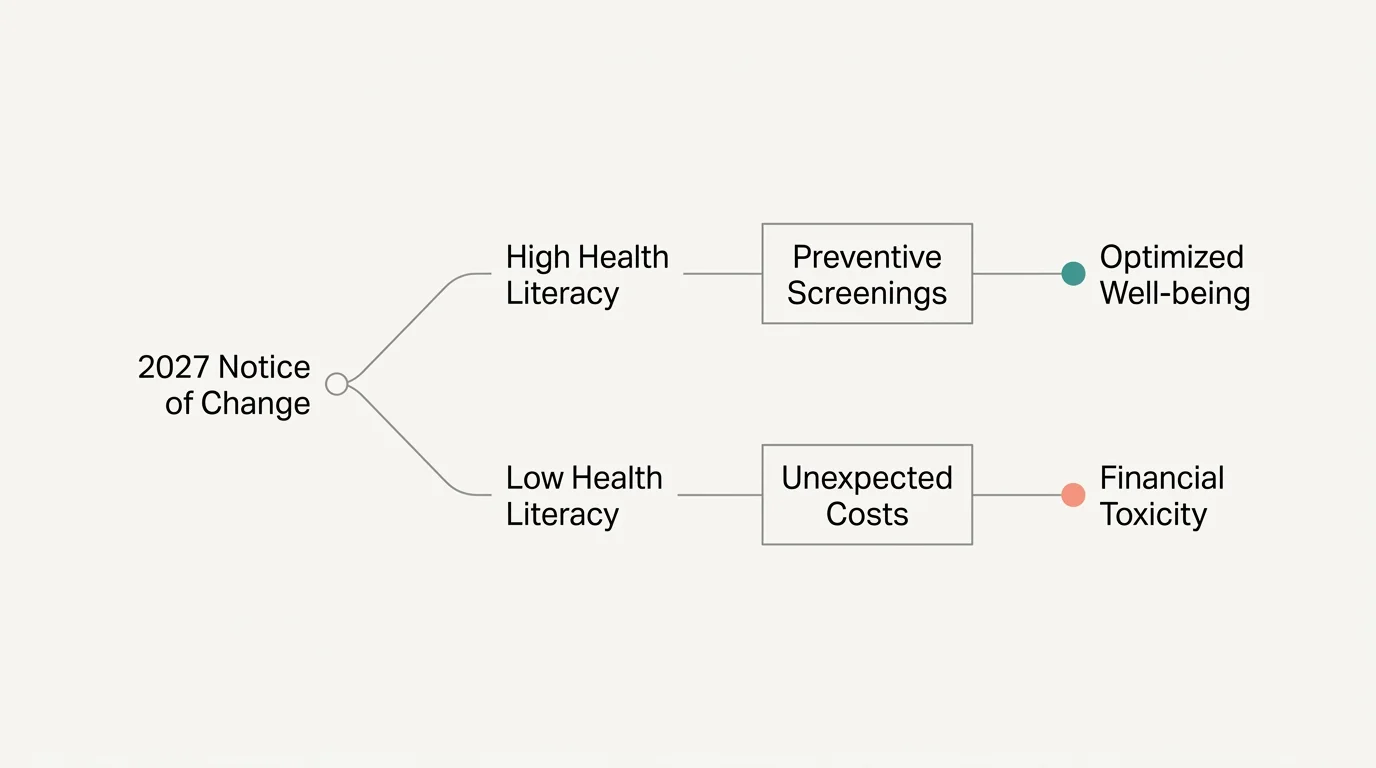
The Science Snapshot: Why Proactive Insurance Management Impacts Health Outcomes
Navigating the complexities of health insurance extends far beyond basic financial planning; it represents a fundamental pillar of your overall health and longevity. Public health researchers frequently examine the concept of health insurance literacy, which measures your ability to find, understand, and use pricing and benefit information to make informed healthcare decisions. According to health literacy guidelines, individuals who thoroughly understand their insurance benefits are significantly more likely to engage in preventive screenings and manage chronic conditions proactively.
Conversely, those who face unexpected out-of-pocket costs often experience a severe psychological burden. Studies on financial toxicity continually demonstrate that seniors who face unexpected healthcare expenses are significantly more likely to delay essential treatments, skip doses of prescription medications, or avoid follow-up appointments entirely. When patients encounter sudden price hikes for their necessary medications, they frequently stretch their prescriptions, directly compromising their treatment plans.
By proactively reviewing your Medicare updates, you directly mitigate these risks. Comprehensive awareness of your coverage limits barriers to care, ensuring you can schedule routine bloodwork, attend physical therapy, and consult with specialists without the looming fear of hidden expenses. Engaging with your Annual Notice of Change serves as a critical preventive health measure, empowering you to align your medical requirements with your financial realities before the new year begins.

Strategic Pillar One: Decoding Your Medical Care and Network Access
Your medical provider network forms the foundation of your healthcare experience, and the Annual Notice of Change provides crucial updates regarding which doctors remain in your plan. Insurance companies frequently negotiate new contracts with hospital systems, independent clinics, and specialized practitioners. Consequently, a physician who accepted your Medicare Advantage plan last year might transition out of your network for 2027. Discovering this change during a medical emergency or a crucial follow-up appointment creates unnecessary panic and disrupts the continuity of your care.
To prevent this, you must examine the specific network changes outlined in your notice. Do not simply assume that your long-term primary care physician or your preferred cardiologist will automatically remain covered. You need to verify their status directly. The most reliable method involves contacting your doctor’s billing department and asking if they will accept your exact 2027 plan name, rather than just asking if they generally accept Medicare.
Furthermore, pay close attention to any adjustments in copayments for specialist visits or urgent care facilities. Even a modest increase of twenty dollars per visit compounds rapidly if you require frequent physical therapy sessions or ongoing chronic disease management. Securing your network access guarantees that you can continue working with the healthcare professionals who truly understand your medical history and support your long-term wellness goals.

Strategic Pillar Two: Evaluating Prescription Coverage and Formularies
Prescription drug coverage represents one of the most volatile and impactful aspects of your annual Medicare updates. The section of your notice detailing the formulary—the official list of medications covered by your plan—requires your immediate and meticulous attention. Insurance providers routinely shift medications between different pricing tiers, remove certain drugs entirely, or introduce new utilization management rules such as prior authorization requirements.
A medication that currently sits on a low-cost generic tier could easily migrate to a more expensive preferred brand tier in 2027, drastically altering your monthly pharmacy bills. To safeguard your health and your budget, gather all your current medication bottles and cross-reference them against the updated formulary document. Look specifically for any changes in tier status, new quantity limits, or step therapy requirements, which mandate that you try a less expensive drug before the plan covers your current prescription.
If you discover that a vital medication will cost significantly more next year, you possess the power to take action. You can discuss alternative, equally effective medications with your prescribing physician, or you can use the official Medicare plan comparison tools during the upcoming Open Enrollment period to select a different plan that covers your exact regimen more favorably. Proactive formulary management ensures you never have to choose between purchasing groceries and filling a life-saving prescription.

Strategic Pillar Three: Maximizing Preventive and Holistic Benefits
Holistic wellbeing encompasses much more than doctor visits and pharmaceutical interventions, and modern Medicare Advantage plans increasingly reflect this comprehensive approach to health. Your Annual Notice of Change details the preventive and supplemental benefits that address the social determinants of health—the non-medical factors that heavily influence your health outcomes. Over recent years, many plans have expanded their offerings to include routine dental care, vision exams, hearing aids, and fitness club memberships.
For 2027, you should closely examine your notice for allowances related to over-the-counter pharmacy items, healthy grocery delivery, and non-emergency medical transportation. These supplemental benefits directly remove logistical barriers that might otherwise prevent you from maintaining a healthy lifestyle. Furthermore, look for enhanced coverage for allied health professionals, utilizing medical nutrition therapy resources or licensed therapists providing essential mental health counseling.
Utilizing these holistic benefits allows you to actively invest in your longevity and cognitive health. If your current plan intends to eliminate your preferred gym benefit or reduce your dental allowance, you must weigh these losses against the core medical coverage. Often, readers overlook these seemingly peripheral benefits, leaving hundreds of dollars of health-supporting services unused. By fully understanding your wellness perks, you can construct a daily routine that supports your physical mobility, emotional resilience, and nutritional needs without straining your personal finances.

Real Voices: Guidance from Healthcare Professionals
Healthcare professionals consistently observe the fallout that occurs when patients ignore their annual insurance updates. Clinical social workers and patient advocates emphasize that a lack of preparation often leads to dangerous gaps in care. Consider the perspective of geriatric care managers who witness seniors arriving at the pharmacy counter in January, only to discover their life-saving inhaler is no longer covered. These professionals strongly urge their clients to treat the Annual Notice of Change as a mandatory health assignment.
Registered dietitians frequently note that patients needlessly pay out-of-pocket for nutrition counseling because they failed to realize their updated insurance policy included comprehensive preventive care sessions. Similarly, physical therapists report that patients abruptly cancel vital rehabilitation sessions early in the year upon realizing their specialist copayments doubled overnight. Clinicians across the spectrum agree: maintaining your health requires logistical preparation just as much as medical compliance. They advise dedicating an hour in early autumn to thoroughly review your documents. By tackling the administrative side of your healthcare, you empower your medical team to provide seamless, uninterrupted care that focuses entirely on your healing rather than your insurance hurdles.
Frequently Asked Questions About Medicare 2027 Updates
When does the Annual Notice of Change arrive, and what should I do first?
Your insurance provider must send this document by the end of September. Once it arrives, immediately review the summary of changes section, which clearly highlights the differences between your current coverage and the 2027 policy. Focus your initial review on premium adjustments, maximum out-of-pocket limits, and changes to your specific prescription drug tiers. If you do not receive this document by early October, contact your plan provider directly to request a replacement copy.
Does this letter apply to Original Medicare, or just Medicare Advantage and Part D plans?
The Annual Notice of Change specifically applies to individuals enrolled in private Medicare Advantage plans (Part C) and standalone prescription drug plans (Part D). If you utilize Original Medicare (Part A and Part B) alongside a Medicare Supplement (Medigap) policy, you will not receive this specific document, though your Medigap provider will notify you separately of any premium adjustments. However, you must still review the standard Medicare handbooks sent by the government to understand any nationwide shifts in deductibles or preventive service coverage.
What happens if my primary care physician leaves the network in 2027?
If your trusted physician drops out of your plan’s network for the upcoming year, you face a critical decision. You can choose to remain with your current plan and transition your care to a new, in-network doctor, or you can leverage the Annual Election Period—running from October 15 through December 7—to enroll in a different plan that your current physician accepts. Always consult with your doctor’s office regarding which specific 2027 plans they intend to accept before making your final selection.
Who can I contact if I feel completely overwhelmed by my healthcare choices?
Analyzing insurance documents often triggers frustration and anxiety, but you do not have to navigate this process in isolation. You can access free, unbiased, and personalized counseling through your State Health Insurance Assistance Program. These federally funded agencies employ trained counselors who help you compare plans based on your unique medical needs, financial situation, and preferred providers. Engaging professional guidance ensures you make decisions rooted in accurate information rather than confusion.
Your Next Step Toward Better Health Coverage
Taking control of your healthcare journey begins with a single, manageable action. Today, retrieve your Annual Notice of Change from your mailbox or your email inbox, and place it on your kitchen table alongside your current prescription medications. Dedicate just fifteen minutes this week to reviewing the formulary changes and verifying your primary care doctor’s network status. This small investment of time yields profound peace of mind as you transition into the new year.
As you review your benefits, ask yourself a vital reflection question: What is the one medical service, holistic therapy, or daily prescription that I absolutely cannot compromise on for my health in 2027? Identifying your non-negotiable health needs provides absolute clarity, guiding you toward an insurance plan that truly serves your body, protects your finances, and supports your lasting wellbeing.









Leave a Reply