

Recognizing the subtle whispers of early cognitive decline symptoms gives you a critical window to protect your loved one’s brain health and future independence. While occasional forgetfulness happens to everyone, the true dementia warning signs often camouflage themselves as everyday quirks—a skipped bill, a sudden withdrawal from a beloved hobby, or an unusual struggle to follow a favorite recipe. Intervening early allows families to secure specialized medical care, adjust nutrition and movement routines, and preserve the highest possible quality of life. This guide illuminates seven easily missed behavioral and functional shifts in aging adults, equipping you with the evidence-based knowledge to distinguish normal aging from genuine cognitive changes.

The Science Behind Subtle Brain Health Changes
Research demonstrates that pathological changes in the brain—such as the accumulation of amyloid plaques and tau tangles—often begin a decade or more before clinical symptoms become obvious. According to data published by the National Institute on Aging, subtle functional impairments arise when the brain’s compensatory mechanisms finally fall behind the rate of neuronal damage. This latency period represents a profound opportunity for intervention. When you identify these shifts early, you open the door to therapies, lifestyle modifications, and social support structures that actively slow disease progression. Furthermore, distinguishing between reversible conditions—like vitamin B12 deficiency or thyroid dysfunction—and progressive dementia relies entirely on timely evaluation. Medical professionals emphasize that catching cognitive decline symptoms early dramatically reduces caregiver burden and improves long-term outcomes for aging adults.

Seven Frequently Missed Signs of Cognitive Decline
Families often focus entirely on severe memory loss, ignoring the more nuanced behavioral shifts that occur long before a loved one forgets a name or a face. The following seven signs represent common, yet heavily overlooked, early indicators of neurological changes.
1. Disrupted Executive Function in Financial Management
Financial missteps frequently serve as the absolute earliest red flags for cognitive impairment. You might notice an aging adult who previously managed flawless ledgers suddenly struggling to balance a checkbook or inexplicably paying the same utility bill twice. This happens because the brain’s frontal lobe—the region responsible for executive function, organization, and complex problem-solving—often sustains early damage. These changes go beyond a simple mathematical error; they reflect a fundamental breakdown in the ability to sequence tasks and comprehend abstract concepts.
2. Withdrawal from Complex Hobbies and Social Engagements
A sudden loss of interest in a lifelong passion rarely stems from mere boredom. When the cognitive load required to knit a sweater, play a card game, or follow the rules of tennis becomes too heavy, individuals often mask their confusion by claiming they no longer enjoy the activity. Social interactions also require rapid mental processing to follow conversations and read social cues. Consequently, avoiding social gatherings serves as a protective mechanism to hide cognitive struggles from friends and family.
3. Spatial and Visual Processing Difficulties
Many people associate dementia warning signs strictly with memory, completely overlooking changes in visual-spatial abilities. You might observe your family member struggling to judge distance while parking the car or having unexpected difficulty navigating a familiar neighborhood without a geographic positioning system. The brain relies on a complex network to interpret visual information; when this network degrades, individuals can experience altered depth perception and difficulty identifying spatial relationships, which significantly elevates their risk for falls and driving accidents.
4. Uncharacteristic Mood Swings and Personality Shifts
Neurological changes actively alter the brain’s emotional regulation centers. An individual who has spent their life exhibiting patience and mild manners might suddenly display explosive anger, deep paranoia, or uncharacteristic impulsivity. Alternatively, they might develop profound apathy, showing zero emotional response to significant family news. These personality shifts do not reflect a character flaw or intentional stubbornness; they represent structural alterations in the brain tissue that govern emotional intelligence and self-control.
5. Difficulty Navigating the Steps of Familiar Recipes
Cooking a traditional family meal requires a cognitive skill known as sequential processing. If your loved one has prepared a famous family recipe for thirty years but suddenly struggles to remember the order of the ingredients or forgets to turn on the oven, this points toward a decline in working memory. The inability to follow multi-step instructions strongly suggests that the brain is losing its capacity to hold and manipulate information in real-time.
6. Frequent Loss of Everyday Objects in Unusual Places
Misplacing car keys happens to the best of us, but the context of the misplacement matters deeply. Early cognitive decline manifests when objects end up in completely illogical locations—such as finding a wallet in the freezer or a wrist watch in the sugar bowl. Furthermore, individuals experiencing dementia warning signs lose the ability to retrace their steps. When they cannot logically deduce where an item might be, they often become deeply distressed or accuse others of theft.
7. Subtle Language Deficits and Vocabulary Loss
Language requires rapid retrieval of information from the brain’s temporal lobes. Early signs of impairment often include stopping abruptly in the middle of a sentence, completely losing the train of thought, or substituting inappropriate words for common items. For example, they might call a watch a hand-clock or refer to a refrigerator as the cold box. This struggle to find the right word, known as aphasia, acts as a clear indicator that the neural pathways facilitating communication are breaking down.
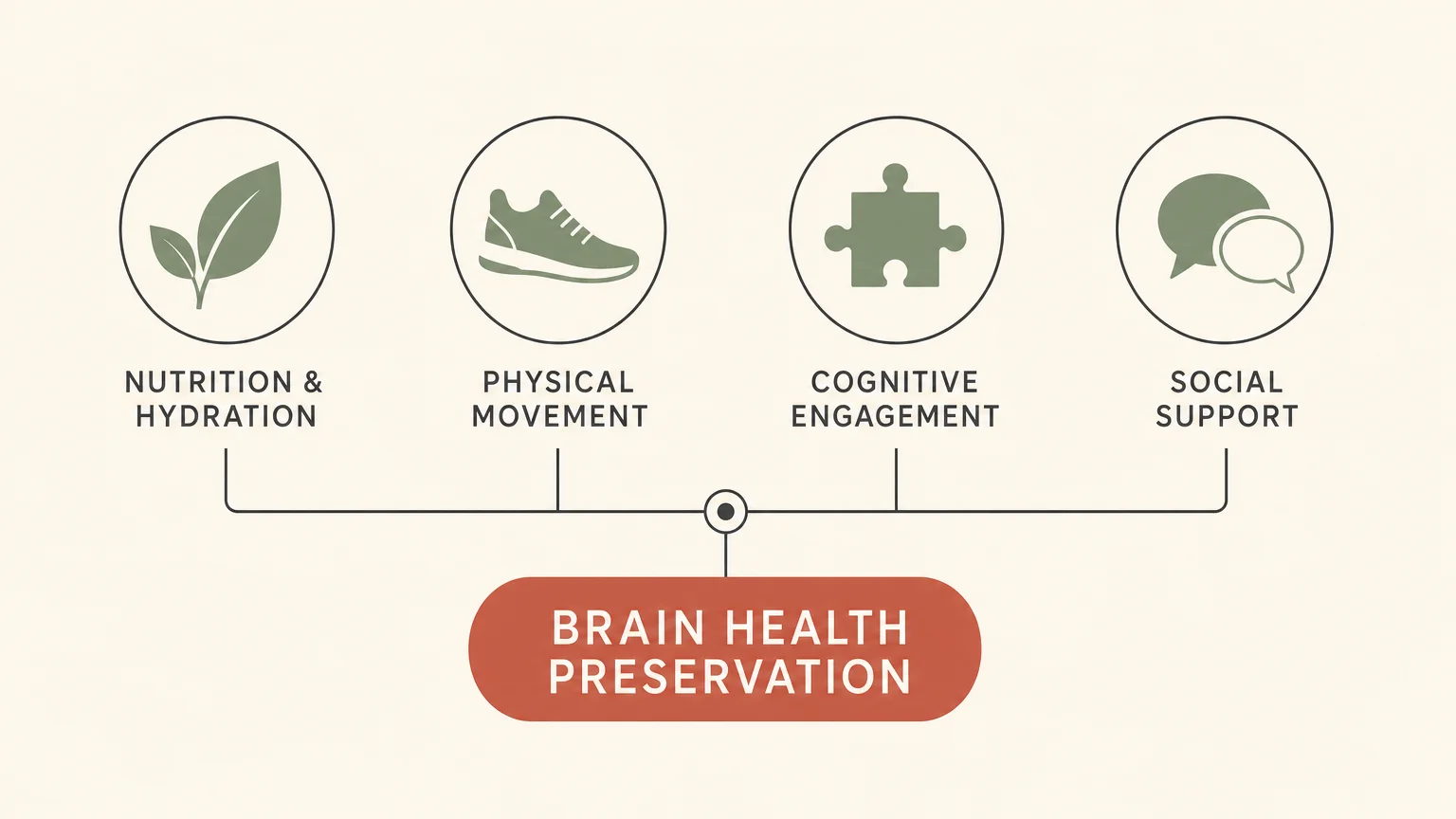
Evidence-Based Strategies for Preserving Brain Health
If you recognize any of these warning signs, taking immediate, practical action provides the best defense against rapid decline. A comprehensive approach encompassing medical evaluation, nutrition, physical activity, and mental engagement significantly bolsters cognitive resilience.
Prioritize Comprehensive Medical Care
Before implementing any major lifestyle overhaul, you must schedule a thorough evaluation with a neurologist or a geriatric specialist. A comprehensive workup will rule out highly treatable conditions that mimic dementia, such as severe dehydration, adverse medication interactions, or sleep apnea. Partnering with a specialized physician ensures you receive an accurate diagnosis. Recognize that access to geriatric specialists varies heavily by region; leverage community health centers or telehealth services if local clinics remain inaccessible. You can find robust resources and screening tools through the Centers for Disease Control and Prevention Alzheimer’s program.
Optimize Nutrition for Neurological Support
The food you consume directly influences the structural integrity of your brain. Clinical dietitians heavily advocate for the Mediterranean-DASH Intervention for Neurodegenerative Delay, widely known as the MIND diet. This nutritional framework emphasizes leafy green vegetables, berries, nuts, olive oil, and fatty fish rich in omega-3 fatty acids. You can review detailed Alzheimer’s Association nutrition guidelines to build an accessible meal plan. Minimizing the intake of refined sugars and saturated fats further protects the vascular system, ensuring healthy blood flow delivers necessary oxygen and nutrients to the brain.
Engage in Consistent, Joyful Movement
Physical activity remains one of the most potent, scientifically validated tools for slowing cognitive decline. Aerobic exercise stimulates the release of brain-derived neurotrophic factor, a crucial protein that encourages the growth of new neurons and the formation of fresh synapses. You do not need to push your loved one through grueling workouts; walking briskly in a local park, participating in a water aerobics class, or practicing gentle chair yoga yields tremendous neurological benefits. Aim for at least one hundred and fifty minutes of moderate cardiovascular activity each week, as recommended by the World Health Organization’s guidelines on physical activity.
Foster a Resilient and Active Mindset
The concept of neuroplasticity dictates that the brain can form new connections when consistently challenged. Encourage aging adults to learn completely new skills rather than simply repeating old ones. Learning a new language, taking up a musical instrument, or participating in a community theater group forces the brain to adapt and grow. Social connection acts as a massive pillar of mental wellbeing. Regular interaction with friends and community members actively defends against the isolation and depression that frequently accelerate cognitive decline.

Real Voices in Cognitive Care
Listening to those on the front lines of geriatric care reinforces the importance of vigilant observation. Clinical neuropsychologists frequently emphasize that families act as the true experts on their loved ones. While a physician sees a patient for a brief window, family members witness the daily, subtle unraveling of executive function. Relatives who advocate for their aging parents often express a shared sentiment: they wish they had spoken up sooner. One caregiver shared that she initially dismissed her father’s repeated questions as a product of age-related hearing loss. It was only when he became dangerously disoriented during a routine drive to the local grocery store that she sought neurological help. By sharing these lived experiences, medical professionals hope to empower families to trust their instincts and seek professional guidance the moment intuition signals that something has shifted.
Frequently Asked Questions About Memory and Aging
How do I differentiate between normal aging and early dementia?
Normal aging involves occasional memory lapses, such as briefly forgetting a name but remembering it later, or occasionally misplacing your reading glasses. Early dementia significantly disrupts daily life, making it impossible to retrace steps, complete familiar tasks, or manage finances safely. If the forgetfulness actively impacts independent living, you should consult a healthcare provider.
Can stress or lack of sleep cause cognitive decline symptoms?
Absolutely. Chronic stress elevates cortisol levels, which actively impairs the hippocampus—the brain’s primary memory center. Similarly, prolonged sleep deprivation prevents the brain from clearing out metabolic waste, leading to brain fog, confusion, and poor decision-making. Addressing sleep hygiene and stress management often reverses these temporary cognitive impairments.
Is there a specific age when families should start monitoring for memory loss?
While the risk of neurodegenerative disease increases significantly after age sixty-five, early-onset dementia can affect individuals in their forties and fifties. You should maintain a baseline awareness of your family members’ cognitive health at any age. Proactive monitoring ensures that any sudden deviations from their personal baseline are caught immediately.
Are there any preventative supplements proven to stop dementia warning signs?
The supplement industry heavily markets vitamins and herbal remedies for brain health; however, rigorous clinical trials rarely support these claims. While correcting a documented deficiency—such as low vitamin B12 or vitamin D—improves overall health, no single supplement prevents or cures dementia. You must focus your energy on whole-food nutrition, cardiovascular exercise, and regular medical checkups.
Taking the Next Step Together
Navigating the potential reality of cognitive decline symptoms feels incredibly daunting, but you possess the strength to support your family through this transition. By educating yourself on these seven subtle signs, you replace fear with actionable awareness. Your immediate first step involves scheduling an open, compassionate conversation with your loved one about their health, followed by booking a routine checkup with their primary care physician. Take a moment today to reflect on your family’s baseline routines. Are there any gentle shifts you can make right now to encourage better nutrition, more movement, or deeper social connection? Advocating for brain health requires courage, and partnering with dedicated medical professionals ensures you never have to walk this path alone.








Leave a Reply