

If your monthly budget feels significantly tighter this year, the recent jump in your Medicare Part B premium to $202.90 is likely the culprit. However, focusing solely on this standard deduction distracts you from the hidden out-of-pocket healthcare costs that quietly drain your retirement savings. While recent changes cap Medicare Part D expenses at $2,100 for 2026, managing chronic conditions leaves many older adults vulnerable to expensive copayments, deductibles, and non-covered services. By taking proactive control of your daily lifestyle habits, you can dramatically reduce your reliance on the medical system. Discover how evidence-based shifts in your nutrition, physical movement, and preventive care routines serve as your most effective financial shield against rising healthcare expenses.

The Science Snapshot: Why Lifestyle Is Your Best Financial Defense
When you dissect the drivers of out-of-pocket spending for older adults, the data reveals a compelling narrative about chronic disease management. Research from the Centers for Disease Control and Prevention demonstrates that conditions like type 2 diabetes, heart disease, and osteoarthritis consume the vast majority of healthcare dollars. For a Medicare beneficiary, these conditions translate into frequent specialist visits, multiple prescriptions, and higher utilization of diagnostic imaging. Every time you require a diagnostic service, you are responsible for the twenty percent coinsurance after meeting your deductible. Furthermore, the National Institutes of Health emphasizes that social determinants—such as neighborhood environment and access to nutritious food—play a massive role in your health trajectory. While you cannot fix systemic healthcare issues alone, you can implement evidence-based lifestyle interventions that lower your individual risk of hospitalization. By prioritizing metabolic health and physical mobility, you effectively insulate your savings from the compounding costs of disease management.
Strategy Pillar One: Maximize Preventive Care Before the Deductible Hits
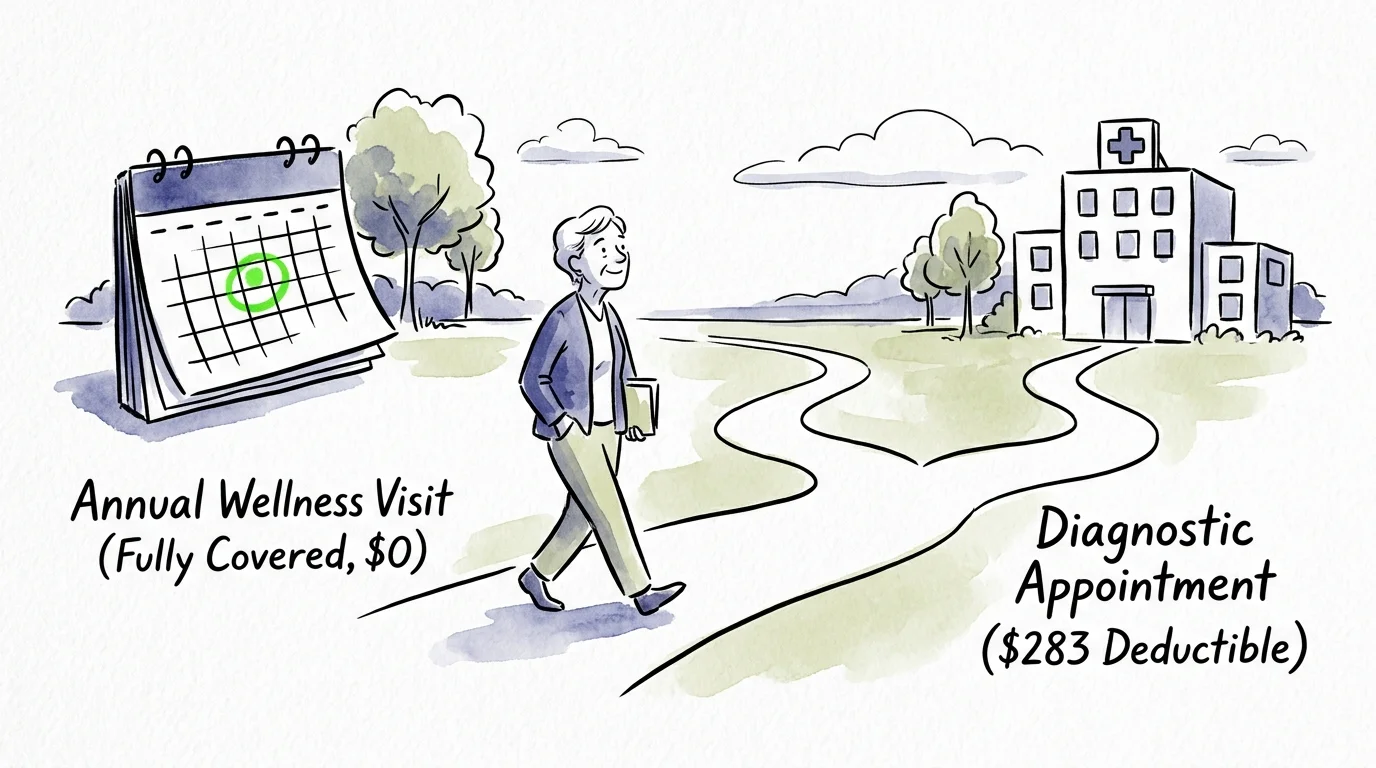
Understanding the mechanisms of your Medicare coverage provides your first layer of defense against unexpected bills. In 2026, the standard Medicare Part B premium has risen significantly, but your financial exposure extends well beyond that monthly deduction. Once you require medical care, you must satisfy an annual Part B deductible of $283 before Medicare begins paying its eighty percent share for outpatient services. However, you can strategically utilize Medicare’s preventive services to receive vital health assessments without paying a dime. The Medicare Annual Wellness Visit is fully covered and provides an excellent opportunity to develop a personalized prevention plan with your physician.
To maximize this benefit, you must distinguish between preventive and diagnostic care when interacting with your provider. If you schedule a wellness visit but use the appointment to seek treatment for a specific ache or a persistent cough, the visit transitions to a diagnostic service. Suddenly, you find yourself responsible for the standard deductible and the associated coinsurance. Approach your appointments with clear intentions; schedule your annual wellness check purely for preventive screenings, and book separate appointments for immediate medical concerns. Working closely with your healthcare team to map out necessary screenings ensures you catch potential health issues early, long before they require expensive treatments that drain your financial reserves.

Strategy Pillar Two: Harness Nutritional Resilience to Manage Medication Costs
Your daily dietary choices act as a direct regulator of your prescription medication expenses. With the Medicare Part D out-of-pocket cap set at $2,100 for 2026, many older adults mistakenly believe their drug costs are entirely manageable. However, spending over two thousand dollars annually remains a massive burden on a fixed income, and this cap only applies to covered drugs on your specific formulary. By adopting a nutrition strategy focused on stabilizing blood sugar and reducing systemic inflammation, you can potentially reduce your reliance on expensive pharmaceuticals.
When you transition toward a dietary pattern rich in soluble fiber, healthy fats, and lean proteins, you provide your body with the raw materials needed to regulate blood pressure and glucose levels naturally. Clinical guidelines emphasize the efficacy of plant-forward eating patterns in managing hypertension and hyperlipidemia. Integrating leafy greens, legumes, and whole grains into your meals significantly improves metabolic markers over time. As your cardiovascular health improves, work alongside your prescribing physician to evaluate your medication needs; many patients successfully reduce or eliminate certain prescriptions under close medical supervision. Lowering your dosage keeps you far away from that out-of-pocket cap and leaves more money in your budget for activities you love.
Strategy Pillar Three: Treat Daily Movement as Proactive Co-pay Reduction
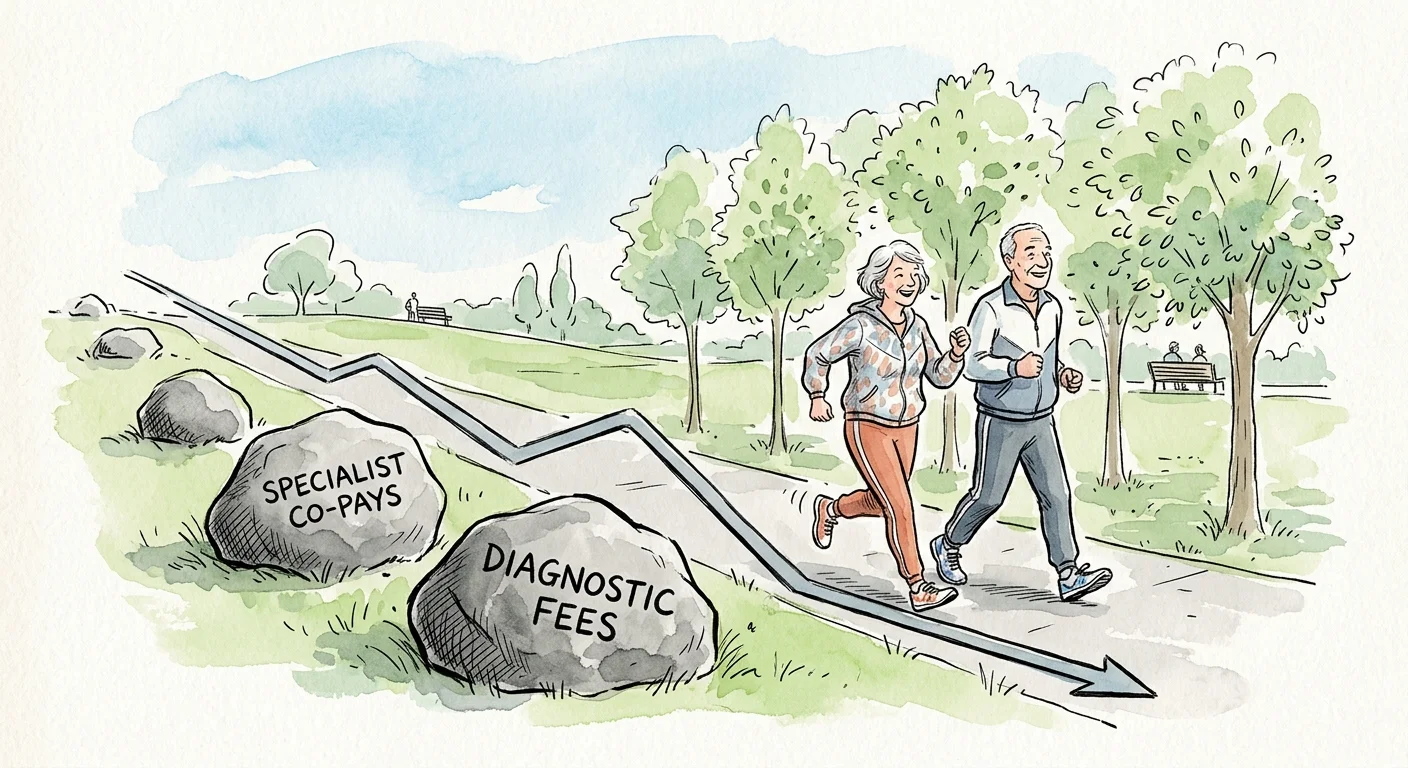
Physical activity often gets categorized as a tool for weight management, but for Medicare beneficiaries, it serves primarily as a strategy for proactive co-pay reduction. A single fall can trigger a devastating cascade of medical expenses—ambulance transportation, an emergency room visit, hospital admission under Part A, and months of outpatient physical therapy under Part B. The coinsurance for these services can quickly deplete your savings, making fall prevention one of the most lucrative investments you can make in your retirement.
Build a resilient, injury-resistant body by committing to a daily routine of therapeutic movement. Focus heavily on balance exercises, core strengthening, and functional mobility. Movements as simple as practicing standing up from a chair without using your hands can dramatically improve your lower body strength and stability. Experts at the World Health Organization advocate for older adults to engage in multicomponent physical activity emphasizing functional balance and strength training at least three days a week. Whether you choose tai chi, water aerobics, or resistance band workouts, the goal remains the same: preserve your bone density and joint function. Maintaining physical independence ensures you spend your time enjoying your community rather than paying specialty care copayments in orthopedic waiting rooms.

Strategy Pillar Four: Cultivate a Mindset of Financial Healthcare Advocacy
The psychological weight of navigating healthcare costs can lead to overwhelming stress and decision fatigue. To protect your mental well-being and your wallet, you must transition from a passive recipient of healthcare to an active, informed advocate for your financial health. This begins with understanding the specific rules governing your premiums, such as the Income-Related Monthly Adjustment Amount. If your income has recently decreased due to retirement or another life-changing event, you do not have to silently accept a massive spike in your Part B premium. You have the right to file an appeal with the Social Security Administration to request a reduction based on your new, lower income.
Furthermore, rigorously evaluate your Medicare Part D or Advantage plan during the annual open enrollment period. Insurance companies alter their coverage rules, copay structures, and drug formularies every single year. A medication that cost ten dollars a month in 2025 might move to a more expensive tier in 2026. Cultivating financial advocacy means setting aside time each autumn to compare plans and verify that your doctors and medications remain covered. Acknowledge the complex system, but approach it with persistence. Utilize free resources, such as the State Health Insurance Assistance Programs, to get unbiased help navigating your options.

Real Voices: How Proactive Habits Change the Financial Equation
The transformation from struggling with medical debt to achieving healthcare financial stability is not just a theoretical concept; it happens daily in clinics across the country. Clinical pharmacists report that patients who commit to structured lifestyle interventions often require fewer medication adjustments, directly shielding them from pharmaceutical price hikes. One gerontology physical therapist recently noted that when older adults integrate daily walking and strength training into their routines, their need for pain management injections and expensive joint therapies drops remarkably.
Patients themselves echo this reality. Individuals who have embraced targeted dietary changes to manage their type 2 diabetes share stories of profound financial relief. Instead of constantly worrying about reaching the catastrophic coverage phase of their prescription drug plans, they find their quarterly pharmacy bills shrinking as their physicians gradually reduce their reliance on insulin and other blood-glucose-lowering agents. These real-world outcomes prove that your daily health routines hold immense power over your long-term medical expenditures.
Frequently Asked Questions About Managing Your Medicare Costs
Does my Annual Wellness Visit count toward my Medicare deductible?
No, the Annual Wellness Visit is considered a preventive service and is covered entirely by Medicare Part B, meaning you pay nothing out of pocket. However, you must be careful not to use this specific appointment to seek diagnoses or treatments for new or existing illnesses. If your doctor performs diagnostic tests or treats a specific condition during this visit, you may be billed for the diagnostic portion. That specific charge will apply to your standard $283 deductible and your twenty percent coinsurance.
If I reach the out-of-pocket cap for prescription drugs, are all my medications free?
The $2,100 out-of-pocket limit for 2026 applies exclusively to covered Part D prescription drugs. Once you hit this threshold, you will pay nothing for medications that are explicitly listed on your plan’s formulary for the remainder of the calendar year. However, this cap does not cover over-the-counter medications, dietary supplements, or prescription drugs that your specific insurance plan refuses to cover. You must verify your formulary annually to ensure your necessary prescriptions actually count toward this specific spending limit.
Can regular exercise actually reduce my Medicare expenses?
Yes; engaging in regular, targeted physical activity serves as a highly effective way to lower your medical costs. By strengthening your muscles and improving your balance, you drastically reduce your risk of suffering a catastrophic fall, which often results in expensive emergency room visits, hospital stays, and extended physical therapy sessions. Keeping your joints healthy through movement helps you avoid the specialty co-pays associated with severe orthopedic treatments. Always consult your healthcare provider before starting a new exercise regimen to ensure it aligns safely with your medical needs.
What should I do if my Medicare premiums spike due to my income?
If your Part B premiums increase because of the Income-Related Monthly Adjustment Amount, you should investigate whether you qualify for a formal reassessment. The Social Security Administration bases this surcharge on your tax returns from two years prior. If you have experienced a major life-changing event—such as retiring or losing a pension—that significantly reduced your current income, you can file an appeal. By proactively filing Form SSA-44, you can potentially restore your premium to the standard rate and save money.
Taking Your First Step Toward Healthcare Savings
Gaining control over your healthcare expenses does not require an overwhelming overhaul of your life. True sustainability comes from making incremental, focused adjustments that compound dramatically over time. Your most effective strategy is to pick one specific area of your wellness routine and optimize it today.
Perhaps your first step is calling your primary care clinic to schedule your fully covered Annual Wellness Visit, ensuring you clearly state the purpose of the appointment to avoid surprise diagnostic charges. Alternatively, you might decide to dedicate fifteen minutes this evening to reviewing your current prescription list to see if evidence-based lifestyle interventions could help lower your dosages. As you move forward, ask yourself: which daily habit can I upgrade right now to protect my health and simultaneously preserve my hard-earned retirement savings for the things I truly love?









Leave a Reply