
3. Statins and Macrolide Antibiotics
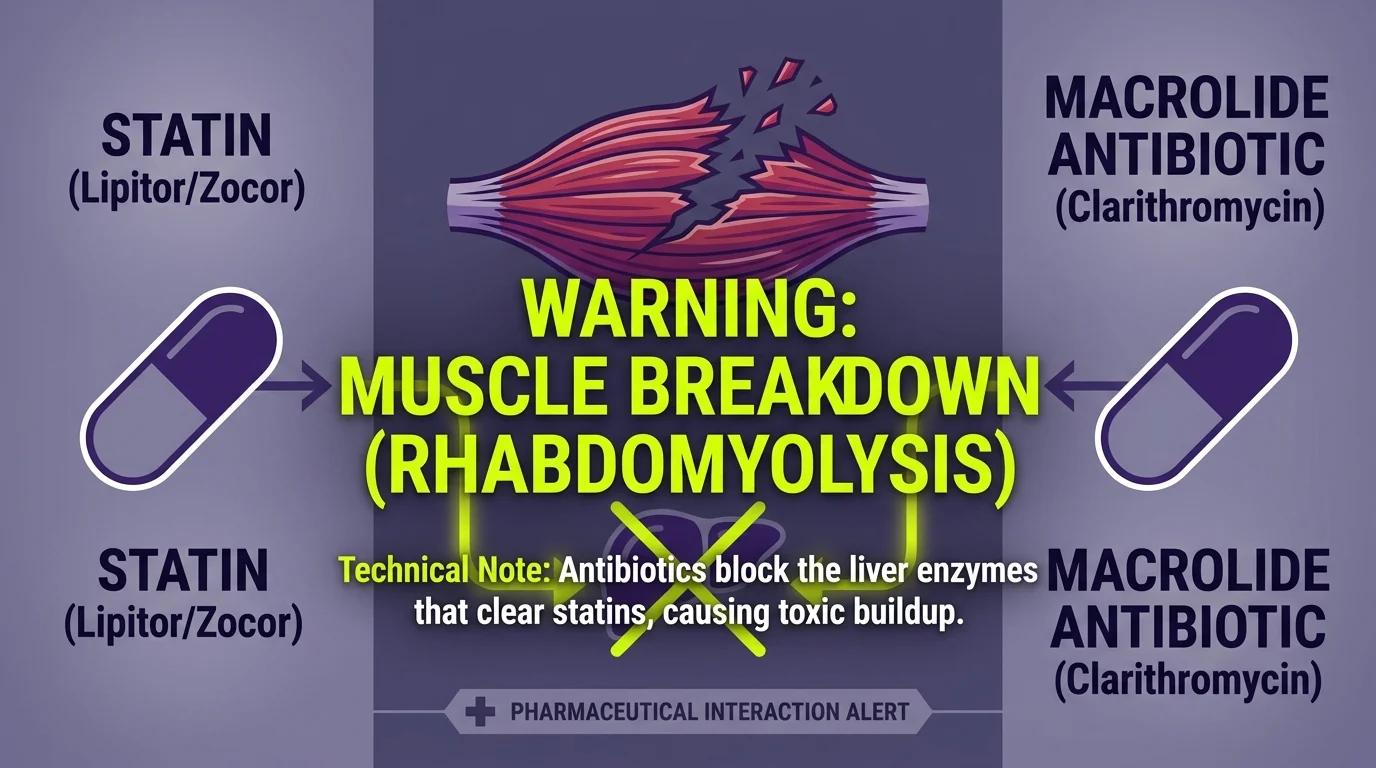
Cholesterol-lowering statins like atorvastatin and simvastatin rank among the most widely prescribed cardiovascular medications globally. However, these life-saving drugs rely heavily on specific liver enzymes—particularly the cytochrome P450 3A4 enzyme—for clearance from your body.
When you develop a bacterial infection and receive a prescription for a macrolide antibiotic, such as clarithromycin or erythromycin, these powerful antibiotics severely inhibit the exact liver enzymes responsible for breaking down the statin.
As a result, statin concentrations in your bloodstream can surge to toxic levels within mere days. This excessive concentration leads to severe, debilitating muscle pain and a rare but life-threatening condition called rhabdomyolysis.
During rhabdomyolysis, rapid muscle breakdown releases proteins into your bloodstream that overwhelm your kidneys, potentially causing irreversible renal failure. You must actively inform your prescribing physician and pharmacist about your statin use whenever you receive a new antibiotic prescription.









Leave a Reply