
The 6 Dangerous Drug Combinations Seniors Must Watch For
When you combine medications without thoroughly evaluating their combined chemical effects, you risk triggering severe interactions that amplify unwanted side effects or completely neutralize the benefits of your treatments.
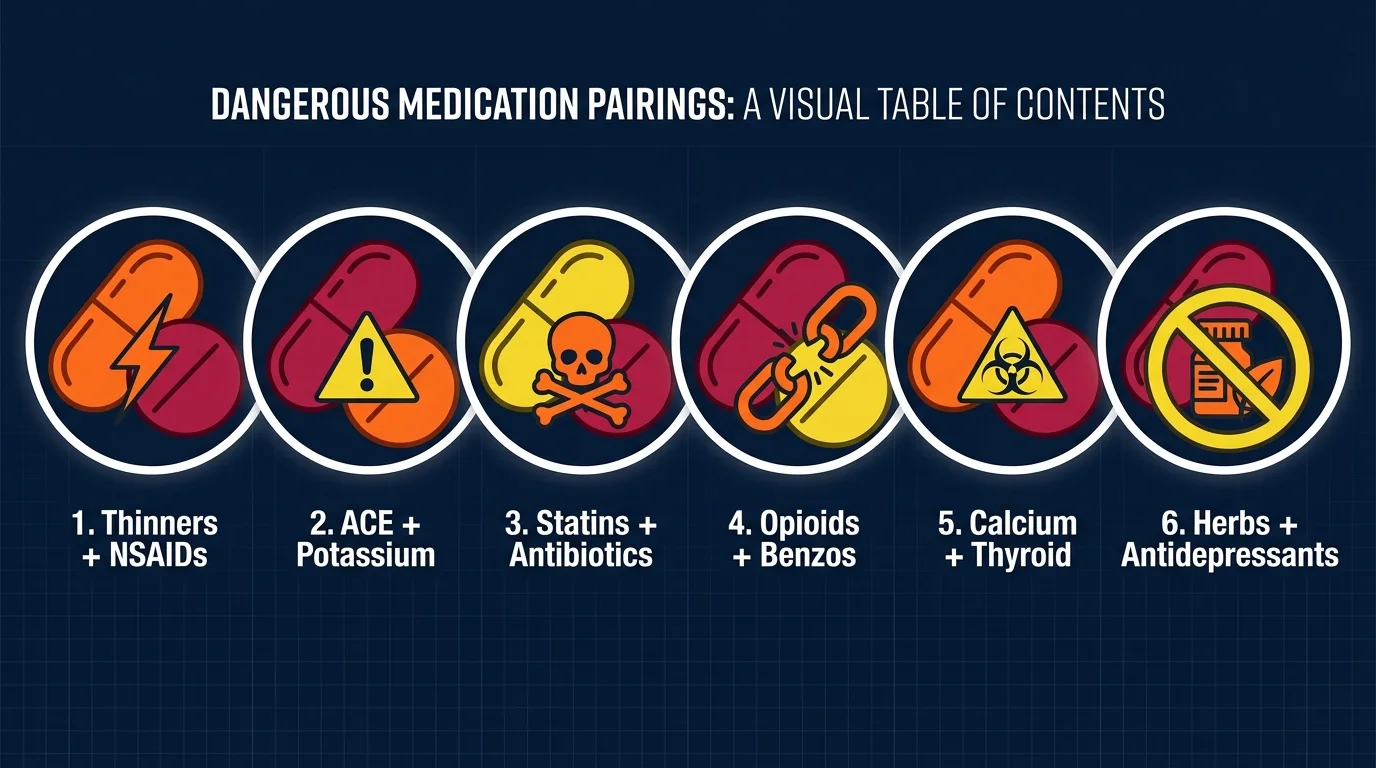
The following six combinations represent some of the most common and hazardous medication pairings found in the medicine cabinets of older adults today.
1. Blood Thinners and Nonsteroidal Anti-Inflammatory Drugs
Millions of seniors take daily anticoagulants, commonly known as blood thinners, to prevent strokes, heart attacks, and deep vein thrombosis. If you rely on medications like warfarin, apixaban, or rivaroxaban, you must exercise extreme caution when reaching for over-the-counter pain relievers. Nonsteroidal anti-inflammatory drugs, including ibuprofen and naproxen, also inherently inhibit blood clotting.
More importantly, these anti-inflammatory drugs suppress the production of prostaglandins, which are protective chemicals that maintain the delicate mucosal lining of your stomach. When you mix these two categories of drugs, you strip away your stomach’s natural cellular defense while simultaneously preventing your blood from clotting. This exponentially increases your risk for life-threatening gastrointestinal bleeding. E
ven low-dose daily aspirin, when combined with another blood thinner and an over-the-counter painkiller, creates a highly dangerous environment for internal hemorrhaging. You should explore alternative pain management strategies with your physician, such as targeted physical therapy or acetaminophen, which generally avoids this specific bleeding risk.







Leave a Reply