
The Science Snapshot: Why Aging Changes Medication Metabolism
As you age, your body undergoes profound physiological changes that directly impact how you absorb, distribute, metabolize, and excrete medications. Pharmacologists refer to this biological process as pharmacokinetics, and it perfectly explains why a dose of medication that worked flawlessly in your fifties can cause debilitating side effects in your seventies.
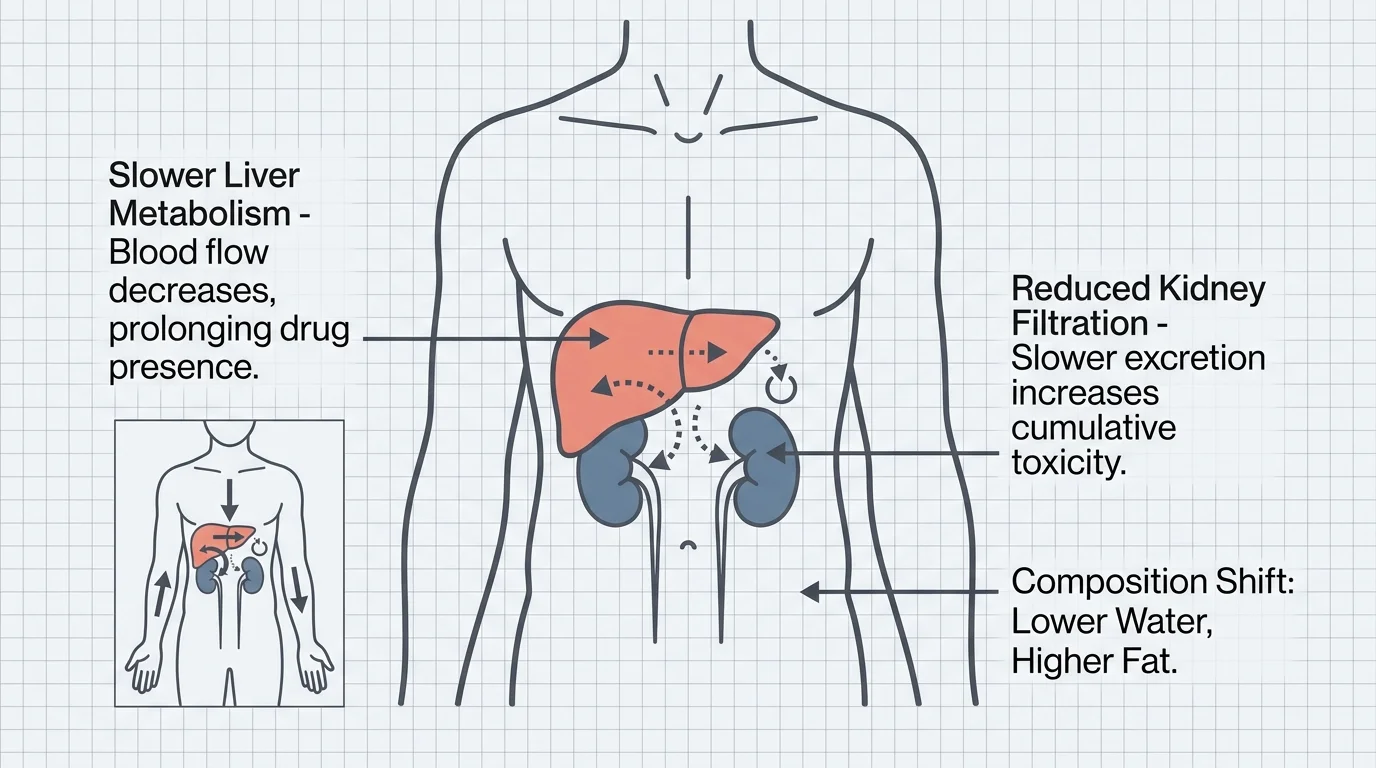
Your liver and kidneys serve as the primary filtration organs for clearing drugs from your system. Over time, blood flow to these vital organs naturally decreases, and they lose some of their functional reserve. Consequently, medications linger in your bloodstream significantly longer, drastically increasing your risk of cumulative toxicity.
Shifts in your physical body composition also play a major role in medication dynamics. Older adults typically experience a decrease in total body water and lean muscle mass, alongside a relative increase in body fat percentage.
Water-soluble drugs become highly concentrated in your blood, while fat-soluble drugs accumulate deeply in fatty tissues, leading to an artificially prolonged drug half-life. Furthermore, seniors frequently experience polypharmacy—the concurrent use of five or more medications daily.
According to the Centers for Disease Control and Prevention, older adults are disproportionately affected by adverse drug events, leading to thousands of preventable emergency room visits annually. Understanding these foundational biological realities empowers you to advocate for safer prescribing practices and holistic health interventions.









Leave a Reply