
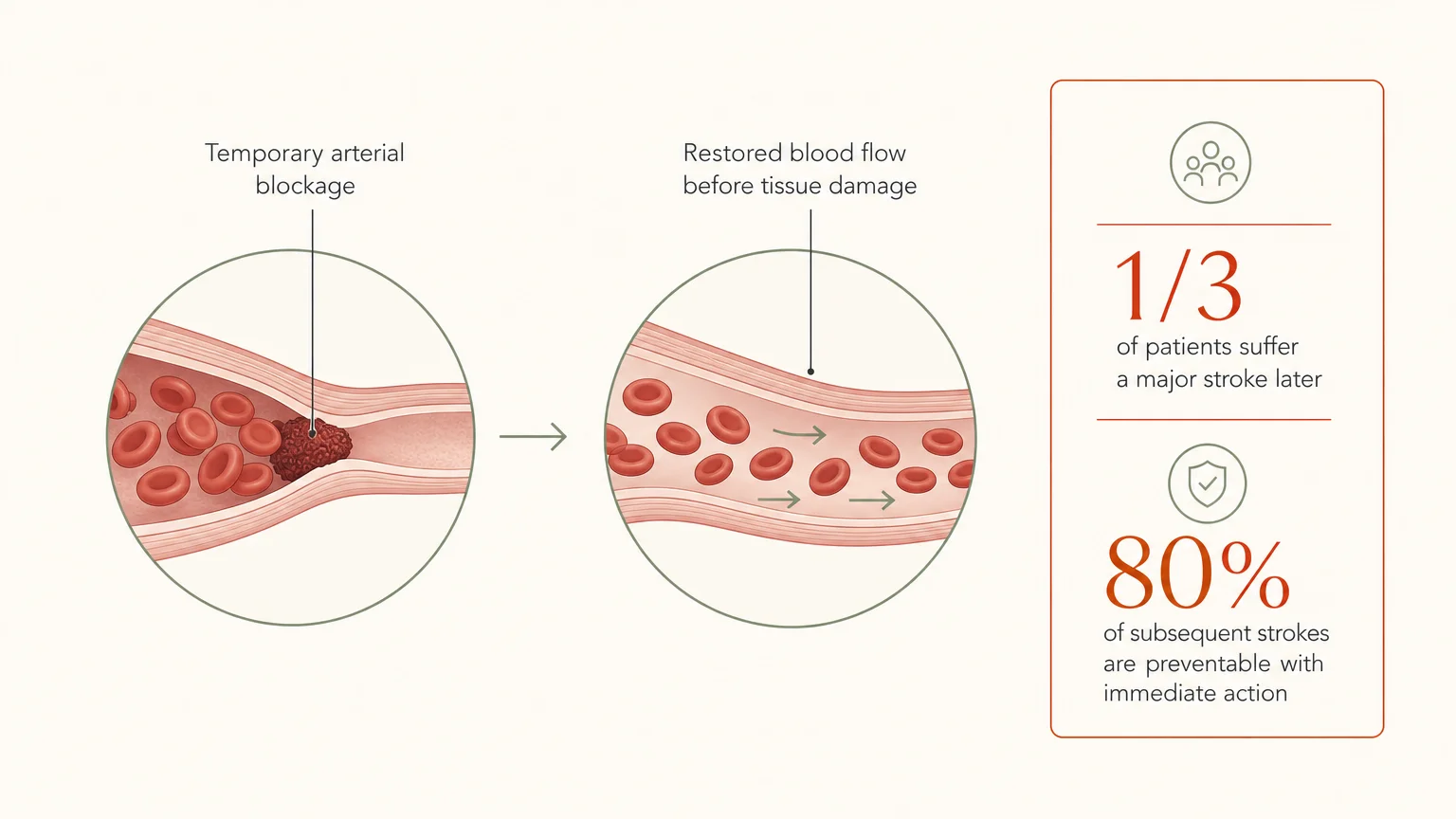
The Science Snapshot Behind a Transient Ischemic Attack
To fully grasp the danger of a transient ischemic attack, you must understand the underlying mechanics of your vascular system. Your brain relies on a constant, uninterrupted flow of oxygen-rich blood to maintain its complex functions. During a mini stroke, a small blood clot or a fragment of plaque temporarily obstructs a vital artery supplying the brain.
Unlike a standard ischemic stroke, this blockage naturally dislodges or dissolves relatively quickly, restoring blood flow before permanent tissue death can occur. Because the brain cells survive the temporary oxygen deprivation, your physical and cognitive symptoms vanish entirely, often leaving you feeling perfectly normal again.
However, this temporary reprieve masks a severe underlying threat to your cardiovascular system. Data provided by the National Institute of Neurological Disorders and Stroke reveals that approximately one-third of individuals who experience a transient ischemic attack will suffer a severe stroke later in life. Furthermore, your risk of a catastrophic event peaks dramatically within the first forty-eight hours following the initial episode.
Medical researchers confirm that up to eighty percent of subsequent strokes are preventable if doctors can evaluate the patient immediately and initiate aggressive treatments—such as targeted antiplatelet therapies or strict blood pressure management. Acknowledging social determinants of health, it is vital to recognize that systemic barriers sometimes delay access to rapid diagnostics.
Advocating fiercely for yourself in an emergency setting ensures you receive the time-sensitive neuroimaging required to identify your risk level and secure protective care.








Leave a Reply