

Recognizing the subtle early signs of vitamin deficiency can protect your independence and vitality as you age. When fatigue, unexplained muscle aches, or mild memory slips emerge in your sixties and beyond, passing them off as normal aging often masks a profound, correctable nutritional shortfall. As your metabolism changes and your stomach acid production declines, your body struggles to extract vital nutrients from the food you eat. Uncovering these silent gaps early allows you to intervene before simple deficiencies cascade into serious medical vulnerabilities. By learning to translate your body’s subtle whispers, you can adapt your daily habits, secure targeted medical testing, and reclaim the energetic life you deserve.
The Hidden Science of Aging and Nutrient Absorption
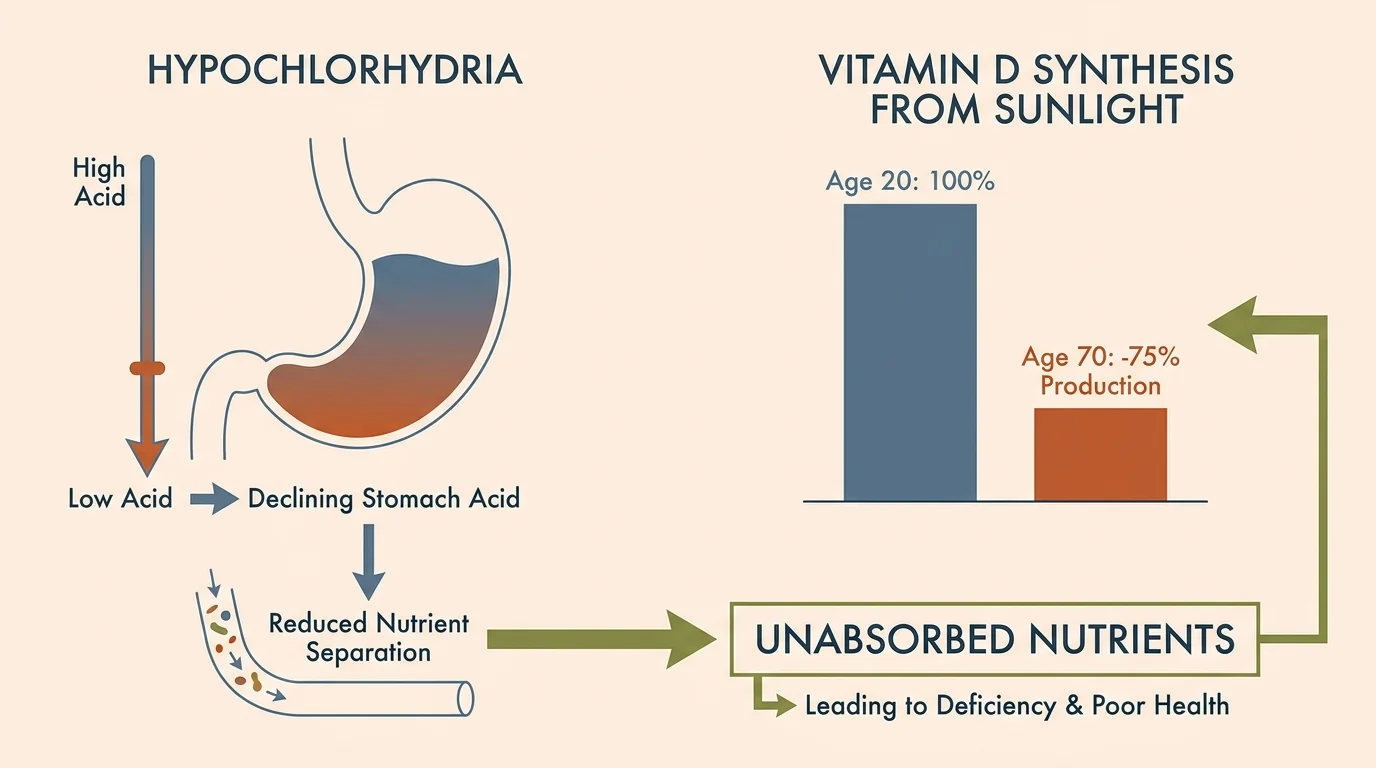
Aging alters your internal landscape in ways that fundamentally change how you process food. Deep within your digestive tract, the production of stomach acid naturally diminishes over the decades. This physiological shift—known as hypochlorhydria—creates a significant barrier to wellness; your stomach requires a highly acidic environment to separate essential nutrients from the proteins you consume. Without sufficient acid, crucial compounds pass through your system completely unabsorbed, leaving your cells starving even when your diet appears perfectly balanced.
Your skin also transforms as the years pass, losing much of its capacity to synthesize vitamins from sunlight. Research indicates that a person in their seventies produces up to seventy-five percent less Vitamin D from sun exposure than a person in their twenties. This dramatic reduction forces your body to rely almost entirely on dietary intake and supplementation to maintain healthy bones and immune function. When you combine these natural biological changes with the modern reality of spending more time indoors, a deficiency becomes not just possible, but highly probable.
Furthermore, the medications you take to manage other health conditions frequently interfere with your nutritional status. Common prescriptions—including proton pump inhibitors for acid reflux, diuretics for high blood pressure, and metformin for blood sugar management—actively deplete your reserves of vital nutrients. Understanding these complex interactions empowers you to take proactive measures. By consulting resources like the National Institutes of Health Office of Dietary Supplements, you can educate yourself on the specific metabolic demands of your current stage of life and adjust your approach to wellness accordingly.

Decoding the Subtle Signals Your Body Sends
Your body communicates its needs through a sophisticated language of physical sensations, yet we often misinterpret these signals as inevitable signs of getting older. Vitamin B12 deficiency offers a perfect example of this miscommunication. Because B12 maintains the myelin sheath—the protective coating around your nerves—a shortfall initially presents as a faint tingling or numbness in your fingers and toes. As the deficiency deepens, you might experience unexplained balance issues, a swollen or inflamed tongue, and pervasive cognitive fog. Many individuals mistakenly attribute this mental sluggishness to early-stage dementia, completely unaware that a simple nutritional correction could restore their mental clarity.
Vitamin D deficiency broadcasts entirely different, though equally deceptive, warning signs. Instead of nerve issues, a lack of the “sunshine vitamin” manifests deeply within your musculoskeletal system. You may notice a heavy, aching sensation in your lower back or pelvis, accompanied by a subtle loss of strength in your thighs and shoulders. This proximal muscle weakness makes rising from a chair or climbing stairs suddenly difficult. Beyond the physical toll, inadequate Vitamin D severely impacts your psychological wellbeing; unexplained mood dips and persistent seasonal blues often serve as the first behavioral indicators that your levels have dropped dangerously low.
Deficiencies in Vitamin C and Folate present through subtle changes in your skin, mouth, and overall energy levels. If you notice that you bruise easily from minor bumps, or that small cuts take unusually long to heal, your body may be crying out for Vitamin C to rebuild essential collagen. Similarly, cracks at the corners of your mouth or persistent fatigue often indicate a profound lack of Folate. By paying close attention to these seemingly minor physical changes, you shift from reacting to health crises to proactively managing your cellular health.

Strategic Nutrition for Optimal Senior Health
Transforming your daily meals into a targeted nutritional strategy requires intention rather than restriction. To combat the natural decline in nutrient absorption, you must maximize the density of every meal you consume. Incorporating rich sources of Vitamin B12 involves regular consumption of eggs, fortified plant milks, nutritional yeast, and lean meats. For older adults managing fixed incomes or dental issues, canned salmon provides a remarkably accessible, soft, and budget-friendly powerhouse of both Vitamin B12 and Vitamin D—especially when you consume the calcium-rich soft bones included in the tin.
Food pairing represents another highly actionable strategy to enhance your body’s absorption capabilities. The nutrients in your food interact synergistically; consuming them in the right combinations unlocks their full potential. For instance, pairing iron-rich plant foods like spinach or lentils with a robust source of Vitamin C—such as a squeeze of fresh lemon juice or a handful of strawberries—exponentially increases the amount of iron your intestines can absorb. This simple culinary adjustment requires no extra money and minimal effort, yet it significantly protects against anemia and fatigue.
Acknowledging the social determinants of health is critical when planning your nutritional approach. Cooking complex meals becomes burdensome if you struggle with mobility or experience isolation. Embracing convenient, nutrient-dense options ensures you meet your goals without overwhelming yourself. Frozen vegetables are harvested and flash-frozen at peak ripeness, often retaining more vitamins than fresh produce that has traveled for weeks. Exploring comprehensive guidelines from the Centers for Disease Control and Prevention can help you design a sustainable, accessible grocery list that supports your long-term vitality.

Movement and Mindset in Nutrient Utilization
Physical activity and mental resilience play surprisingly critical roles in your nutritional health. Movement directly stimulates gut motility, ensuring that food moves through your digestive tract at the optimal speed for nutrient extraction. When you engage in regular weight-bearing exercises—such as brisk walking, dancing, or light resistance training—you actively command your body to pull calcium and Vitamin D from your bloodstream and deposit them into your bones. Without this mechanical stress, even the most robust dietary intake of vitamins will fail to fortify your skeletal structure.
Your mindset dictates how you respond to the subtle symptoms of deficiency. Society frequently conditions older adults to expect a rapid decline in energy and mobility. When you internalize this ageist narrative, you stop looking for solutions and accept fatigue as your new normal. Rejecting this defeatist attitude is the first necessary step toward healing. You must believe that you deserve to feel vibrant, energetic, and stable on your feet.
Furthermore, maintaining strong social connections deeply influences your eating habits. People who share meals with friends or community members naturally consume a wider variety of foods and take more time to chew—a mechanical process that pre-digests food and aids nutrient absorption. Whether you join a local walking group or participate in community dining programs, integrating social joy into your movement and meals significantly amplifies your overall wellness.
Navigating Medical Care and Supplementation
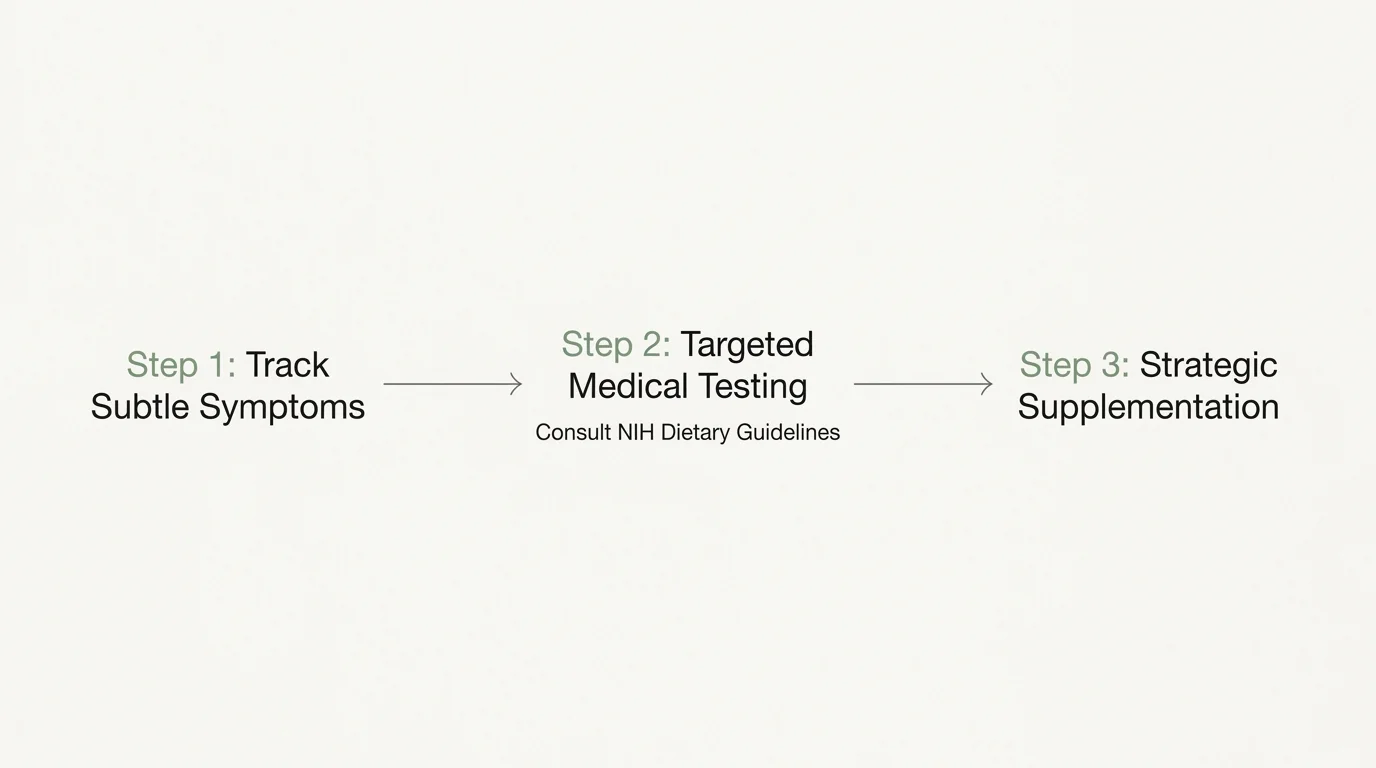
Collaborating effectively with your healthcare provider transforms vague symptoms into actionable data. Standard annual blood panels often miss the nuanced markers of early vitamin deficiency; a basic complete blood count will not reveal a B12 shortfall until you have already developed macrocytic anemia. To catch these issues early, you must specifically request comprehensive assays, such as a Methylmalonic Acid test to accurately measure B12 utilization, and a 25-hydroxyvitamin D test to gauge your sunshine vitamin reserves.
While discovering a deficiency naturally leads to a desire for immediate correction, you must approach supplementation with clinical precision. Swallowing handfuls of over-the-counter multivitamins without a targeted plan rarely solves the underlying issue and can occasionally induce toxicity. Fat-soluble vitamins, in particular, accumulate in your liver and tissues over time. Working closely with professionals found through directories like the American Geriatrics Society ensures that you receive the exact therapeutic dosage required to replenish your stores without compromising your liver or kidney function.
Always review your complete medication list with your pharmacist or doctor before introducing a new supplement. Calcium supplements can block the absorption of thyroid medications, while high doses of Vitamin E interact dangerously with blood thinners. A strategic, medically supervised approach guarantees that your efforts to resolve a vitamin deficiency do not inadvertently destabilize your broader medical regimen.

Real Voices from the Clinical Frontlines
Clinical dietitians and geriatric specialists frequently witness the transformative power of targeted nutritional interventions. Specialists routinely observe patients who enter their clinics relying on canes and suffering from profound exhaustion, only to walk out unassisted a few months later. Geriatric nutritionists emphasize that older adults often endure years of unnecessary suffering simply because their symptoms are brushed off as arthritis or age-related cognitive decline.
Consider the common experience of patients who present with severe neuropathy and memory lapses. After finally securing a specialized metabolic panel, they discover their Vitamin B12 levels have plummeted due to years of taking standard acid reflux medication. Once prescribed highly bioavailable sublingual B12 or clinical injections, these patients report a phenomenon they describe as a “fog lifting.” Their balance improves, their peripheral nerve pain subsides, and their memory sharpens. These real-world clinical turnarounds powerfully illustrate why you must advocate relentlessly for comprehensive nutritional assessments when your physical baseline begins to shift.
Frequently Asked Questions About Senior Nutrition
Can I rely on a daily multivitamin to cover my nutritional gaps?
While a daily multivitamin serves as a reasonable insurance policy for minor dietary fluctuations, it cannot correct an active, clinical deficiency. The dosages found in over-the-counter multivitamins are intentionally kept low to prevent toxicity in the general population. If your stomach acid has declined, or if you lack intrinsic factor, you will not absorb the synthetic B12 present in these generic pills. Correcting a true deficiency requires therapeutic doses—often administered via sublingual drops, intramuscular injections, or high-dose prescription capsules—which must be monitored by a physician.
How do my daily prescription medications interact with vitamin absorption?
Prescription medications significantly alter the biochemical environment of your digestive tract. Diuretics used for heart failure or hypertension forcefully flush water-soluble vitamins and crucial minerals like potassium out of your system through increased urination. Metformin, a widely prescribed diabetes medication, actively blocks the absorption of Vitamin B12 in the lower intestine. Proton pump inhibitors neutralize the stomach acid required to digest protein-bound vitamins. You must collaborate with a healthcare professional to adjust your nutrient intake to counteract these specific pharmaceutical side effects.
Will correcting a vitamin deficiency immediately resolve my symptoms?
The timeline for symptom resolution depends entirely on the specific vitamin and the duration of the deficiency. Restoring your Vitamin C or Folate levels often yields noticeable improvements in energy and skin health within just a few weeks. However, repairing the neurological damage caused by a prolonged Vitamin B12 deficiency requires profound patience; rebuilding myelin sheaths can take several months of aggressive treatment. Recognizing that cellular healing takes time helps you stay committed to your nutritional protocol even when immediate results seem elusive.
How often should older adults request specific vitamin panels from their doctors?
Geriatric health advocates generally recommend requesting a comprehensive vitamin and mineral panel annually, especially if you actively take medications known to deplete nutrients. However, you should not wait for your yearly physical if you suddenly develop unexplained weakness, nerve tingling, or cognitive changes. In those instances, you must secure an appointment immediately. Personalized care remains essential; if you have a history of gastrointestinal surgery or inflammatory bowel disease, your doctor may suggest checking your nutrient levels every six months to ensure your tissues remain adequately nourished.
Taking Your Next Step Toward Vibrant Aging
Reclaiming your energy and protecting your long-term health begins with a single, manageable action. Start today by tracking your physical symptoms alongside your daily meals for just three days. Write down any moments of unexplained fatigue, joint aches, or brain fog, noting what you ate earlier in the day. This simple written record provides your doctor with invaluable context during your next appointment, moving the conversation away from vague complaints and toward precise diagnostic testing.
As you reflect on your current health routine, ask yourself: Are you accepting discomfort simply because you believe it belongs to the aging process? By refusing to settle for preventable fatigue, you open the door to profound physical renewal. You possess the power to advocate for your nutritional health; take that first step, and invest in the vibrant, active future you absolutely deserve.









Leave a Reply