
Expert tips—how to stop eczema itching
What are the symptoms of eczema?
Itchy, dry, rough, inflamed, flaky, and irritated skin are the main symptoms. It can flare up, subside, and flare up again, causing extreme frustration and discomfort. Many people find their symptoms intensifying at night, making it difficult for them to sleep.
When people scratch, this causes irritation and inflammation, unfortunately causing infections that must be treated with antibiotics. Mild eczema can be managed at home by avoiding triggers and keeping skin moisturized. It’s best to see a doctor when it is hard for you to manage symptoms and they get worse.
Check these following situations and consider seeing a doctor if:
- There is no response to treatments.
- Symptoms keep you awake at night
- You can’t complete everyday tasks because of symptoms.
- Your skin is blistering or weeping fluids, starts to peel, or gets thick or scaly.

What triggers the itching?
When people talk about eczema, they refer to it as the itch that rashes. It’s also known as atopic dermatitis (AD).
Triggers for eczema flares can include allergens such as pet dander, dust mites, foods, or irritants like soaps, detergents, or fragrances. Extreme temperatures, sweating, stress, illness, or certain clothing fibers like wool can also trigger itching.
What is the role of the microbiome in eczema itching?
There is evidence proving how the microbiome plays a significant role in eczema development and the way the itch goes along with it. As the skin is the largest organ, it’s colonized by around 100 microbial phylotypes and 1000 bacterial species.
A balanced microbiome is proper for healthy skin and is comprised of diverse microorganisms. These are beneficial in preventing the skin from being colonized with harmful pathogens; they balance the immune system and maintain a healthy skin barrier.
People who struggle with eczema have a reduced diversity in their skin microbiome, as well as an overgrowth of certain bacteria, like Staphylococcus aureus. This one is believed to intensify itch in people with eczema.
How does diet influence eczema itching?
It’s a very complex task to determine the causes and triggers of eczema. There is evidence suggesting that avoiding foods that cause an allergic reaction rarely prevents flare-ups.
What’s true is that food allergies are common in children with atopic dermatitis, but eliminating the offending foods rarely brings a positive change in eczema symptoms.
Concluding, it’s possible for some foods to cause AD flare-ups, and experts recommend allergy testing for foods in children with moderate to severe AD. However, medication can’t control an immediate allergic reaction after eating a specific food.
How does stress impact eczema itching?
More than half of the people with eczema report at least one stressful event in the month before a flare.
This is proof that stress significantly impacts itch, and it results in a vicious cycle where stress worsens itch and vice versa.
Stress activates the hypothalamic-pituitary-adrenal (HPA) axis as well as the sympathetic nervous system, triggering the production of specific proteins associated with itch. People’s reaction to stress worsens eczema symptoms and damages the skin barrier.
You can manage stress and limit the itch-stress cycle by deep muscle relaxation, acupuncture, yoga, or breathwork.

How to stop eczema itching at night?
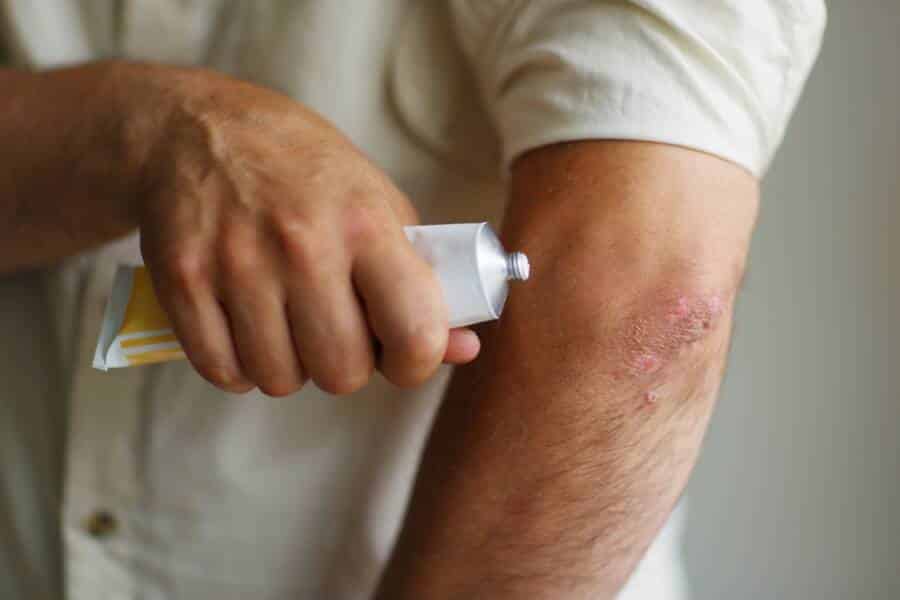
There are some tricks you can use before bed, such as moisturizing skin with additive- and fragrance-free creams and with ointments to calm any sensation. You can consider taking an oatmeal bath or applying products with cooling agents like calamine or menthol. This is where you can find Colloidal Oatmeal Bath Powder.
It’s a good idea to place your moisturizer in the fridge before applying it for a cooling and soothing effect.
Moreover, you can wear cotton gloves and cut your fingernails short to prevent skin damage from nighttime scratching.
Antihistamines like Benadryl can relieve the itch coming from skin allergies, but they don’t work for eczema. Some specialists still recommend antihistamines to help you fall asleep while dealing with a flare.
In cases of extreme nighttime itches, healthcare professionals prescribe topical prescriptions, ointments, or creams; immunosuppressant medications; phototherapy; and topical anesthetics like pramozine. Low doses of antidepressant medications such as mirtazapine are also used by doctors in severe cases.

Can my skincare routine help in managing itching?
There are some tips you can follow in your routine that could help in managing the eczema itch.
You can, for example, use lukewarm water when bathing and limit wash time to 5 to 10 minutes. Avoid irritating ingredients, so choose fragrance-free soaps or detergents and lotions, as well as avoid any trigger you already dealt with.
When it comes to moisturizing, opt for soothing and hydrating ingredients. Your products should contain ceramides, and you should apply them frequently throughout the day.
Products with menthol and calamine can be helpful considering their cooling effects, but you can also simply place your moisturizer in the fridge. Another trick you can do is apply a wet, cold cloth compress to the itchy skin for 5-10 minutes or until the itch subsides.
Always be gentle on your skin, so instead of scratching, you can replace it with pinching or patting. Wear soft, breathable clothing to prevent irritation and avoid sitting on grass, rough carpets, and upholstery with bare legs.
Other tips for coping with eczema
Avoid sweating and extreme temperatures that can worsen the eczema and itch. You should maintain a relatively cool and neutral humidity environment. During the winter, a humidifier can help, especially if you live in a dry environment and you’re prone to dry skin.
Eczema treatment
The correct treatment for eczema will come from a dermatologist or an allergist. Your primary care doctor can also help you identify the diagnosis and offer you a good treatment, as well as send you further to the right niche. The right treatment depends on the type and severity of your eczema, and it can be helpful to combine more than one treatment.
Medication
When it comes to medication, antihistamines can be a relief for itching. These work by blocking allergic reactions that are triggered by histamine. The side effect of these is drowsiness, so you better take them when you don’t need to be alert. Some commonly prescribed antihistamines are cetirizine (Zyrtec), fexofenadine (Allegra), diphenhydramine (Benadryl), and loratadine (Claritin).
Cortisone creams and ointments are also a help in relieving itching and scaling, but long term they can have side effects such as thinning the skin, causing irritation, or causing discoloration.
Immunosuppressants are prescribed to prevent your immune system from overreacting. This prevents flare-ups of eczema, but there are serious side effects, including an increased risk of developing infection, high blood pressure, kidney disease, and even cancer.
Therapy
Phototherapy, or light therapy, uses ultraviolet light or sunlamps to prevent immune system responses that trigger eczema. A series of treatments can help in reducing or clearing up eczema, and it can also prevent bacterial skin infections.
Lifestyle changes
Stress is a great trigger of symptoms, and ways to reduce it include doing deep breathing exercises, meditating, practicing yoga, listening to relaxation music, and prioritizing a good night’s sleep.
Alternative treatments
There are some alternative solutions that can help you calm the symptoms of eczema, but make sure you check with your doctor because of potential side effects.
Popular remedies are green, black, or oolong tea. Other used techniques are acupuncture, aromatherapy, relaxation techniques like meditation and yoga, as mentioned before, as well as progressive muscle relaxation or guided imagery.
If you want to find out more about…
These are some of the remedies you can find online:
- CeraVe Moisturizing Cream for Itch Relief,
- Aquaphor Itch Relief Ointment
- Balneol Hygienic Cleansing Lotion
Read next: 9 Surprising Ways to Boost Your Immune System Naturally






Leave a Reply