

14 Best Stress Relievers
Stress is a natural part of life— it’s coded into us, a holdover from our earliest days designed to keep us safe from danger. However, now that we’re no longer in danger of starving, stress is more likely to be caused by non-life-threatening events such as work problems or family annoyances.
While the causes of stress can appear insignificant at times, the repercussions of stress on our bodies are not. Stress can make us feel uneasy, unwell, or even in pain, so learning to handle it is critical to living a healthy lifestyle.
Health talked with a number of specialists on how to reduce stress quickly or gradually using a range of techniques. Here are 14 things you can do this instant to begin feeling more relaxed.

1. Try Guided Imagery
It’s like taking a mental vacation with guided images. It can entail visualizing yourself at your happy place, such as sitting on a beach, listening to the waves, smelling the sea, and feeling the soft sand beneath your feet.
Guided imagery can be done by listening to a tape of someone walking you through a serene scenario. You can also practice guided visualization on your own after you’ve learned how to do it.
Simply close your eyes for a moment and imagine yourself in a serene setting. Consider all of the sensory experiences you’ll have and pretend you’re there. Return to the present time by opening your eyes after a few minutes.
2. Meditate
Short-term stress reduction and long-term stress management can both be great benefits of meditation. There are a variety of meditation techniques to attempt, each of which is unique and interesting in its own way.
You can also create a mantra to repeat in your head while you take slow, deep breaths. Alternatively, you can spend a few minutes practicing mindfulness, which is being present in the moment. Concentrate solely on what you see, feel, hear, taste, and smell.
3. Practice Progressive Muscle Relaxation
Progressive muscle relaxation requires relaxing each of your body’s muscular groups one by one. To begin practicing, take a few deep breaths. Then, beginning with your forehead and working your way down to your toes, practice tightening and releasing each muscle group.
With practice, you’ll be able to notice muscular tension and stiffness, and you’ll be able to relax more readily.
However, each time you practice, you should feel a wave of calm rush across your body.
4. Focus on Breathing
Simply focusing on your breathing or modifying the way you breathe can have a significant impact on your overall stress level. Breathing methods can relax your body and mind in a matter of minutes.
The best thing is that no one will know you’re performing them. So, whether you’re in a difficult meeting or a busy theatre, breathing exercises might help you reduce your tension.
5. Take a Walk
Exercise is a terrific stress reliever that works quickly. A stroll allows you to appreciate a change of environment, which can put you in a new frame of mind, while also providing the advantages of exercise.
Walking is a simple yet effective way to refresh your mind and body, whether you need to take a quick walk around the office to get away from a stressful job or you want to go for a long walk in the park after work.
6. Enjoy Aromatherapy
Aromatherapy offers significant stress-relieving benefits—it can make you feel more energized, calm, or present in the moment. According to a new study, particular fragrances can change brain wave activity and reduce stress hormones in the body.
So, whether you like candles, diffusers, or body products, think about introducing some aromatherapy into your daily routine.

7. Create Artwork
Getting in touch with your creative side can come naturally to you as a youngster, but if you’ve lost touch with your love of art, it’s not too late to rekindle it. If you don’t like sketching or painting, you can try coloring in a coloring book.
Adult coloring books are becoming extremely popular, and for good reason: coloring can be a terrific stress relief.
8. Eat a Balanced Diet
A poor diet might cause increased responsiveness to stress. Emotional eating and grabbing for high-fat, high-sugar meals can bring a momentary sense of relaxation, but they will only contribute to your long-term stress.
Blood sugar levels might rise when you eat refined carbs like cookies and potato chips. When your blood sugar levels drop, you may experience increased tension and anxiety.
In the long run, a well-balanced diet may help you cope with stress. Eggs, avocado, and walnuts can aid with energy balance and emotional stability.
9. Make Time for Leisure Activities
De-stressing through leisure activities can be really beneficial. Many individuals, however, believe that their lives are too hectic for hobbies, games, or extra enjoyment. Adding leisure time to your schedule, on the other hand, might be crucial to feeling your best.
And if you feel better, you’ll perform better, which implies that taking a break can make your workday more efficient. Whether you enjoy gardening or creating quilts, hobbies and leisure are essential for living your best life.
10. Develop a Positive Self-Talk Habit
The way you talk to yourself is important. Harsh self-criticism, self-doubt, and doomsday prophecies are all counterproductive. You will become stressed if you are continuously thinking, “I don’t have time for this,” and “I can’t bear this.”
Self-talk that is positive might help you establish a more optimistic outlook. In addition, an upbeat and empathetic talk might assist you in managing your emotions and taking constructive action.
11. Practice Yoga
Yoga includes physical movement, meditation, mild exercise, and regulated breathing, all of which help to relieve stress. While single yoga practice is likely to provide instant advantages, incorporating it into your life on a frequent basis is likely to provide long-term benefits.
Yoga has several physical, psychological, and spiritual advantages. You can start by taking a class, enrolling in an online program, or using an app to help you get started.
12. Autogenic Training
Autogenic training isn’t very well-known. But it’s a highly effective type of self-hypnosis that teaches how to regulate functions usually under subconscious control, like breathing, heart rate, and blood pressure.
It works by mellowing out our overactive stress response and putting the mind in a relaxed brainwave state, comparable to meditation. An analysis of many studies found autogenic training helpful for stress-related disorders, including insomnia, anxiety, and high blood pressure.
It’s even been used by pilots, military personnel, and NASA astronauts to improve performance and minimize extreme psychological and environmental stress experienced in space.
13. Self-Hypnosis
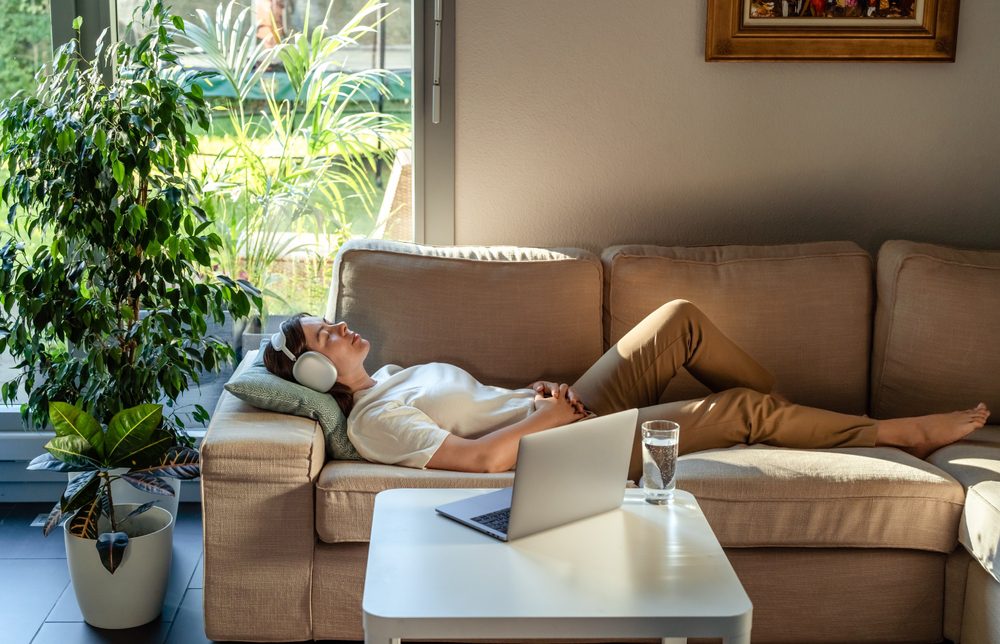
Hypnosis is being in a trance-like state characterized by intense relaxation, improved suggestibility, and elevated imagination.
For self-hypnosis, you put yourself in this state without the aid of a hypnotherapist. If you’ve ever been entranced by a crackling fire or ocean waves, you’ve experienced self-hypnosis.
Research has proven the benefits of hypnosis for anxiety and many other disorders with a stress-related component. You can perform self-hypnosis scripts from memory or record in your own voice, then follow along.
There are also prerecorded self-hypnosis apps and MP3s. We recommend using audio programs created by professionals with hypnosis training and accreditation for the best results.
14. Tapping
The emotional Freedom Technique, commonly known as tapping or EFT, is a form of acupressure that stimulates meridian points with your fingertips. Tapping can be used for anything that ails you, emotionally or physically, including stress and stress-related issues.
One tapping session can decrease stress hormone cortisol levels by an astounding 50%.
Related Post: 9 Natural Ways to Reduce Migraine Symptoms






Leave a Reply