
Let’s talk about LASIK risks no one tells you about!
Laser-assisted in situ keratomileusis, or LASIK, is a widely used procedure to correct vision problems, providing an alternative to glasses or contact lenses.
During this precise surgery, a special laser reshapes the cornea—the eye’s clear front surface, which is shaped like a dome. While LASIK is generally safe and effective, it can be intimidating for some due to potential complications. We’ve gathered insights from doctors and patients to uncover lesser-known LASIK risks. Stay tuned to learn more about these hidden risks.
We have many important things to talk about, so read along with us until the end of this article to discover all you need to know about LASIK risks!
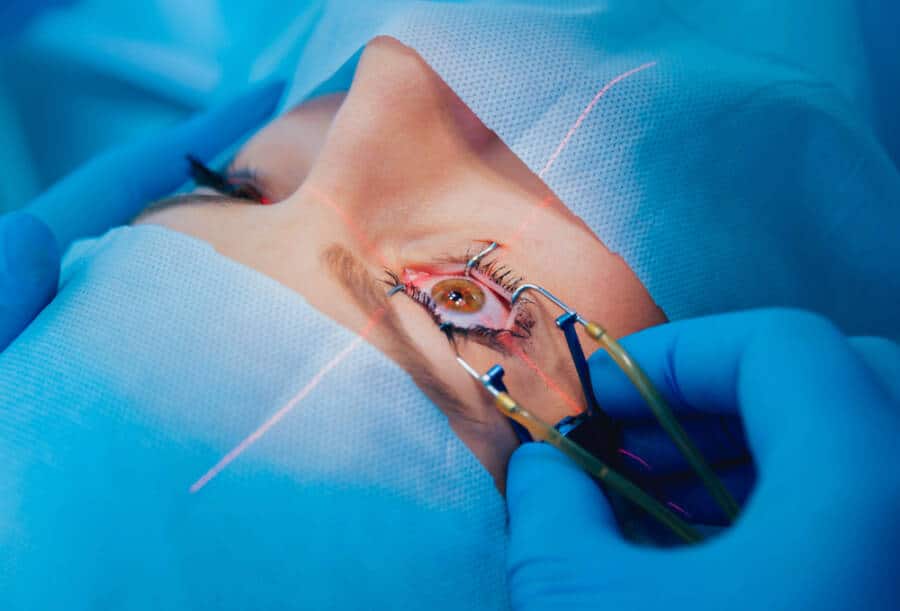
1. Double vision, glare, and halos
Double vision is one of the first LASIK risks we will discuss today. According to doctors, this shouldn’t last for more than a few days or a couple of weeks. Understandably, your eyes can be more sensitive after such an important procedure, so you might have light sensitivity, halos around bright lights, glare, and even double vision.
After the surgery, you might notice that your ability to see in low light, like dusk or in fog, could be worse than before, even if your vision looks good in regular tests. You should immediately talk to your surgeon in case there’s something wrong with your vision, especially if it lasts for more than a couple of weeks. It might only be part of the recovery process, but make sure you talk to them before the surgery so you know what to expect.
2. Flap issues
Another LASIK risk that isn’t discussed very much is eye flapping. Doctors say that removing or folding back the flap from the front of your eye during the procedure can trigger complications, such as excess tears and infection.
Moreover, in some severe cases, people might notice their outermost corneal tissue layer growing weirdly underneath the flap during the recovery process.
3. Dry eyes
This isn’t a scary LASIK risk, but you should know about it, so there’s no reason to be concerned in case it happens to you. Everyone reacts differently to surgery, and the amount of time it takes for your body to heal is different from one person to another.
With that in mind, your eye surgery might cause a temporary decrease in your tear production. You might notice that your eyes feel unusually dry during the healing process, and in some cases, that can last up to six months. In addition to that, dry eyes can reduce your vision quality, so talk to your doctor about it.
They might recommend you take some eye drops for hydration. Even though this symptom can be quickly treated, don’t wait until it’s too late. Some patients who had LASIK suffered from severe dry eyes, and they were prescribed medicated eye drops and even tear drain plugs.
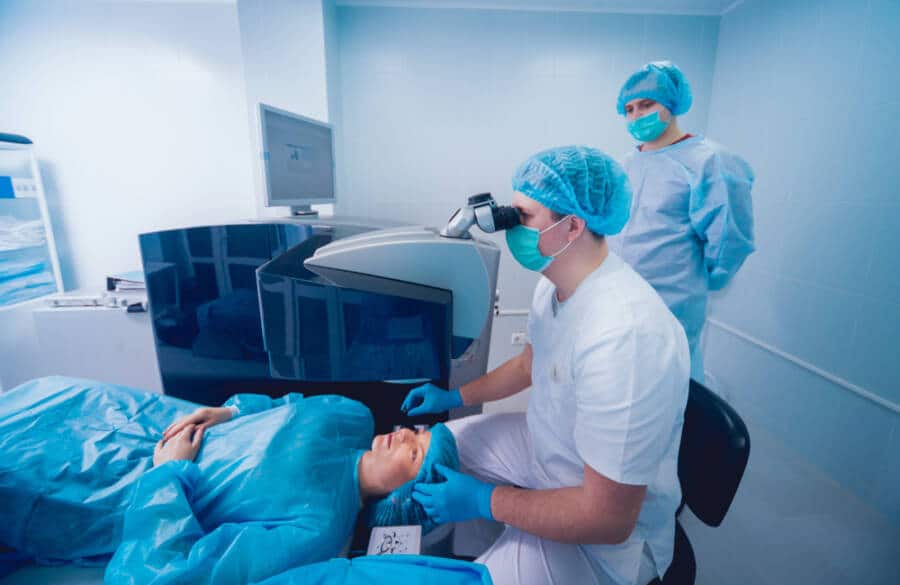
4. Undercorrections and overcorrections
If the laser removes too little tissue from your eye during LASIK surgery, you might not achieve the improved eyesight you expected. Experts note that patients with nearsightedness are more prone to experiencing undercorrections. Besides that, some people might require a follow-up LASIK treatment to remove more tissue within less than a year.
On the other hand, another LASIK risk that could occur is overcorrection. This happens when the laser removes too much of the tissue during the procedure. Unfortunately, this can lead to blurry vision and other issues post-surgery. While these aren’t that common, they can happen, which is why patients are asked to come for a second LASIK producer, often known as an “enhancement” or a “touch-up”.
5. Corneal ectasia
Corneal ectasia is another LASIK risk people don’t always want to talk about. This is a condition in which your cornea is too weak and thin, and it can cause further complications. Since your cornea isn’t in its best shape, it can be hard to maintain, leading to worsening vision and cornea bulging.
6. Infections and inflammation
Even though they’re extremely rare, infections and inflammations are also considered LASIK risks. Don’t be scared, though, because there’s a 1 in 10,000 risk of infection. Since we all know that prevention is key, it’s very important to clean your eyes and apply the antibiotic eye drops according to your doctor’s instructions.
Inflammation happens when lots of white blood cells enter your eyes following the surgery. Experts say that this can happen in the first few days, so it’s critical to keep using the eye drops your doctor has prescribed and to go back for your checkup within the first week.
7. Epithelial ingrowth
Another LASIK risk, though not common, is epithelial ingrowth, which happens when cells from the cornea’s outer layer grow behind the corneal flap. According to experts, this is quite rare with primary surgery, but it’s rather common when patients go for an enhancement a couple of years after the initial procedure.
Some patients might have mild cases that go away on their own, without the need for additional surgery. Unfortunately, in advanced cases, people might experience discomfort or hazy vision. However, once the unnecessary cells are surgically removed, they will experience less pain and improved vision.
8. Diffuse Lamellar Keratitis (DLK)
DLK is a LASIK risk that happens in the early postoperative period in 0.67% of cases. This is a whitish, culture-negative, and granular inflammatory response of your corneal lamellae and is commonly known as the “sands of the Sahara”.
Even though it’s very rare, patients experiencing this should seek out medical help ASAP, because it can impair vision results if left untreated.
9. Pressure-Induced Stromal Keratitis (PISK)
In contrast to DLK, PISK is linked to elevated intraocular pressure, and it can result in corneal edema. It’s critical to keep an eye on symptoms and take quick action because things can go from bad to worse in a snap.
It usually happens when patients use topical steroid drops for an extended period, so make sure you talk to your healthcare provider in case you notice anything weird or painful.

10. Visual loss or changes
Even though you decide to get eye surgery to get rid of your health issues, you need to do your research, choose a good surgeon with the right equipment, and take really good care of yourself after the procedure.
However, even if you do all these things, there are still some LASIK risks that can happen. One of the worst things you could experience is a visual loss or change. While they’re very rare, they can happen if the surgery doesn’t go as planned or if your eyes can’t recover properly. Some people might end up not seeing as sharply or clearly as before, which is why it’s important to analyze all the LASIK risks before deciding to get it.
What about the complication rate?
For people considering refractive surgery to improve their vision, the LASIK complication rate has long been a factor. The good news is that the rate of complications has dramatically dropped over time, thanks to improvements in technology and procedures.
According to recent studies, less than 1% of patients encounter any serious complications. Moreover, rigorous screening procedures guarantee that only the best candidates proceed with the surgery, reducing the risk of surgical complications. As we’ve previously mentioned, choosing a reliable surgeon from a clinic you can trust will lower the possibility of complications following surgery. Do your research, get informed, and take care of your health!
Your eyes are one of the most important parts of your body, so protect them. If you want to protect your eyes from the sun’s rays, here’s a wonderful pair of polarized sunglasses!
Did you find this article about LASIK risks helpful? Let us know in the comments below! If you enjoyed reading this post and want to check out something else from The Lasting Health, here’s a good post for you: 5 Silent Signs of Earwax Blockage You Should Solve Now!







Leave a Reply